Get the weekly SPARTANAT newsletter.
Your bonus: the free E-Book from SPARTANAT.

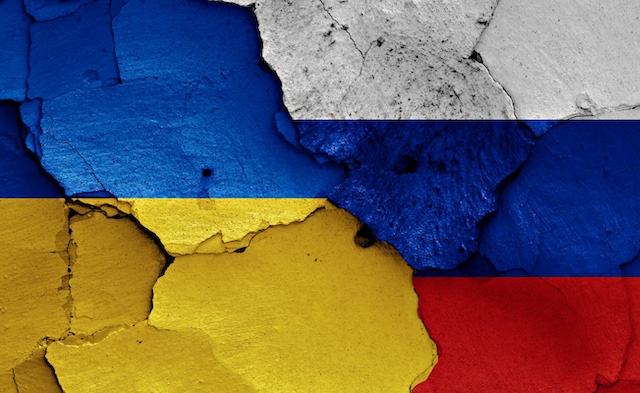
UKRAINE: THE SITUATION 214 - 21st SEPTEMBER 2022
The partial mobilization announced by Putin reflects Russia's challenges in the Ukraine invasion. It may sustain current forces but won't change the war's course significantly.

The "partial mobilization" announced by Russian President Vladimir Putin on September 21 reflects many of the problems that Russia is facing in its stalled invasion of Ukraine and is unlikely to resolve in the coming months.
Putin's order to mobilize a part of the "trained" Russian reserve, i.e. those who have completed their mandatory military service, will not generate significant usable Russian combat power over the course of months. It could be enough to sustain the current level of Russian forces in 2023 by offsetting Russian losses, but even that is not clear. Russian Defense Minister Sergei Shoigu said in an interview on September 21 that the mobilization will occur in deliberate phases, ruling out a sudden influx of Russian forces that could dramatically change the course of the war. Therefore, Russia's partial mobilization will not deprive Ukraine of the opportunity to continue liberating more parts of the occupied territory until winter and beyond.
Ukrainian forces are likely continuing their offensive operations around Lyman.
Ukrainian forces conducted attacks north and east of the city of Kherson as part of an operational disruption campaign against Russian logistics, military, and transportation facilities in the Kherson Oblast.
The complete Russian Offensive Update 213 is available directly from UNDERSTANDING WAR.
UNDERSTANDING WAR online
SPARTANAT is the online magazine for Military News, Tactical Life, Gear & Reviews.
Send us your news: [email protected]
Ad
similar
Get the weekly SPARTANAT newsletter.
Your bonus: the free E-Book from SPARTANAT.
