Get the weekly SPARTANAT newsletter.
Your bonus: the free E-Book from SPARTANAT.


UKRAINE: 3 QUESTIONS - 3 ANSWERS, PART 32: Annexation and peace?
Russian President Vladimir Putin annexed four areas of Ukraine on September 30, 2022, claiming them as Russian territory. An analysis by First Lieutenant Christoph Bilban examines the implications of this annexation on the ongoing conflict in Ukraine and the potential for peace talks.

On September 30, 2022, Russian President Vladimir Putin annexed four areas of Ukraine. Russia now considers the "People's Republics" of Luhansk and Donetsk, as well as the oblasts of Zaporizhzhia and Kherson, to be Russian territory. In his speech, Putin once again spoke of defending Russia by all means.
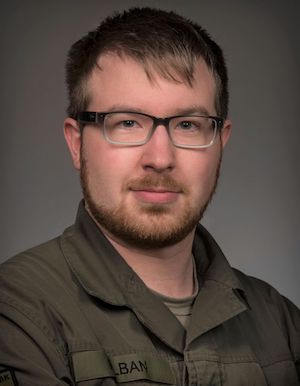
Recent events are analyzed by First Lieutenant Christoph Bilban. He is a researcher at the Institute for Peacekeeping and Conflict Management of the National Defense Academy in Vienna. His research focuses include conflicts in the post-Soviet space and the foreign and security policy of the Russian Federation.
Statement from the Bundesheer Expert:
What does the annexation of the territories mean for the war in Ukraine?
The Ukrainian offensives are continuing, as shown over the weekend. While the territories have been regarded as Russian territory since September 30, the exact border remains unclear from Moscow's perspective. This ambiguity seems intentional as it allows Putin to flexibly determine when an "attack on Russia" has occurred. However, he may be waiting for the ratification of the agreements by the Duma and the Federation Council.
Russia still has options for escalation. In his speech, Putin referred to the precedents of the US atomic bombs on Hiroshima and Nagasaki at the end of World War II. However, the use of tactical nuclear weapons would entail a significant risk to Putin's power. Therefore, its use is still unlikely but not impossible. Putin also called for negotiations in his speech.
Is there a real chance for peace talks?
Concrete peace talks are not currently in sight. While Ukrainian President Volodymyr Zelensky is open to negotiations with Russia, he is not open to negotiating with Putin. Meanwhile, Ukraine has applied for an accelerated NATO membership, knowing that this request is likely to be rejected. This is a clear indication that the negotiating basis for Kyiv has changed. NATO's ambitions were a core issue in the negotiations in March and April, and now they are once again on the table in exchange for the return of Ukrainian territories - but only for Putin's successor.
With his speech, Putin has expanded his war goals: the denazification and demilitarization of Ukraine in his rhetoric have given way to extensive criticism of the West, emphasizing the need to defend Russian culture. He seems to aim for approval among the Russian population, framing the war in Ukraine as part of the broader conflict between Russia and "the West."
Is there still international support for Putin's decisions?
The condemnation of the annexation by the Western community of states and the new sanctions were foreseeable. However, not the whole world condemns Putin equally. Brazil, China, Gabon, and India expressed criticism of the annexation in the UN Security Council last Friday but abstained from the vote due to Russian veto. China, as a challenger to Washington's interests, largely aligns with Putin's fight against the "total dominance" of the USA. While their interests align, further escalation would likely strain the partnership more than strengthen it.
Putin's anti-Western and anti-colonial rhetoric resonates in some states outside the Western world - but also in Europe. Russia's influence has increased in African states like Mali or Burkina Faso in recent years. Whether the costs of this policy for Russia justify the benefits remains open, as very few states ultimately stand behind every decision made in Moscow.
UKRAINE: 3 Questions – 3 Answers
– UKRAINE: 3 FRAGEN – 3 ANTWORTEN, TEIL 31: GEGENANGRIFF?
– UKRAINE: 3 FRAGEN – 3 ANTWORTEN, TEIL 30: 9. MAI?
– UKRAINE: 3 FRAGEN – 3 ANTWORTEN, TEIL 29: WAFFEN FÜR DIE UKRAINE?
– UKRAINE: 3 FRAGEN – 3 ANTWORTEN, TEIL 28: THERMOBARISCHE WAFFEN?
– UKRAINE: 3 FRAGEN – 3 ANTWORTEN, TEIL 27: MOSKWA UND FLOTTENMACHT?
– UKRAINE: 3 FRAGEN – 3 ANTWORTEN, TEIL 26: NUKLEARER ELEKTROMAGNETISCHER IMPULS?
– UKRAINE: 3 FRAGEN – 3 ANTWORTEN, TEIL 25: ELEKTRONISCHER KAMPF?
– UKRAINE: 3 FRAGEN – 3 ANTWORTEN, TEIL 24: TAKTISCHE ATOMWAFFEN?
– UKRAINE: 3 FRAGEN – 3 ANTWORTEN, TEIL 23: MARIUPOL?
– UKRAINE: 3 FRAGEN – 3 ANTWORTEN, TEIL 22: PHOSPHORBOMBEN?
– UKRAINE: 3 FRAGEN – 3 ANTWORTEN, TEIL 21: KRIEG UND RECHT?
– UKRAINE: 3 FRAGEN – 3 ANTWORTEN, TEIL 20: BIOLOGISCHE WAFFEN?
– UKRAINE: 3 FRAGEN – 3 ANTWORTEN, TEIL 19: ABC-GEFAHREN?
– UKRAINE: 3 FRAGEN – 3 ANTWORTEN, TEIL 18: NACHSCHUB?
- UKRAINE: 3 QUESTIONS - 3 ANSWERS, PART 17: MISSILES AND AIR DEFENSE?
- UKRAINE: 3 QUESTIONS - 3 ANSWERS, PART 16: AIR COMBAT?
- UKRAINE: 3 QUESTIONS - 3 ANSWERS, PART 15: COMBAT OF THE ALLIED WEAPONS?
- UKRAINE: 3 QUESTIONS - 3 ANSWERS, PART 14: TANK COMBAT?
- UKRAINE: 3 QUESTIONS - 3 ANSWERS, PART 13: COMBAT UNDER THE GROUND?
- UKRAINE: 3 QUESTIONS - 3 ANSWERS, PART 12: CYBERWAR?
- UKRAINE: 3 QUESTIONS - 3 ANSWERS, PART 11: NEUTRALITY?
- UKRAINE: 3 QUESTIONS - 3 ANSWERS, PART 10: HOW IS IT GOING?
- UKRAINE: 3 QUESTIONS - 3 ANSWERS, PART 9: NBC THREAT?
- UKRAINE: 3 QUESTIONS - 3 ANSWERS, PART 8: BATTLE FOR THE CITIES
- UKRAINE: 3 QUESTIONS - 3 ANSWERS, PART 7: AIR WAR AND DRONES
- UKRAINE: 3 QUESTIONS - 3 ANSWERS, PART 6: NUCLEAR POWER PLANTS AND NUCLEAR THREAT
- UKRAINE: 3 QUESTIONS - 3 ANSWERS, PART 5: WHAT WEAPONS?
- UKRAINE: 3 QUESTIONS - 3 ANSWERS, PART 4: WEAPONS FOR KYIV?
- UKRAINE: 3 QUESTIONS - 3 ANSWERS, PART 3: IS THERE RESISTANCE?
- UKRAINE: 3 QUESTIONS - 3 ANSWERS, PART 2: WHAT ARE THE CONSEQUENCES OF THE ATTACK?
- UKRAINE: 3 QUESTIONS - 3 ANSWERS, PART 1: WHAT'S GOING ON?
SPARTANAT is the online magazine for Military News, Tactical Life, Gear & Reviews.
Send us your news: [email protected]
Ad
similar
Get the weekly SPARTANAT newsletter.
Your bonus: the free E-Book from SPARTANAT.
