Get the weekly SPARTANAT newsletter.
Your bonus: the free E-Book from SPARTANAT.


UKRAINE: 3 QUESTIONS - 3 ANSWERS, PART 21: War and Law?
The text discusses the rules governing the treatment of civilians in times of war, emphasizing the protection of civilians and the distinction between civilians and armed combatants. It also explores international agreements and mechanisms for prosecuting war crimes, highlighting the importance of enforcing international humanitarian law.

Reports of civilians being harmed in the war in Ukraine are becoming more frequent. But what exactly distinguishes civilians from armed combatants?
Brigadier in Ruhe Karl Edlinger explains the fundamental rules that should apply in wars. He is a legal adviser at the Military Command Lower Austria. Previously, Edlinger was a lecturer in military law at the Ministry of Defense, among other positions, and he is a regular guest lecturer at institutions at home and abroad.
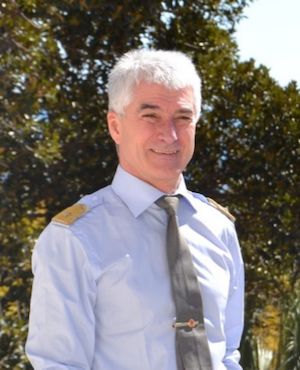
Statement from the Federal Army Expert:
Which international agreements govern the conduct of warfare itself?
The rights and obligations of belligerents are set out in a series of international agreements. The most important agreements, which are binding on all states in the world, are:
- The Hague Conventions of 1899 and 1907, which in particular govern the conduct of hostilities and the rules in occupied territory.
- The four Geneva Conventions of 1949, which protect victims of armed conflicts: the wounded and sick, shipwrecked, prisoners of war, and civilians.
Other agreements that restrict means and methods of warfare apply to those states that have ratified those agreements. They include the prohibition of chemical and biological weapons, a ban on anti-personnel mines or cluster munitions, agreements for the protection of the environment, agreements for the protection of cultural property in armed conflicts, and much more.
Which international agreements govern the treatment of civilians in war? How are civilians who participate in combat distinguished from regular troops?
The protection of civilians is explicitly emphasized in all agreements. Civilians must be protected under all circumstances. Neither the civilian population nor individual persons may be the target of attacks. The use or threat of violence with the primary aim of spreading terror among the civilian population is prohibited.
However, civilians lose their protection when they actively participate in combat operations. If they are captured in the process, they are not entitled to prisoner of war status and may be prosecuted criminally.
This applies, for example, when they point a weapon at an enemy soldier, when they support their own forces in combat operations (e.g. transporting ammunition to the firing position), or when they lay mines, set up barricades, plant explosives, or throw Molotov cocktails at enemy tanks.
However, they can also be harmed without participating in combat. If an attacker realizes that civilians are near military targets, he is not required to stop the attack. He may continue it as long as the potential harm to civilians or civilian objects (known as collateral damage) is not disproportionate compared to the military advantage of the attack.
Any deliberate attack on civilians not taking part in hostilities, or on civilian objects not being used for military purposes, is a serious breach of international humanitarian law, constituting a war crime.
How are violations of international law (war crimes) punished? Isn't there a lack of international "legal enforcement" here, as is guaranteed nationally within a state?
Every state is obligated to prosecute its own citizens and soldiers who have committed war crimes criminally.
In addition, the United Nations Security Council can establish a tribunal for war crimes and crimes against humanity and genocide, as it did in the case of the former Yugoslavia and after the genocide in Rwanda. A tribunal for crimes in the Ukraine war is unlikely, as Russia, as a permanent member of the Security Council, will veto the establishment of such a tribunal.
The International Criminal Court in The Hague, which has jurisdiction over genocide, crimes against humanity, and war crimes, can initiate proceedings if a crime is committed by a national of a state party or on the territory of a state party. Russia and Ukraine are not state parties, but Ukraine has accepted the jurisdiction of the International Criminal Court.
However, under the principle of universal jurisdiction, any state that apprehends a perpetrator of crimes against international law (genocide, crimes against humanity, and war crimes) can prosecute and punish them.
BUNDESHEER Online
UKRAINE: 3 Questions – 3 Answers
– UKRAINE: 3 QUESTIONS – 3 ANSWERS, PART 20: BIOLOGICAL WEAPONS?
– UKRAINE: 3 QUESTIONS – 3 ANSWERS, PART 19: NBC RISKS?
– UKRAINE: 3 QUESTIONS – 3 ANSWERS, PART 18: SUPPLY?
– UKRAINE: 3 QUESTIONS – 3 ANSWERS, PART 17: ROCKETS AND AIR DEFENSE?
– UKRAINE: 3 QUESTIONS – 3 ANSWERS, PART 16: AIR COMBAT?
– UKRAINE: 3 QUESTIONS – 3 ANSWERS, PART 15: COMBINED ARMS WARFARE?
– UKRAINE: 3 QUESTIONS – 3 ANSWERS, PART 14: TANK COMBAT?
– UKRAINE: 3 QUESTIONS – 3 ANSWERS, PART 13: COMBAT UNDERGROUND?
– UKRAINE: 3 QUESTIONS – 3 ANSWERS, PART 12: CYBERWAR?
– UKRAINE: 3 QUESTIONS – 3 ANSWERS, PART 11: NEUTRALITY?
- UKRAINE: 3 QUESTIONS - 3 ANSWERS, PART 10: HOW IS IT GOING?
- UKRAINE: 3 QUESTIONS - 3 ANSWERS, PART 9: ABC DANGER?
- UKRAINE: 3 QUESTIONS - 3 ANSWERS, PART 8: BATTLE FOR THE CITIES
- UKRAINE: 3 QUESTIONS - 3 ANSWERS, PART 7: AIR WAR AND DRONES
- UKRAINE: 3 QUESTIONS - 3 ANSWERS, PART 6: NUCLEAR POWER PLANTS AND NUCLEAR THREAT
- UKRAINE: 3 QUESTIONS - 3 ANSWERS, PART 5: WHICH WEAPONS?
- UKRAINE: 3 QUESTIONS - 3 ANSWERS, PART 4: WEAPONS FOR KIEV?
- UKRAINE: 3 QUESTIONS - 3 ANSWERS, PART 3: IS THERE RESISTANCE?
- UKRAINE: 3 QUESTIONS - 3 ANSWERS, PART 2: WHAT ARE THE CONSEQUENCES OF THE ATTACK?
- UKRAINE: 3 QUESTIONS - 3 ANSWERS, PART 1: WHAT'S GOING ON?
SPARTANAT is the online magazine for Military News, Tactical Life, Gear & Reviews.
Send us your news: [email protected]
Ad
similar
Get the weekly SPARTANAT newsletter.
Your bonus: the free E-Book from SPARTANAT.
