Get the weekly SPARTANAT newsletter.
Your bonus: the free E-Book from SPARTANAT.


UKRAINE: 3 QUESTIONS - 3 ANSWERS, PART 10: How's it going?
This abstract summarizes a military expert's perspective on the war in Ukraine. The expert, Brigadier Philipp Eder, explains how information is gathered and analyzed, why Putin's intentions were misunderstood, and why traditional military tactics are still relevant despite advancements in cyber warfare.

Regardless of the tragic events of the day, we also receive many questions regarding our military experts themselves, as well as general questions about the war in Ukraine. Today's answers come from Brigadier Philipp Eder. He heads the Military Strategy department at the Ministry of Defense.
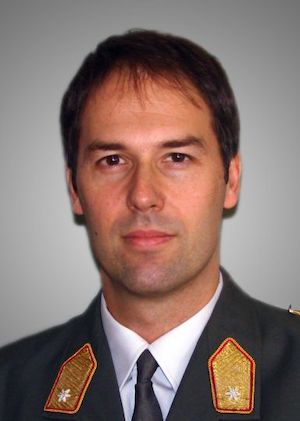
Statement from the Bundesheer Expert:
Where do your 3 experts get their information about the progress of the war in Ukraine?
We experts rely on information from publicly available media and contacts in our professional network. Particularly valuable are the insights from social media on the ground. After conducting a thorough plausibility check, we compile this information into a military strategic assessment.
We have acquired our expertise through the General Staff training at the National Defense Academy in Vienna, complemented by international training courses and our practical experience. This allows us to assess the progress of the war and highlight future options for the warring parties.
Why did many assume that Russian President Putin only wanted the East of Ukraine, not the whole country?
In security policy, scenarios can be assessed based on their likelihood of occurrence. Over the last 30 years, Europe has focused heavily on scenarios with a high likelihood of occurrence. A conventional war in Europe triggered by Russia was considered very unlikely. Consequently, the budgets and readiness of European armed forces were drastically reduced.
Military experts assess scenarios based on a different criterion: what is the most dangerous scenario? Mastering this scenario makes it easier to handle all simpler tasks. Therefore, military personnel around the world repeatedly call for more resources to fulfill their mission of territorial defense, even in worst-case scenarios. President Putin, however, chose the most dangerous scenario rather than the most likely one.
Why is Russia launching attacks with tanks, airplanes, rockets, and other heavy weapons? Wouldn't a cyber war suffice?
In order to achieve its goals of taking possession of Ukraine and replacing the government, Russia needs soldiers with weapons and protected mobility to invade the country. Additional troops are also required to secure the conquered territory. President Putin cannot achieve these goals solely through a cyber war originating from Russia. Cyber attacks accompany this conventional assault. Effects achieved in cyberspace can include local or widespread blackouts, email failures, ATM outages, or total internet shutdown. Electronic warfare also targets the enemy's technology on the battlefield.
BUNDESHEER online
UKRAINE: 3 Questions – 3 Answers
– UKRAINE: 3 QUESTIONS - 3 ANSWERS, PART 9: NBC DANGER?
– UKRAINE: 3 QUESTIONS - 3 ANSWERS, PART 8: BATTLE FOR THE CITIES
– UKRAINE: 3 QUESTIONS - 3 ANSWERS, PART 7: AIR WAR AND DRONES
– UKRAINE: 3 QUESTIONS - 3 ANSWERS, PART 6: NUCLEAR POWER PLANTS AND NUCLEAR THREAT
– UKRAINE: 3 QUESTIONS - 3 ANSWERS, PART 5: WHAT WEAPONS?
– UKRAINE: 3 QUESTIONS - 3 ANSWERS, PART 4: WEAPONS FOR KIEV?
– UKRAINE: 3 QUESTIONS - 3 ANSWERS, PART 3: IS THERE RESISTANCE?
– UKRAINE: 3 QUESTIONS - 3 ANSWERS, PART 2: WHAT ARE THE CONSEQUENCES OF THE ATTACK?
– UKRAINE: 3 QUESTIONS - 3 ANSWERS, PART 1: WHAT'S GOING ON?
SPARTANAT is the online magazine for Military News, Tactical Life, Gear & Reviews.
Send us your news: [email protected]
Ad
similar
Get the weekly SPARTANAT newsletter.
Your bonus: the free E-Book from SPARTANAT.
