Get the weekly SPARTANAT newsletter.
Your bonus: the free E-Book from SPARTANAT.

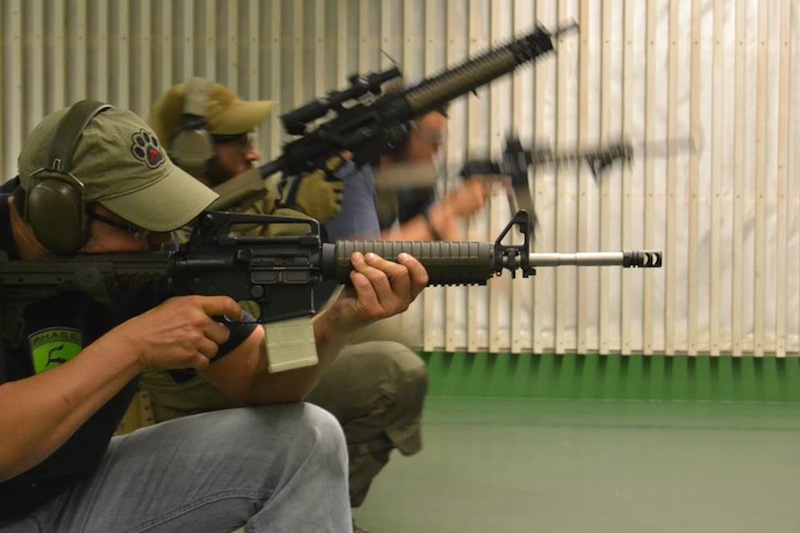
TRAINING WITH KL STRATEGIC (2): The attack
This text discusses the basics of shooting techniques, focusing on the importance of a stable standing position. It explores the biomechanical aspects of the stance, emphasizing the need for natural muscle tension and proper body alignment to counteract recoil. The text also compares the advantages of a parallel step stance over a lateral L-stance. Various body parts such as feet, legs, hips, upper body, shoulders, head, and center of gravity shift are analyzed to provide a comprehensive understanding of achieving stability and accuracy in shooting.

In the second part of the training series with KL Strategic, we continue to work on the basics of shooting. Standing, kneeling, prone - when to use which position and how to ensure that it is stable?
This question will be addressed on the following pages from a shooting technique and biomechanical perspective, so let's dive in:
- Standing Position
Especially in the standing position, there are many aspects to consider. As previously shown in the article about grip (Part 1 - Grip), the goal is to deflect forces rather than process them within the body. A truly incorrect standing position can easily be identified when the person does not stand the same way after the shot as they did before. In this case, the recoil was fully directed into the body and processed there without a counter-reaction - similar to a Newton's cradle.
The standing position is easy to describe: comfortable and stable! Looking closer at these two terms, it becomes evident that there is much more to it than initially assumed.
A stance is considered comfortable when muscle tension is minimized to the absolute necessary minimum. Certain muscle efforts are necessary for activities in the position (e.g. holding the weapon), however, additional efforts should be avoided. These efforts include:
- Twisting the upper body
- Sideways pulling/holding of the arms
- Forced head positions
- Tense grip
- Tension/pressure in the grip
- Arching the lower back
- Leaning back of the body
- Straightening the knees
All these movements and positions go beyond the natural muscle tension, sometimes working against it and providing no advantage for a stable position. Therefore, they are clearly unnecessary and should be avoided.
Let's look at the standing position in sections.
Foot Position:
The stable position already begins with the foot position. While the lateral L-stance is often promoted, it does not offer the advantages that a parallel step stance does. The lateral L-stance turns the entire body sideways, bringing the shooting side shoulder back. This makes it extremely difficult to counteract the recoil with extreme muscular effort. This applies to both long guns and handguns. Further disadvantages arise depending on the type of weapon. I will address this separately elsewhere (see: "Upper Body").
On the other hand, the parallel step stance offers several advantages. Not only is it naturally taken and therefore does not require additional muscle activation, but it is also quick and intuitive to adopt. This is especially important for all dynamic situations in which a firearm is used.
Furthermore, the body is not turned away from the weapon, which leads to an improvement in the recoil processing. I will address this in more detail elsewhere. A particularly great advantage is the naturalness of the foot position. In this stance, we are used to balancing our body and responding quickly and intuitively to external balance disturbances.
The latter aspect alone dictates the use of this position when we already know in advance that our balance will be disturbed.
It should be avoided to place the feet parallel next to each other, as this disrupts the natural body sensation.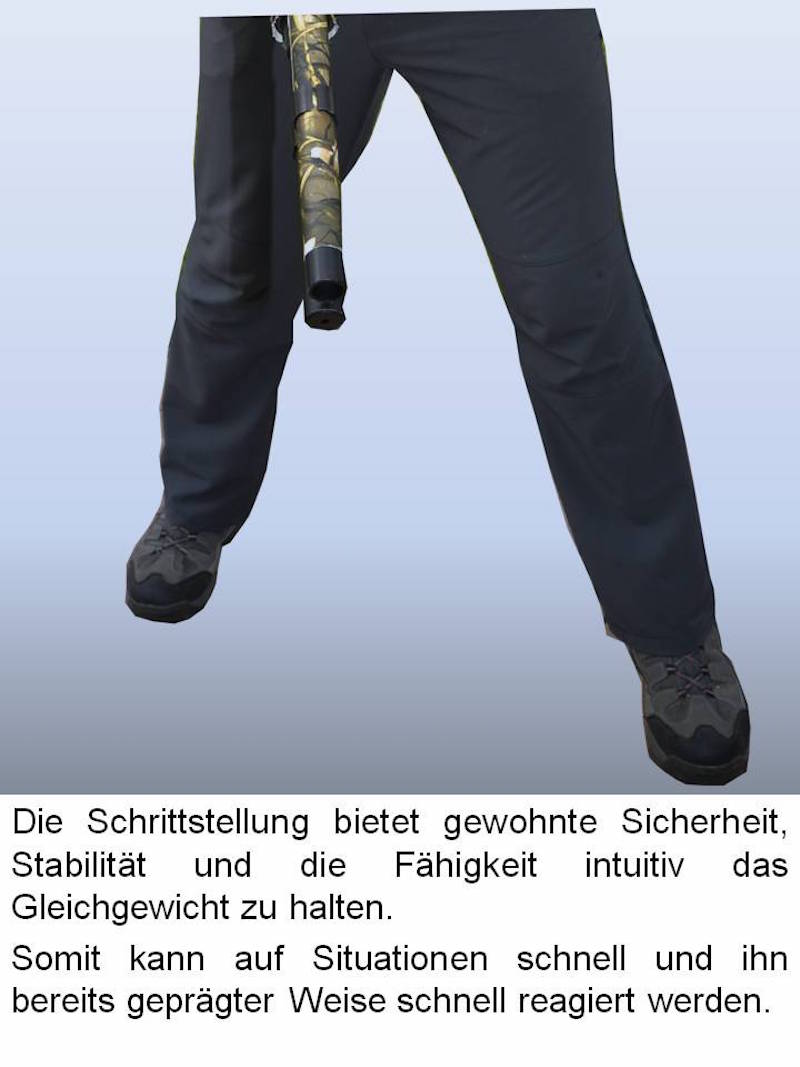 In the natural step stance, we already utilize a muscle memory that we have built throughout our entire lives.
Legs:
Here too, utilizing natural muscle tension offers significant advantages over forced positions. When taking the lateral L-stance position, there is inevitably a shift of weight onto the supporting leg, resulting in the leg being fully extended. This extension leads to additional muscle activation which unnecessarily consumes energy that could be better utilized elsewhere.
However, the step stance also has potential for errors. Often I see shooting students trying to stabilize their stance by straightening their legs at the knees and strongly contracting the thigh muscles to relieve the lower back muscles. However, this measure makes the stance very unstable and cannot be maintained for long periods.
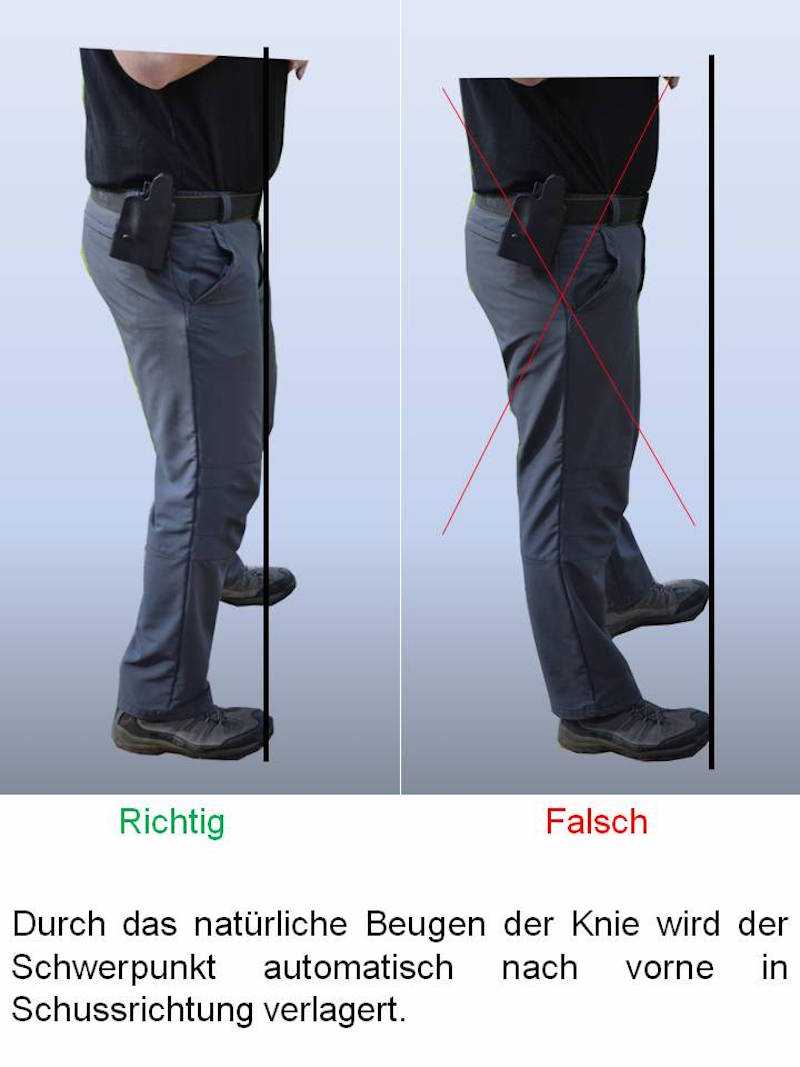
Natural muscle tension is sufficient here. It can be achieved as follows:
- Assume the step stance
- Keep the upper body straight, arms hanging at the sides
- Consciously straighten the knees
- Consciously relax the thigh muscles without moving the rest of the body
- The body slightly bends at the knees, the legs take their naturally tensioned position!
Hip/Lower Back:
In the area of the hips and lower back, actual additional muscular work is required. This area rigidly connects the upper and lower body during the shooting process. It is necessary to contract the lower back muscles, but without tensing excessively. Most people rarely engage these parts of the back muscles, which may lead to slight muscle soreness in the first few days of use. It is crucial to keep the hips straight and not lean the upper body forward, protruding the buttocks backward as a "counterweight". This action disrupts the natural muscle tension and posture, causing the upper and lower body to be biomechanically separated. As a result, the entire recoil processing and holding work must be done by the abdominal and upper back muscles, leading to pain, tension, and possibly injuries!
Additionally, this separation means that forces transmitted from the weapon must be absorbed and processed by the body rather than deflected. This can only be done through the muscle apparatus, which is not only additionally strained but also suddenly irritated, requiring a reconstruction of the entire muscle tension after each shot. This consumes time and energy that could be better utilized elsewhere.
Upper Body:
The upper body provides the largest surface area to absorb, distribute, and transmit forces. Turning it away from the direction of the shot with the lateral L-stance, or leaning it back or arching it, directs the forces solely to the shoulder of the shooting hand. However, this shoulder is in the farthest position of the body where effective force can be applied. Therefore, little resistance can be provided against the recoil force. As a result, the body is further rotated in its "naturally pre-determined" direction. In short, the weapon in the lateral L-stance pushes the body around its vertical axis. This can be observed in faster shot sequences by the outward movement of hits towards the shooting side.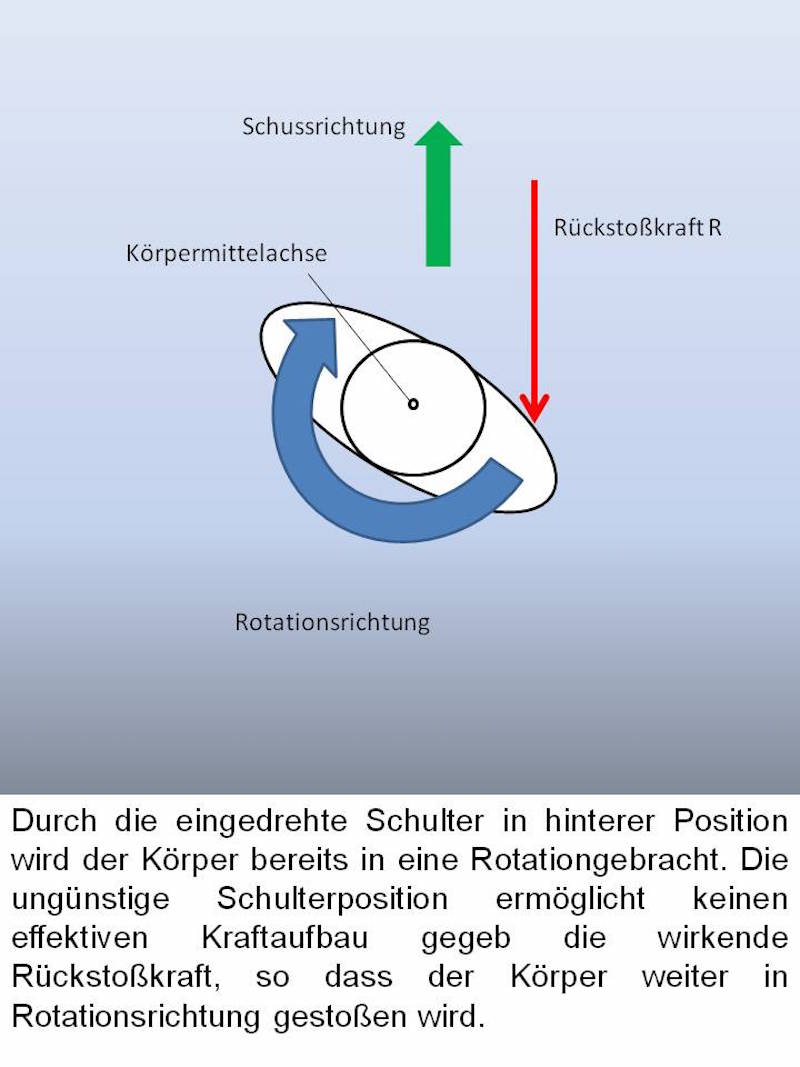 Keeping the upper body in the direction of the shot prevents these negative outcomes and also allows for working from a natural movement. If necessary, the recoil can be countered with minimal muscle tension in the shoulder or upper arms, enabling quick, accurate shot sequences in conjunction with the natural holding point (see Part 3 - natural holding point).
Shoulder:
As mentioned earlier, the shoulders do most of the work in absorbing and transmitting prevailing forces. When in the lateral L-stance (away from the shot!), they are outside of effective force development and therefore are merely "victims" of the prevailing forces.
In contrast, in the step stance, the shoulders are available as an effective element for transmitting force. It is essential to roll the shoulders forward (boxer stance) with a certain pre-tension to enable control over the weapon. This inward rolling is almost unconscious and automatic in the standing position with handguns (assuming correct posture), while with long guns, muscle memory training is often necessary. I often see shooters unconsciously retracting the shooting shoulder slightly, almost pushing it back from the shoulder rest. This can have several reasons:
- Unconscious imprinting from the lateral L-stance
- Overly short sling setting (usually in combination with a slight lean back)
- Too long shoulder rest
This results in increased muscle tension in the shooting shoulder to ensure a stable position, which is otherwise mainly provided by muscle-supported bone and soft tissue structure in the shoulder.
Head:
The position of the head in the standing position has far-reaching effects on the speed of target acquisition, effectiveness of movements, and possible aiming errors.
The stance in the step position is the only standing position where it is not necessary to move the head for aiming, whereas the upright, extended posture generally requires head movement for target acquisition.
In the "boxer stance," the head is pulled between the shoulders so that when assuming the stance, the sights are brought directly into the field of vision with correct arm posture. If foot position, hip posture, upper body posture, and shoulder posture are correct, the head position results automatically. This way, excessive tension of the neck muscles beyond the necessary amount is not required.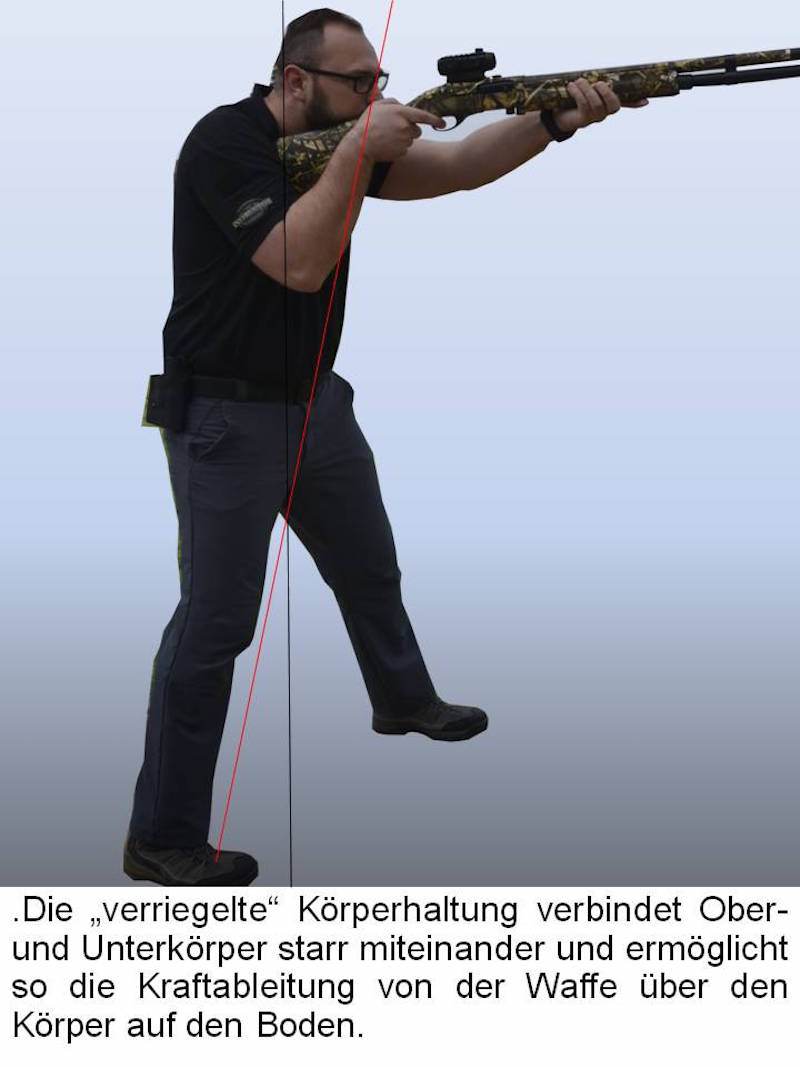
Center of Gravity Shift:
If the posture of the individual body parts has been correctly executed, the entire body tends to move forward. This tendency is consciously supported by shifting approximately 60-70% of the weight onto the front foot. This corresponds roughly to the weight distribution when initiating normal forward movement from a standing position.
It is important that the upper body does not bend at the hips. In this position, the shoulders, knees, and toes are roughly in alignment.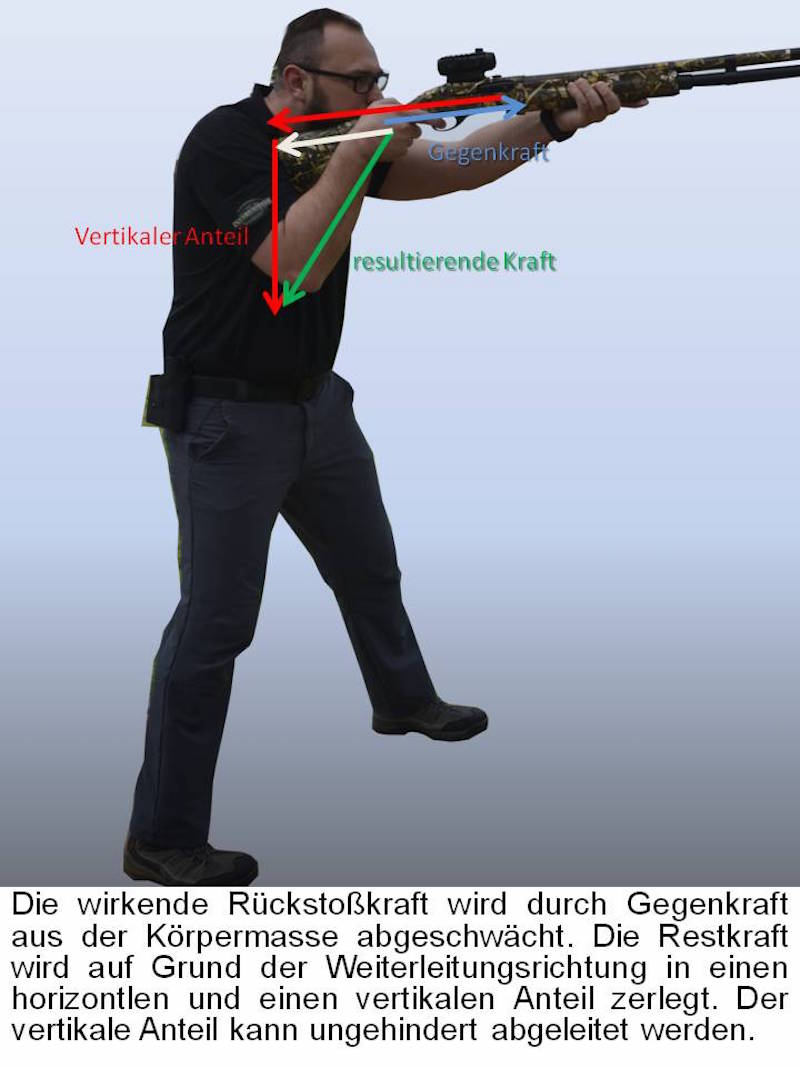
Unlike other standing positions, the body, through the center of gravity shift, leans forward beyond the body's midline in the direction of the shot against the direction of the recoil force. Therefore, a force directed against the recoil force is applied through the body mass. As a result, the force to be derived is reduced. Additionally, the force resulting from the body's posture with a diagonal force axis divides the resulting force into smaller horizontal and vertical components. With the "locked" bone structure, it is now possible to direct the remaining vertical force through the body into the ground without significant absorption. This prevents unnecessary stress on the body, and the posture does not need to be rebuilt after each shot.
This fundamental structure of the standing
SPARTANAT is the online magazine for Military News, Tactical Life, Gear & Reviews.
Send us your news: [email protected]
Ad
similar
Get the weekly SPARTANAT newsletter.
Your bonus: the free E-Book from SPARTANAT.
