Get the weekly SPARTANAT newsletter.
Your bonus: the free E-Book from SPARTANAT.

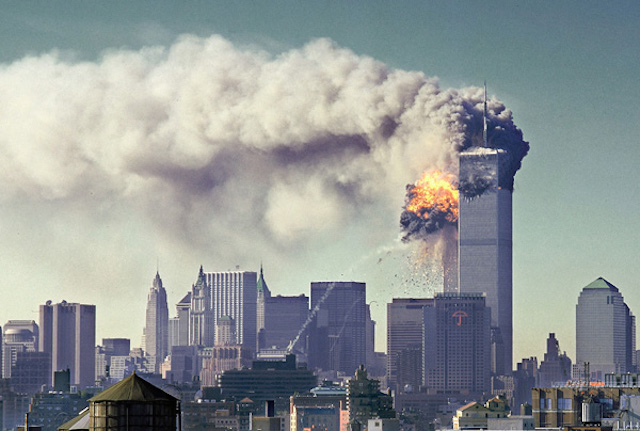
TERRORISM (3): What is new about the new terrorism?
Terrorism has evolved since the end of the Cold War, with a shift towards more brutal attacks targeting civilians directly. Different waves of terrorism have been identified, each with unique characteristics.

Since the end of the Cold War, terrorism has undergone significant changes. In research, it is referred to as the "new terrorism": It has become more brutal and targets the civilian population directly. Decentralized networks have formed around the idea of a "global jihad", people travel to war zones, and so-called "lone wolves" operate completely alone. Counterterrorism faces its limits.
Terrorism has many faces. From the Basque ETA and the IRA in Northern Ireland to the Colombian FARC or the RAF in Germany, from Al-Qaeda to the Islamic State: Often misunderstandings arise because the same word is meant to describe phenomena that are similar but not identical.
The Four Waves of Terrorism
The different temporal, spatial, and ideological backgrounds of the phenomenon of terrorism can be divided into four waves according to the US political scientist David Rapoport, namely
- the anarchist,
- the anti-colonialist,
- the new left,
- the religious
terrorism.
Rapoport locates the beginning of modern terrorism with the anarchists in Russia in the 1880s: Their strategy aimed – as with later left-wing extremist groups, but also nationalists in the Balkans (think of the assassination of Archduke Franz Ferdinand) or in India – at the assassination of prominent figures in politics and society.
In the 1920s, anti-colonial terrorism began; with the independence of numerous states forty years later (17 former colonies and protectorates were admitted to the United Nations in 1960 alone - including Benin, the two Congos, Nigeria, and Gabon), it ceased.
The new left terrorism overlapped with the (terrorist) struggle for independence: It emerged in the protests against the Vietnam War and was directed against "the West" and the capitalist system as such. Its tactics included hijackings as well as targeted killings or kidnappings of members of the social elite. For example, in 1979 the IRA murdered the British ambassador in Ireland; assassination attempts on British Prime Minister Margaret Thatcher (in 1984) and her successor John Major (1991) failed.
The last wave, the religious – mainly (but not exclusively) Islamist – terrorism dates back to two key events in the pivotal year 1979. Firstly, the fall of the Shah regime in Iran had a significant impact on Shiite terrorist organizations in other countries in the region, particularly Iraq, Saudi Arabia, Kuwait, and Lebanon. Secondly, many Muslims around the world responded to the call to fight against the Soviet invasion of Afghanistan - this was the origin of the present global jihadism.
The "New Terrorism"
With the end of the Cold War, a kind of "new terrorism" emerged as a continuation of this older religious trend. Here, the globalization of the 1990s merged with postmodernity, as Walter Laqueur described in a 1996 article for Foreign Affairs.
The resulting changes affect the essential characteristics of the new terrorism:
- its decentralized and informal organizational structure,
- its global orientation, and
- the selection of targets (the civilian population of the affected states).

To illustrate our... read more
SPARTANAT is the online magazine for Military News, Tactical Life, Gear & Reviews.
Send us your news: [email protected]
Ad
similar
Get the weekly SPARTANAT newsletter.
Your bonus: the free E-Book from SPARTANAT.
