Get the weekly SPARTANAT newsletter.
Your bonus: the free E-Book from SPARTANAT.

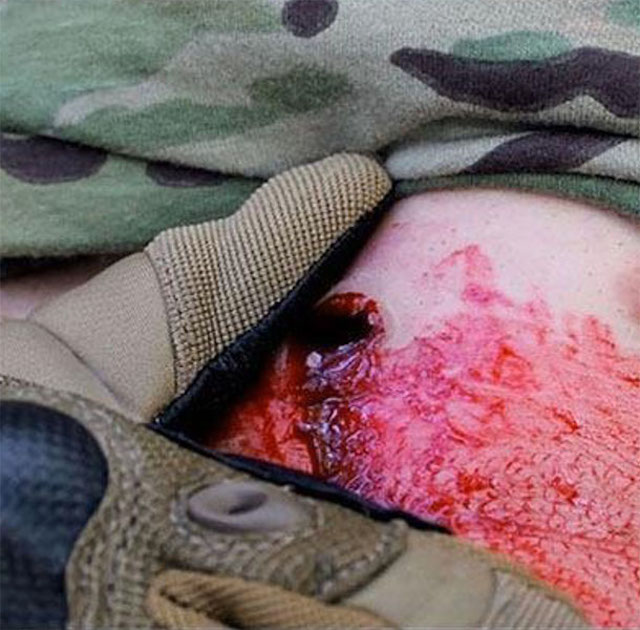
TB wounds: "Everything from bruises to open fractures is possible"
Professional makeup artists create realistic wound representations for first aid training. Using silicone, they make wounds that are realistic in appearance but harmless to the skin. The training helps prepare professionals in high-risk professions to respond effectively to injuries.

In professions with a high risk of injury, professional training and courses in the area of first aid care are of immense importance. Often, in accidents, it is only minutes that decide whether the patient lives or dies. The professional use of specially trained makeup artists, who are capable of creating realistic representations of wounds and using them during exercises, significantly contributes to the success of these training sessions – above, a reenacted gunshot wound. TB Wunden produces wounds, harmless in makeup, but brutally realistic in appearance. (Those who cannot see realistic injuries should not continue reading here.)
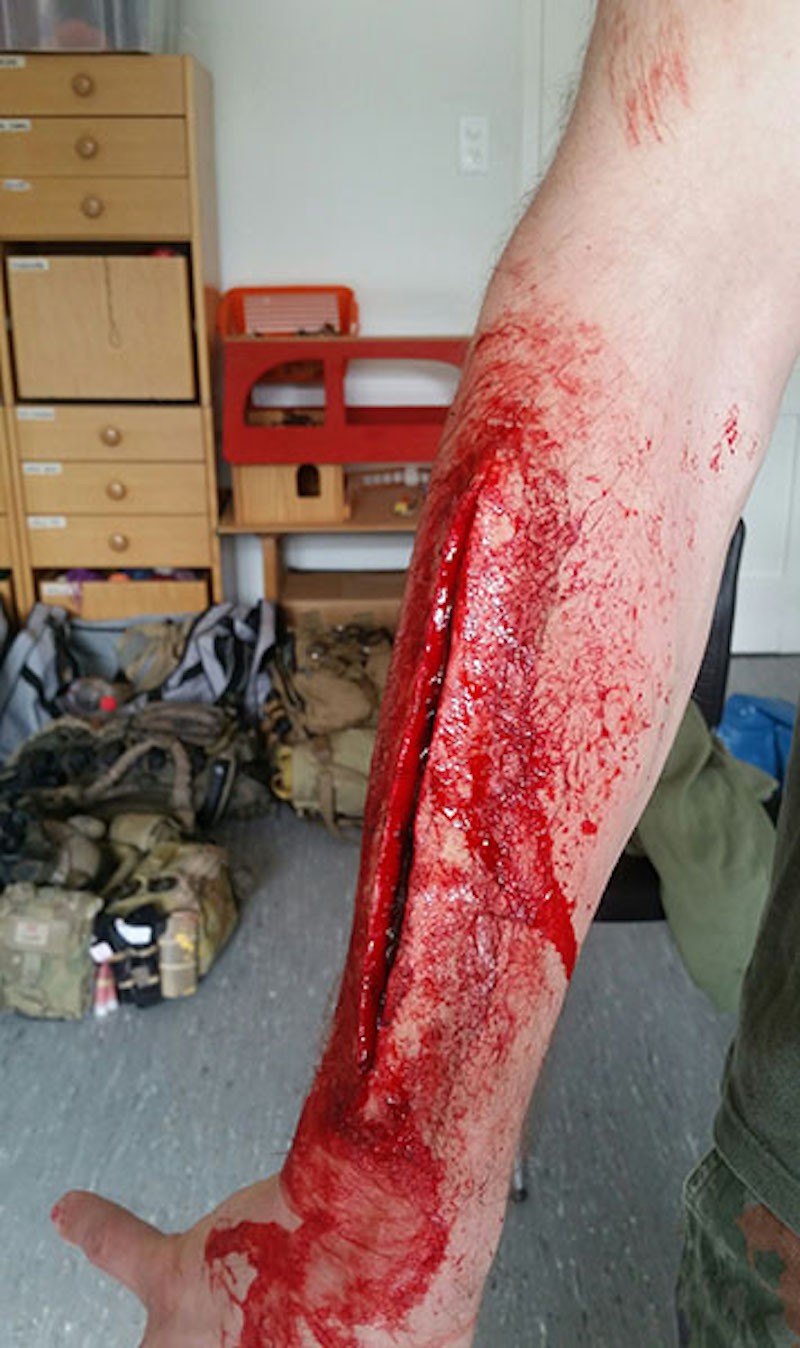
Large cut wound. Using various materials can create deceptively real 3D wound representations.
The Realistic Injury Demonstration (RUD) was originally developed in collaboration with the Swiss for military purposes and later introduced by the British Army. The aim was to "accustom" soldiers to the sight of the injured before an operation, in order to maintain their rapid ability to act despite the grim images.
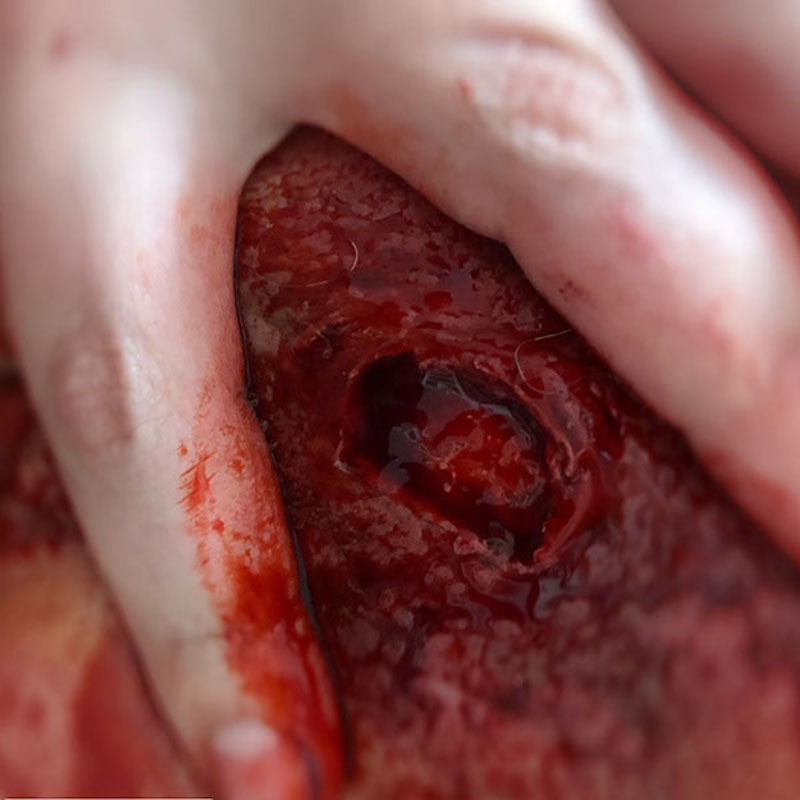
Explosions can cause serious injuries depending on the intensity. Here is a shrapnel injury.
In Switzerland and Denmark, in 1944, the first documents were created and tools were developed to realistically and scenario-specifically represent various injuries. In Germany, injury cards were used until 1950. In 1954, sheets from the Youth Red Cross on realistic injury representations were first published. In 1964, the makeup kit "Mehlem" was developed to improve the material supply for representations.
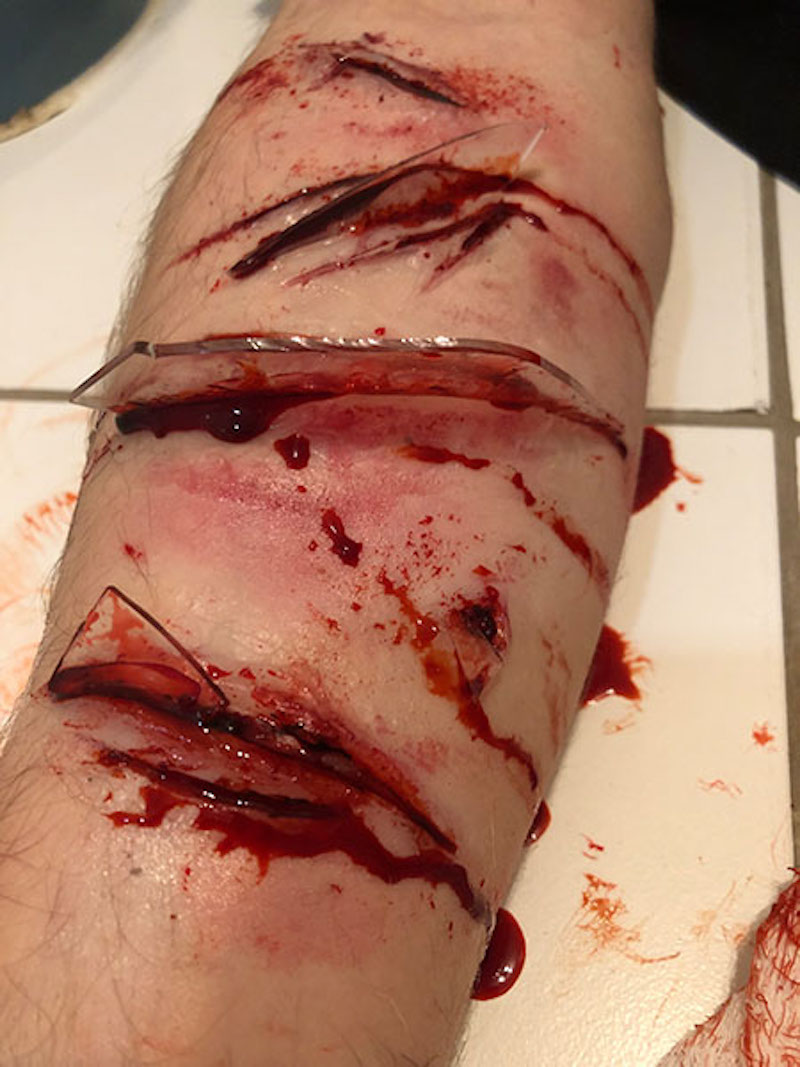
Multiple wounds at once: simulated glass shard cuts.
With the increased number of international deployments of the Bundeswehr (German armed forces), new types of injuries arise, making a very good representation of wounds vital for training. However, in other areas outside the military as well, whenever serious injuries can occur, such as in companies working with heavy machinery, with the police, the fire department, hunting, and also in everyday life, a solid and as realistic as possible knowledge of first aid has become an important issue.
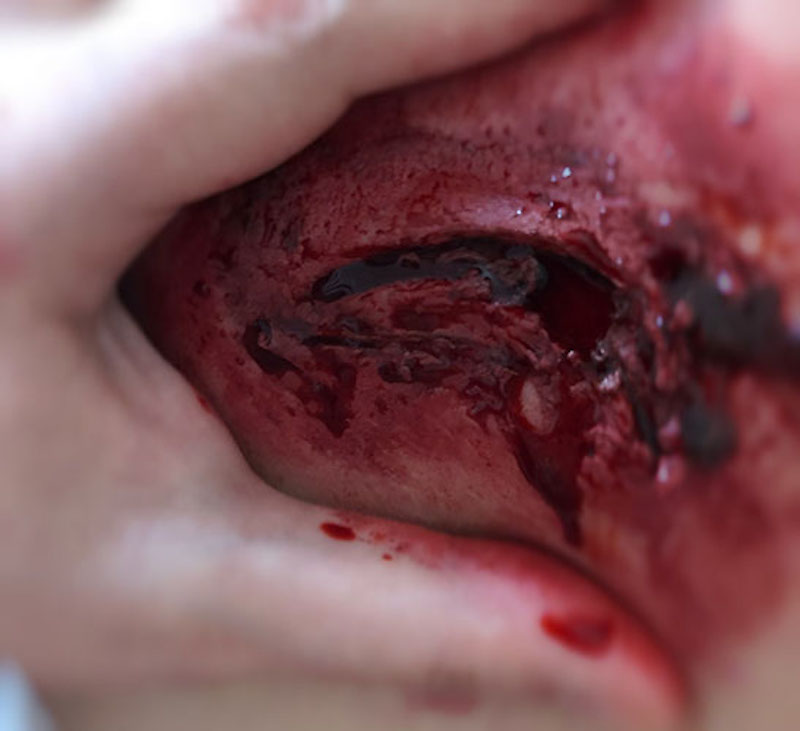
Wound caused by a knife. Rapidly stopping the bleeding is vital in emergencies.
There is a wide range of materials available to create a lifelike wound representation. In addition to various household items such as syrup, glue, or baking powder, over time a variety of silicone types and special colors specifically developed for creating wounds have been added. This area, and the work on wound representations, is known as "Special FX Makeup."
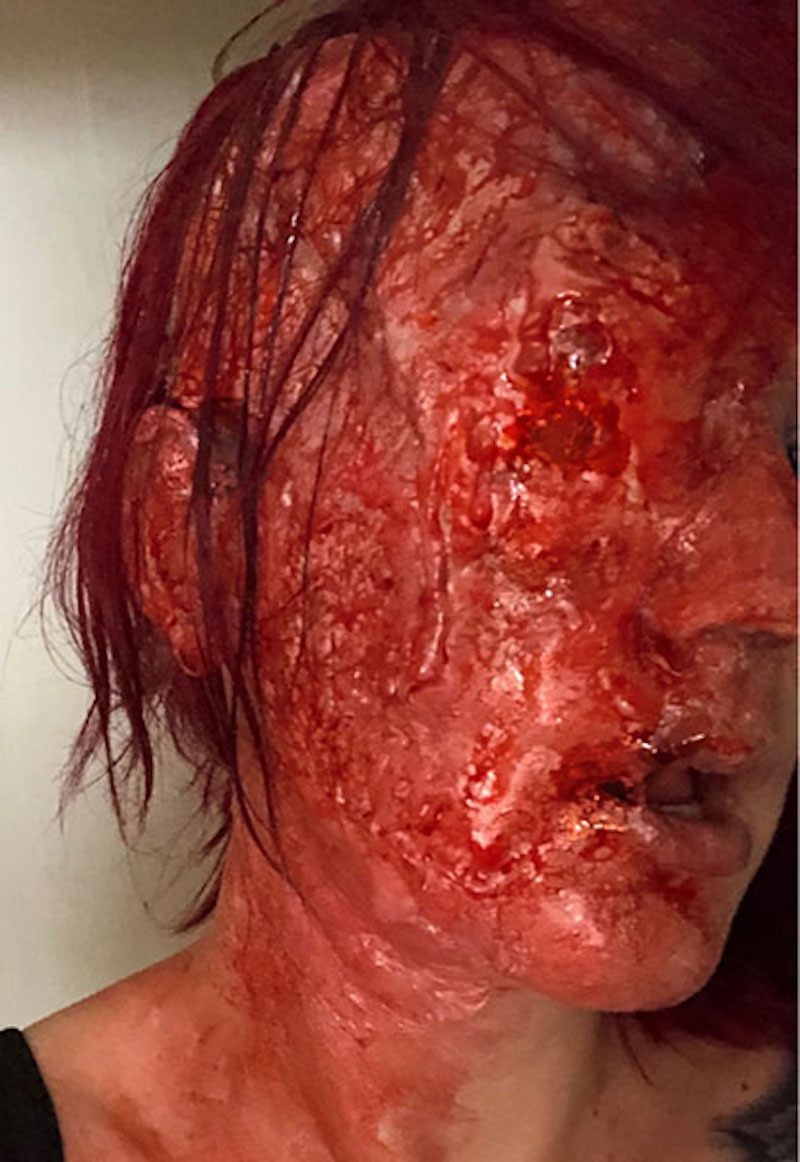
Burn of the entire left side of the face.
TB Wunden works almost exclusively with silicone to ensure good adhesion to the skin and a very realistic stretchability of the wounds. The material allows the desired injury patterns to be prepared before the project, resulting in the makeup being applied and designed very quickly, saving valuable time and costs.
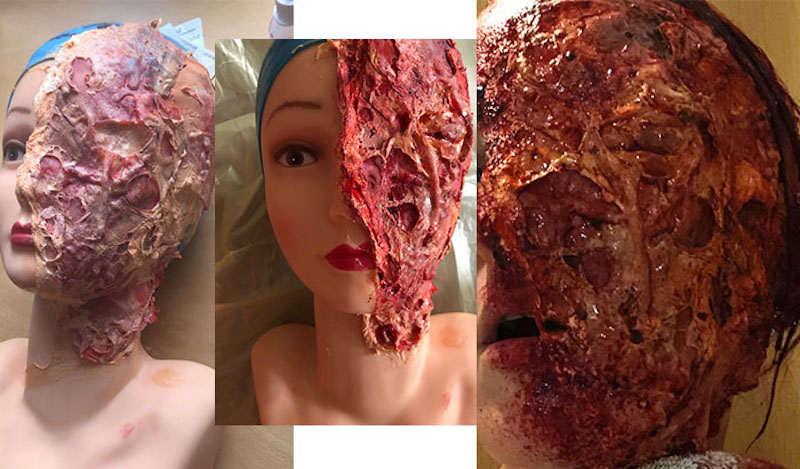
"Success in all things depends on preparation," Poeteus. Creation process of a facial burn. Burns of any kind are among the most severe pains.
Years of experience in authorities and institutions regarding which scenarios with wound representations should be included in the respective training led to the need for the involved makeup artists to work swiftly and pragmatically, in order to enable a rapid completion of the individual stations. Today, due to the very good and strong adhesion on the skin of the injured, a somewhat rougher handling of the represented wound is possible, without it smudging or shifting. Additionally, the wound can be reused multiple times and placed in different locations.
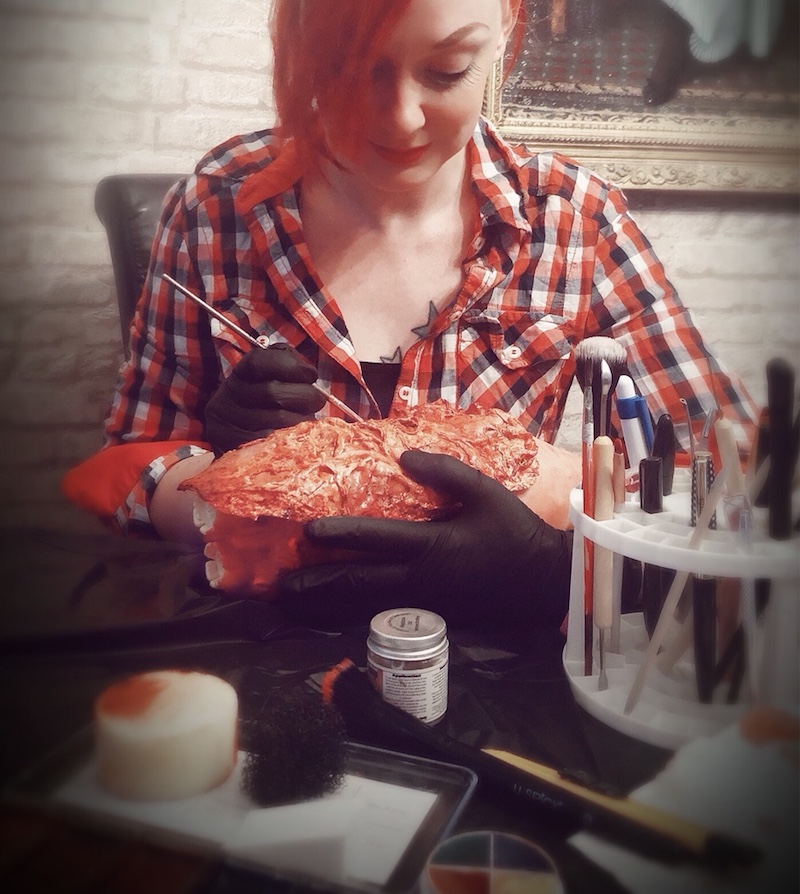 Customer requests at TB-Wunden are always individually tailored to the client and developed in a joint concept. For more information, please contact: [email protected] or LinkedIn: TB Wunden
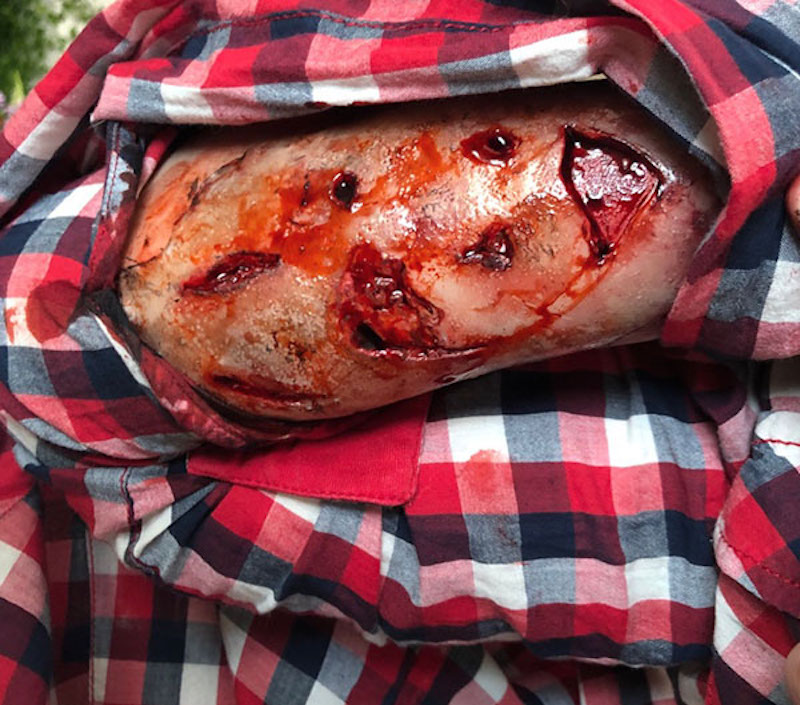
Defensive injury on the left forearm. Constant, as realistic as possible practice of various accident scenarios is of enormous importance to be able to cope with stress.
SPARTANAT is the online magazine for Military News, Tactical Life, Gear & Reviews.
Send us your news: [email protected]
Ad
similar
Get the weekly SPARTANAT newsletter.
Your bonus: the free E-Book from SPARTANAT.
