Get the weekly SPARTANAT newsletter.
Your bonus: the free E-Book from SPARTANAT.

SPARTANAT in northern Iraq 1: On the way to the front
In the heart of Iraqi Kurdistan, a Private Security Company navigates the dangerous front lines against ISIS. Western volunteers sacrifice everything to fight, facing challenges of limited resources and political complexities. Explore their mission in this gripping account.
It only takes 30 minutes towards Mosul for the traveler from Erbil, the capital of the Iraqi autonomous region of Kurdistan, to reach the front lines against the Islamic State - derogatorily referred to as "Daesh". The Kurdish metropolis itself appears calm and peaceful. However, those who arrive here are easily deceived. Barely any security checks. Relaxed Iraqi officials. If it weren't for the midnight arrivals of Western-trained individuals carrying conspicuously long Peli Cases, swiftly crossing the arrival hall... If it weren't for the Blackhawk helicopters flying into action from a base near the airport before dawn... No, there are no "Boots on the Ground," assures the US Department of Defense, definitely not.
We at SPARTANAT accompanied a Private Security Company (PSC) in Northern Iraq in their work, traveling with the people from Trans Atlantic Viking Security (TAV) towards the borders of Kurdistan. Goal: the front lines in the fight against the Islamic State. The journey there: from Erbil to Kirkuk, and from there, further south to the headquarters of an Iraqi general. Beyond Erbil, the "wild" Kurdistan begins. We travel in armored vehicles, the escorts armed, all having received a safety briefing beforehand. It's not unusual for a vehicle to be shot at. Improvised Explosive Devices (IEDs) are also possible. We manage to evade these threats, but the conversation between the vehicle commander and the driver en route is telling enough: "Hey, isn't this the spot where we were hit last time? It was a small charge, luckily only cost us a tire and a fender."
On the way to Kirkuk, our vehicles pass through several checkpoints, where we - clearly identifiable Westerners - are waved through. The terrain becomes less hilly, with arid plains taking over the landscape. 45 minutes to Kirkuk, but it feels much further on the map. As we drive through, observers spot patrols roaming the streets of Kirkuk. Compounds fortified at the roadside were visible before the city, appearing as if left behind by the Americans. However, beyond Kirkuk, the Islamic State reaches almost to the edge of the highway. From here, you can observe the positions of the Kurdish defenders from behind, sometimes as individual mounds with mini-bunkers on top, other times as a continuous wall resembling a sliced trench. "The smoke over there," the driver says, "that's where ISIS is."
"I want to fight the Islamic State here, and if it's quiet, I will go to Syria. If it's quiet there, I will go to Libya."
We weave through Hescos, stone-filled wire baskets, and enter a base, being directed to a paneled room with heavy seating. Brigadier General Aras greets us warmly. He is responsible for a long stretch of the front lines with Peschmerga - Kurdish units and the Iraqi Army. Initially, local politicians are also present in the room. Kirkuk is no longer part of the Kurdistan Autonomous Region. However, the Peschmerga stand at the front lines here. "We must jointly organize the defense here, everyone is pitching in," the General explains. He studied in Sweden. His wife is a geneticist, he tells us. The door opens, a subordinate brings a message. It's clear that it's not good news... The note states that a car bomb has exploded. The General's dismay is evident. The fact that the enemy has struck again... "It's not easy here," he says, as if offering an apology.
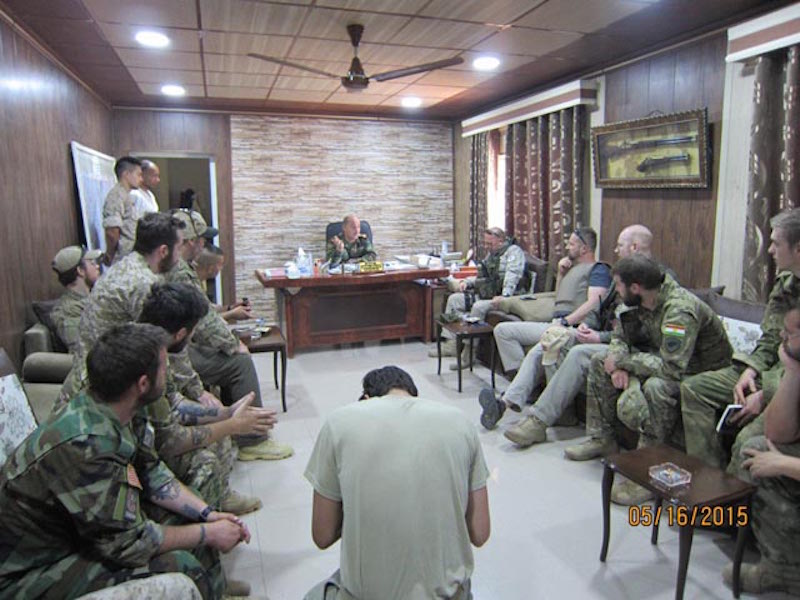 The front is stable, the General informs us. But they are facing problems. Supplies and logistics do not always function seamlessly. However, his bigger concern is that his soldiers have only recently received their pay for March. The fact that simultaneously all "government employees" in the ISIS-occupied Mosul received their money on time raises serious concerns. These were funds that had essentially gone directly to ISIS from the Iraqi government. The alleged reinforcement with Shiite militias is also seen as very problematic here at the headquarters: there have already been clashes where a Kurd was killed. There is a fear that once the Shia militias are in a place, they will not leave. They also patrol through Kirkuk.
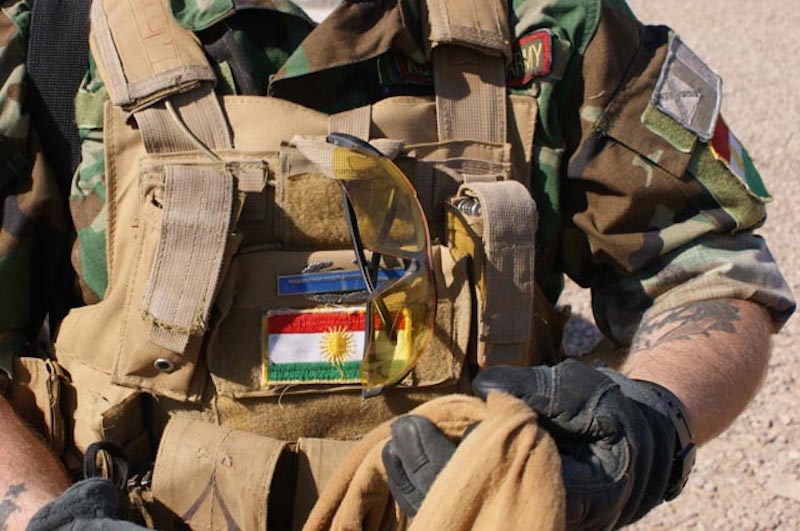
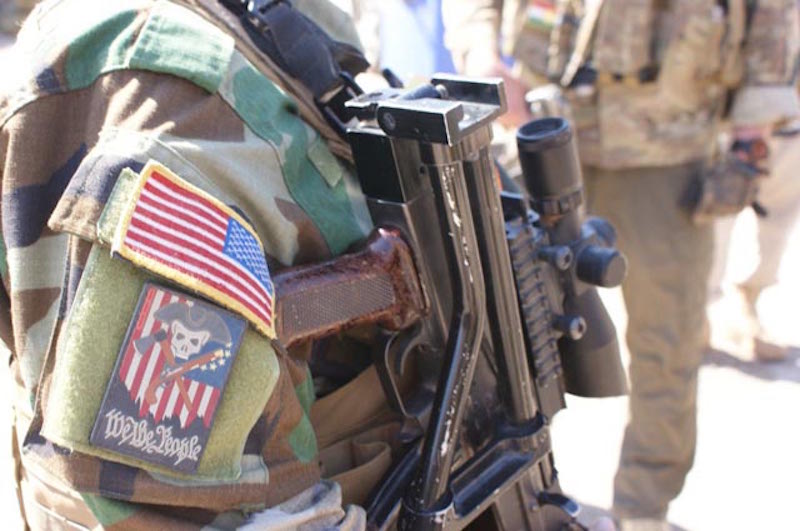
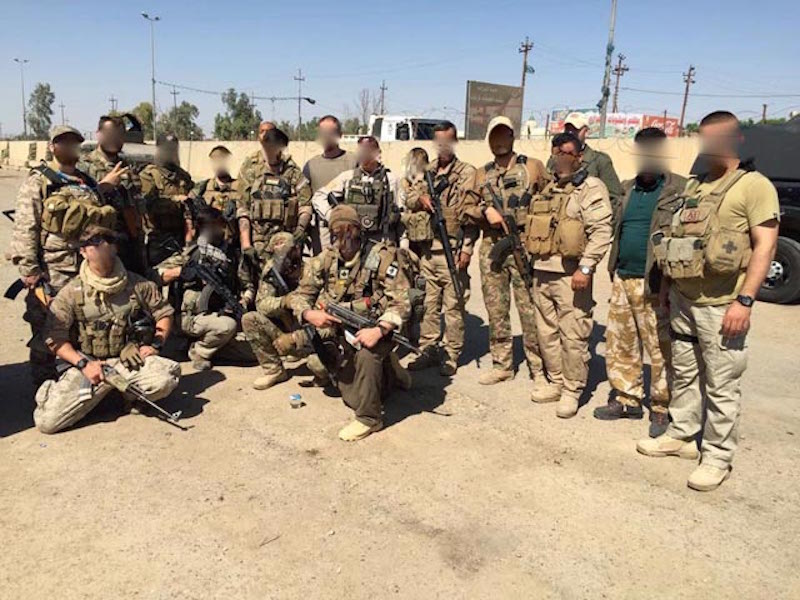 But General Aras wants to show us something else. His rapid response unit, composed entirely of volunteers from the West who have joined the Kurdish Peschmerga in the fight against the Islamic State. The surprise is revealed... Two young men enter through the door, visibly neither Kurds nor Iraqis, then three more, and ultimately a few more. Greetings in American English. Most of the 15 men are Americans, a few Canadians, one European. Some of them are former Marines, one wears the US Army Infantry Combat Badge on his Plate Carrier, one admits he had never had any military experience before. The group ranges in age from 20 to 30, with a few outliers towards 40.
"I want to fight the Islamic State here," one of them declares. He had been in the country twice before with the Marines. Action must be taken now. "My war is not over yet." "You have to fight them," another tells us. "I'm here now, and if it's quiet, I will go to Syria. If it's quiet there, I will go to Libya." Many of the volunteers have given up everything to fight ISIS at its source.
Not just one has mentioned selling his car to have the money for a plane ticket and some equipment. One of the medics arrived with medical supplies (bandages, tourniquets, etc.) worth over $2,000. By now, he barely has enough for his own IFAK. Another volunteer was in the Army before. After two IEDs and presumably PTSD, the Army didn't want him anymore. Now he is back with his "family," with a fighting unit. "We have vetted all the people who have come to us with the authorities," the General later tells us. "We want to know exactly who is coming here." The CIA and European police also want to know. It will surely be interesting conversations if one of them wants to return home months later. However, this is not the case for all volunteers. Some said they would actually prefer to stay in Kurdistan for good.
HERE is the link to the second part: In the front line
SPARTANAT is the online magazine for Military News, Tactical Life, Gear & Reviews.
Send us your news: [email protected]
Ad
similar
Get the weekly SPARTANAT newsletter.
Your bonus: the free E-Book from SPARTANAT.
