Get the weekly SPARTANAT newsletter.
Your bonus: the free E-Book from SPARTANAT.

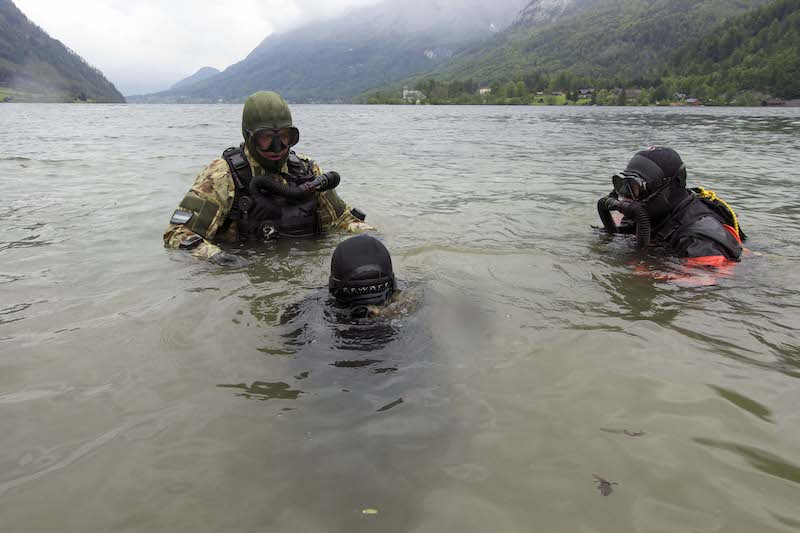
SPARTANAT Experience Day: Blister-free in the mountain lake
Diving with tactical rebreathers is a unique experience, especially for civilians. Outer-limits and SPARTANAT Gearmag organized a taster day, providing insights into the design and operation of rebreathers used by special forces. The event showcased various models and highlighted the differences between military and civilian versions. Stay tuned for future diving events by Outer-limits. For more information on rebreathers and training, visit www.outer-limits.at.

Diving with tactical rebreathers, as used by special forces, is not something that happens every day. In May, one of the leading providers of diving equipment for special forces, the Austrian company outer-limits, together with SPARTANAT Gearmag, organized a taster day: at the TacReb Exploration, civilians could experience what it's like to dive with real rebreathers.
The covert approach over open water is considered the pinnacle of maritime special forces operations. Whether they are inserted through torpedoes from submarines or brought close to the operation area by helicopters, they usually cover the last kilometers underwater. They rely on rebreathers which follow a simple design principle that allows for long dive times and does not release any tell-tale bubbles.
Unlike conventional scuba diving gear, the exhaled air is captured in a flexible container called the "counter lung," the exhaled carbon dioxide is bound in absorbent, and pure oxygen is added as needed. This theory was put into practice this May at the Grundlsee in Styria for interested divers with appropriate scuba experience. outer-limits, one of the world's leading suppliers for maritime Special Operation Forces, brought along primarily the compact Siel Caimano CDV and classic models from Dräger, providing a brief introduction to the interested diving group.
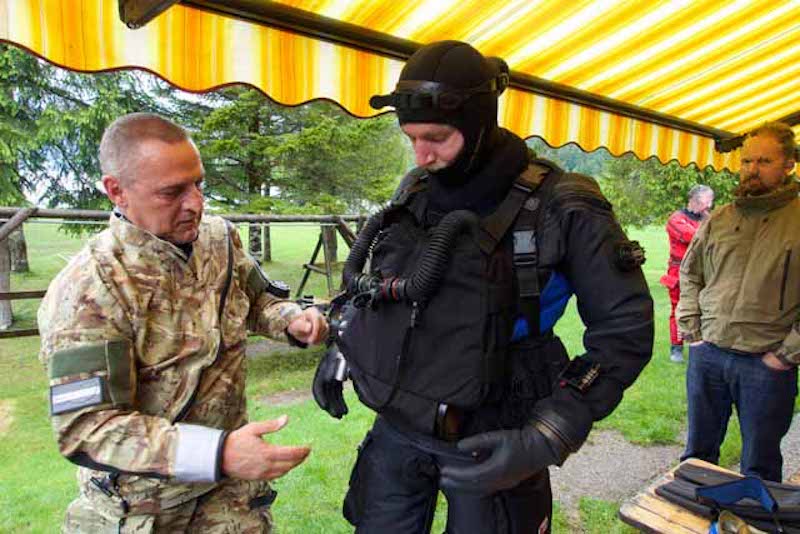 Military rebreathers are typically worn on the chest to provide optimal buoyancy and better handling while diving. Thomas Oswald from outer-limits, in a camo drysuit, checks for the correct fit.
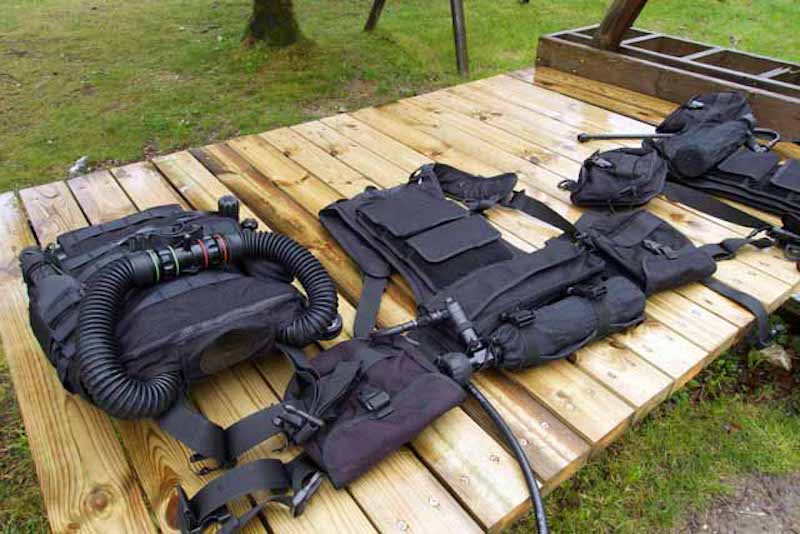 The Caimano by Siel is characterized by its compact size and easy operation. The difference between the military and civilian versions, which are also distributed by outer-limits and freely available, is only the expensive, non-magnetic equipment. However, this is only relevant for mine divers, as it helps prevent premature detonation of the charges.
Rebreathers from the German company Dräger have long dominated the military market. The current model Mark VII (pictured here with the flexible "counter lung" on the back) also allows for the use of Nitrox and therefore greater diving depths compared to operating with pure oxygen.
The heart of rebreathers is the container with the absorbent (in the foreground the user-friendly model by Siel). This container must be carefully filled and sealed before diving. If a large amount of water were to penetrate the device, it could lead to the formation of caustic substances and cause burns.
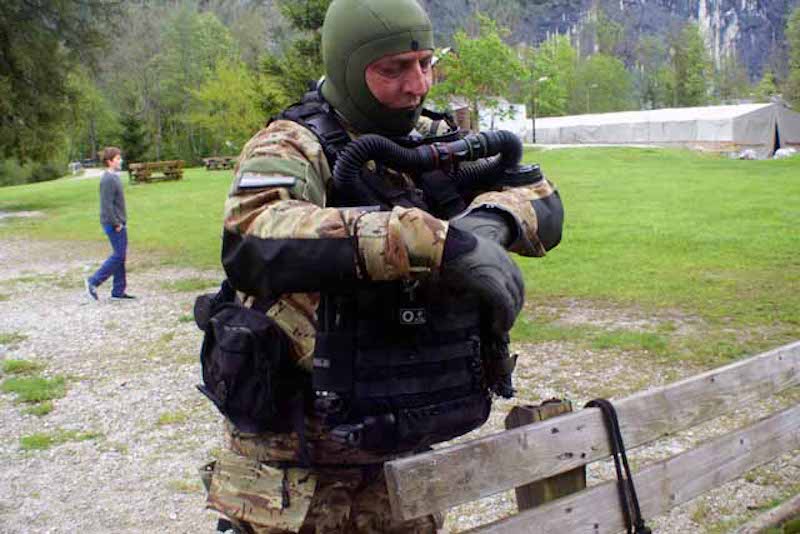 Thomas Oswald getting ready to dive. The boss of Outer Limits trains maritime special units worldwide on rebreathers. In the image below, you can see the tank of pure oxygen which, when combined with the absorbent, allows for dive times of up to three hours.
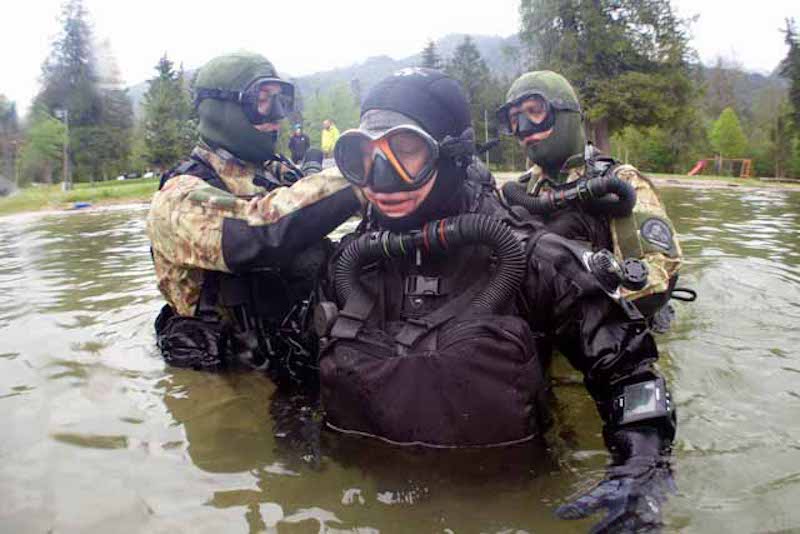 Thomas and Lukas Oswald conducting final checks on a participant of the experience day. The voluminous hose, through which breathing must be done consciously and deliberately, is initially very unfamiliar to scuba divers. A valve in the middle can be opened and closed to prevent water from entering the device on the surface.
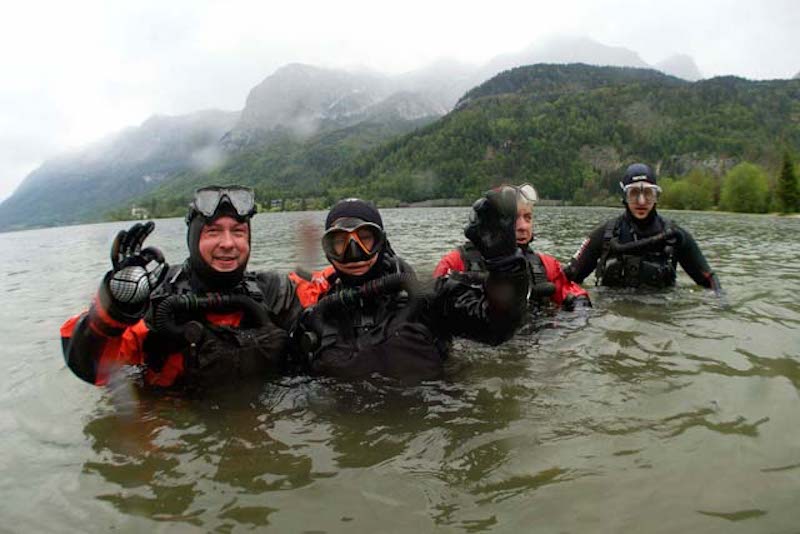 A group ready to dive. Everyone is wearing drysuits, as is customary for special forces. However, they do not regulate buoyancy through the suit to avoid excessive oxygen consumption. The divers are "hard-vacuumed" by the ambient pressure, which is not a problem at depths up to 6 meters relevant for oxygen-rebreathers.
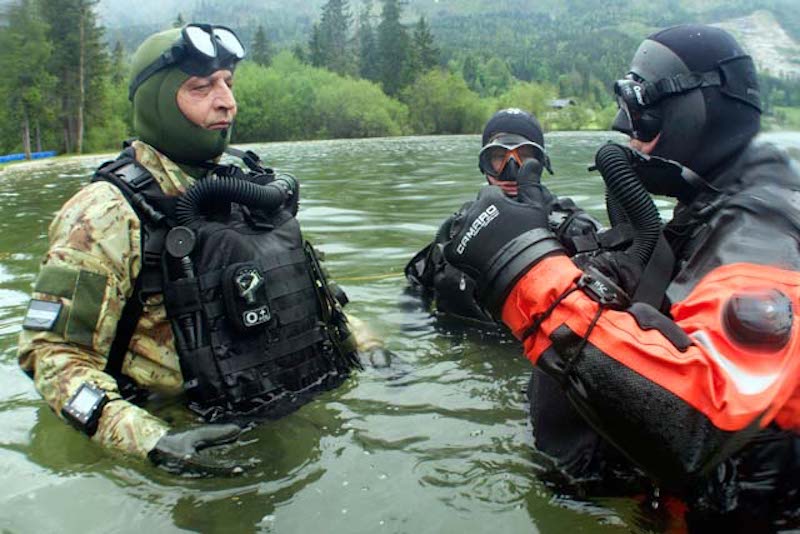 Just before diving, the ambient air, which is a mix of oxygen, nitrogen, and noble gases, is exhaled before pure oxygen operation begins. This is a conscious process that requires three to four breaths.
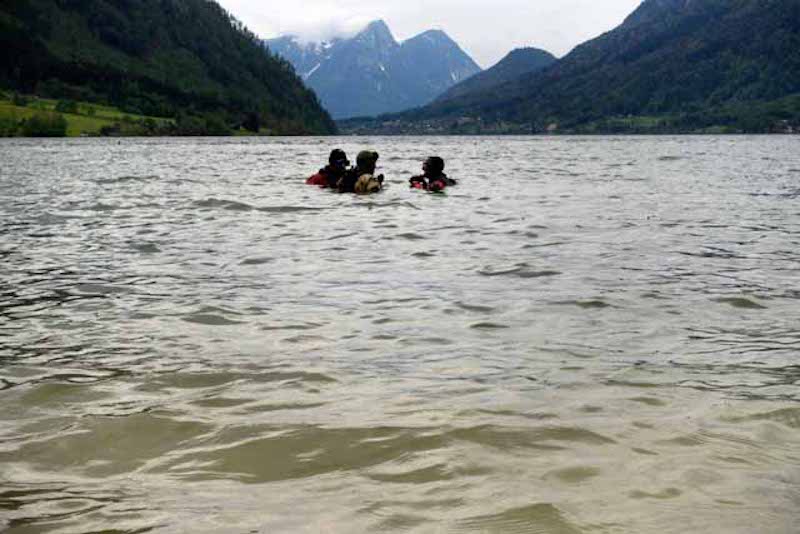 Off they go into the depths of a very murky, turbulent Grundlsee, providing the perfect backdrop for testing tactical rebreathers. This day was an experience for all involved. Special thanks to outer-limits for making this unique diving experience possible and providing dedicated support.
A repeat of this TacReb Exploration diving day with outer-limits is planned. Stay tuned for more information on SPARTANAT.
For questions about military and civilian rebreathers, as well as related training: www.outer-limits.at
SPARTANAT is the online magazine for Military News, Tactical Life, Gear & Reviews.
Send us your news: [email protected]
Ad
similar
Get the weekly SPARTANAT newsletter.
Your bonus: the free E-Book from SPARTANAT.
