Get the weekly SPARTANAT newsletter.
Your bonus: the free E-Book from SPARTANAT.

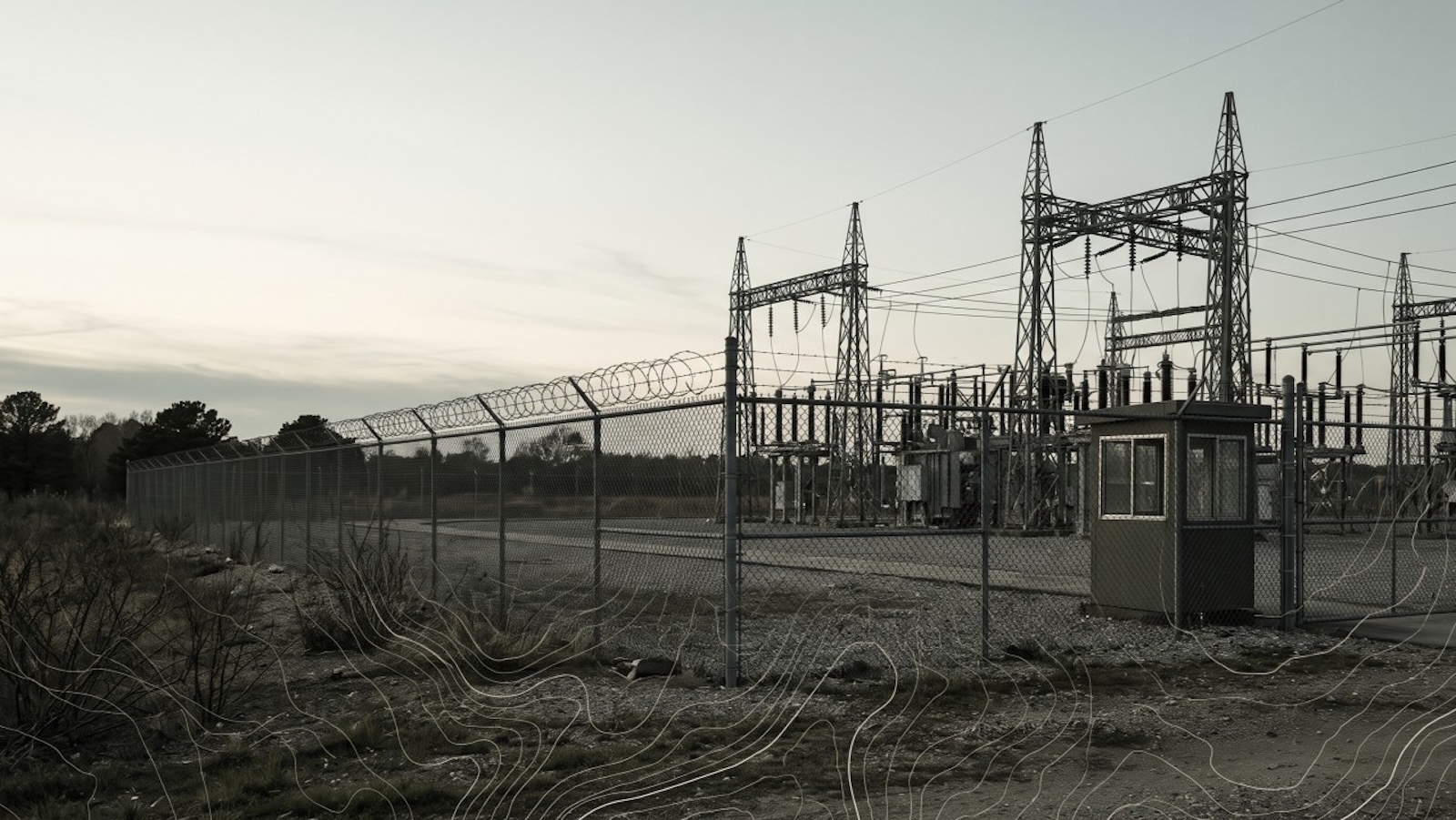
So far, whoever fends off the drone is liable
The authorization of private operators for drone defense does not conflict with the Constitution but lacks liability provisions. The debate centers on authority, costs, and responsibility. Recent legal developments strengthen state authority while expanding criminal liability, yet the operator's role remains unclear amid funding uncertainties.

The authorization of private operators to provide drone defense does not run afoul of the Constitution, but rather stems from the lack of a liability provision. This mechanism has existed since 1965: armed civilian security guards patrol Bundeswehr properties, authorized and under supervision. To this day, there is no legal basis for defense over a substation, and the ongoing debate fails to address the question of who will ultimately foot the bill, according to SPARTANAT author Jan Hesselbarth.
The dispute has reached the cost issue this week
At the general meeting of the BDLS (Federal Association of Aviation Security Companies) in Berlin, the aviation industry took a stand. Defending against targeted drone attacks is a sovereign task, said Dr. Isabel Weiss, Head of Security at the Federal Association of the German Aviation Industry. Ralph Beisel, Chief Executive Officer of the Airport Association, warned of a cost spiral for the industry: No one can estimate the necessary follow-up investments, and since the Federal Ministry of the Interior and the German Federal Police are responsible for the systems, they should also pay for them.
This brings to the table what the debate has been circling around since August. The question of authority is one half. The questions of cost and liability are the other.
Legal developments in October
The Act on the Modernization of the Federal Police Act of October 22, 2026, was published on October 27, 2026, in the Federal Law Gazette, Part I, No. 318, and has been in effect since October 28, 2026. For the first time, it contains an explicit provision regarding drones: To avert a danger posed by unmanned vehicle systems operated on land, in the air, or on water, the Federal Police may use appropriate means, including weapons, against the system, its control unit, or the control link.
At the same time, criminal law measures are being implemented. At the initiative of the state of Hesse, the Bundesrat decided on October 16, 2026, to submit a draft bill to the Bundestag that would add the criminal offense of “treasury-harming trespass” to the Criminal Code; unauthorized overflights of critical facilities using drones would also be punishable. According to the proposed Section 123a(2) of the Draft Criminal Code (StGB-E), a drone would not need to damage the facility or actually disrupt its operation. A decision by the Bundestag is pending; there is no deadline.
My assessment: In four weeks, the legislature has strengthened state authority and expanded the scope of criminal liability. It has not touched the operator’s authority. For you as an operator, this means: detection, classification, preservation of evidence, and triggering an alarm are permitted. The use of force remains the exclusive prerogative of the police. Criminal law applies after the fact. It will not help you within the 60- to 90-second response window.
This provision has existed since 1965
This is where my argument begins, and it is based on current law. According to Section 1(3) of the UZwGBw, anyone who, without being a soldier, is assigned military guard duties by the Bundeswehr has the powers under this law when lawfully performing these duties. The Scientific Services of the Bundestag clearly classify this as follows: For private security services, § 1 of the UZwGBw provides for the delegation of authority, whereby civilian security personnel may be entrusted with military guard duties of the Bundeswehr. The fact that these personnel are armed is stipulated in the Ministry of Defense’s administrative regulation regarding the Weapons Act: § 28 of the Weapons Act (WaffG) applies to civilian security personnel of commercial security firms, and they are issued a service and weapons permit.
The second precedent is found in aviation security law. Under § 16a of the Aviation Security Act (LuftSiG), the competent aviation security authority may delegate the performance of certain tasks to natural persons as well as legal entities under private law as delegates, whereby the delegate is subject to the supervision of the authority that granted the delegation.
For sixty years, Germany has entrusted private entities with armed security duties, under state supervision and in accordance with state-established standards. The question, therefore, is not whether the legal system can handle this. It can.
The point at which the debate has stalled so far
Anyone applying for such authorization expects to be granted the legal status of a public official. In the associations’ view, this includes the privilege of limited liability. In its position paper, the BDEW (Federal Association of the Energy and Water Industries) explicitly cites the liability privilege of civil servants under Article 34, sentence 2, of the Basic Law (GG), with recourse permitted only in cases of intent, and calls for the state to assume liability; granting the status of a public authority to undertake the sovereign task of drone defense could be considered at the request of the operators.
This expectation does not hold up on its own. On August 26, 2010, the Federal Administrative Court ruled on the delegation of authority to a private monitoring body: The limitation on recourse under Article 34, sentence 2, of the Basic Law does not apply to private individuals, even if they act in a sovereign capacity as public officials for the purposes of liability law. The court justified this by citing the purpose of the provision, which protects the employer’s duty of care toward its own employees, and found that this purpose is not fulfilled in the case of private individuals outside the public service.
The counterargument in the same ruling is equally important. Permitting recourse against the grantee even in cases of simple negligence is one of the modalities subject to statutory regulation, and the allocation of liability in the internal relationship requires a statutory basis, regardless of whether the grant of authority occurs through an administrative act, a contract, or by other means. If the legislature intends to provide for broader recourse, it must take into account the amount of damages, the frequency of damages, the economic consequences for the borrower, insurability, and the possibility of denying the loan.
My assessment: The question of liability is a legislative task that no one has yet addressed. Without an explicit legal provision, the borrower’s position is worse than that of a civil servant, and the state cannot retroactively regulate it by administrative decision or contract. Consider the implications in the event of debris falling on a residential development, and you will see the scale of the issue.
Added to this is the issue of financing. In Brandenburg, the state that has made the greatest headway, a ministry spokesperson stated that, as things stand, the state does not plan to provide financial support for such measures; the grant of authority is to be granted only upon application by the respective operator. There is no provision requiring a company to be granted sovereign powers, and an application does not automatically lead to the grant of authority.
Granting authority without liability provisions or cost regulations shifts the responsibility downward and leaves the risk there. That is not an offer; it is a shift.
Three differences from the barracks that I would like to highlight
First, the scope of the intervention. The civilian security guard secures a federal property over which the federal government has dominion. The effect against an aircraft extends beyond the fence, onto neighboring properties, traffic routes, and people.
Second, the legal framework. Coercion on the ground is comprehensively regulated in the UZwGBw. For effects in airspace, aviation law, Section 315 of the German Criminal Code (StGB), firearms law, and frequency law—with allocations by the Federal Network Agency—apply in addition. Delegation of authority does not resolve these layers of regulation.
Third, jurisdiction. The new authority lies with the Federal Police. Regarding their area of responsibility, the Scientific Services state: Within the Federal Police’s jurisdiction, delegation of authority is not provided for by law and is therefore impermissible. Private sector involvement in that area requires a separate legal provision.
The opposing position deserves a response
Aviation lawyer Nina Naske took a different stance on August 26, 2026. Her column “Drone Defense at the Airport: Self-Defense Instead of Delegation of Authority” explains the powers of public authorities, delegation of authority, self-defense, and states of necessity, as well as C-UAS measures, and argues for a return to the general public’s rights of self-defense.
The argument carries weight: self-defense and states of emergency take effect immediately, without authorization procedures, without a new training structure, and without a fee schedule. My response to this: emergency rights are suitable for individual cases and for justification after the fact. They are not suitable as a basis for planning an investment decision involving six- to seven-figure sums. No executive board will procure a system whose use it must later justify to a prosecutor. It is precisely this uncertainty that is preventing investments today.
What this means for your company
The market is there. The private security industry employs 290,674 people and generates 14.02 billion euros in total revenue across 5,954 companies. What’s lacking is the qualification base. The Security Services Ordinance requires 40 hours of training or a proficiency exam, and the Security Services Act—which is intended to replace it—has been on hold since the coalition broke up at the end of 2024 and, as of 2026, is not in force. The Federal Ministry of the Interior lists the draft as “discontinued.” There is a training gap between 40 hours of instruction and an operator working in airspace—a gap that no one has yet quantified.
What is possible today has been possible for a long time. Detection systems are in operation at seven of eight major airports; in Stuttgart and Hamburg since October 5, 2026; Leipzig/Halle is set to follow, and only the Federal Police are authorized to carry out countermeasures.
JAN HESSELBARTH, as co-founder and managing partner of BRAVO SIX ADVISORY GmbH, is responsible for the defense division and brings over 20 years of operational and strategic leadership experience from the German Armed Forces, federal agencies, and the private sector. As a paratrooper officer and Joint Terminal Attack Controller (JTAC), he was responsible for territorial tasks and host nation support at the Hamburg Regional Command following a deployment in Kunduz, Afghanistan. His consulting portfolio includes NATO missions, programs involving up to 1,000 participants, training contributions for more than 5,000 Bundeswehr personnel, and co-authorship of a nationwide study on maritime security for the Federal Ministry of the Interior—a core topic in the context of KRITIS.
BRAVO SIX ADVISORY online
SPARTANAT is the online magazine for Military News, Tactical Life, Gear & Reviews.
Send us your news: [email protected]
Ad
similar
Get the weekly SPARTANAT newsletter.
Your bonus: the free E-Book from SPARTANAT.
