Get the weekly SPARTANAT newsletter.
Your bonus: the free E-Book from SPARTANAT.

Skills Shortage Becomes a Procurement Signal
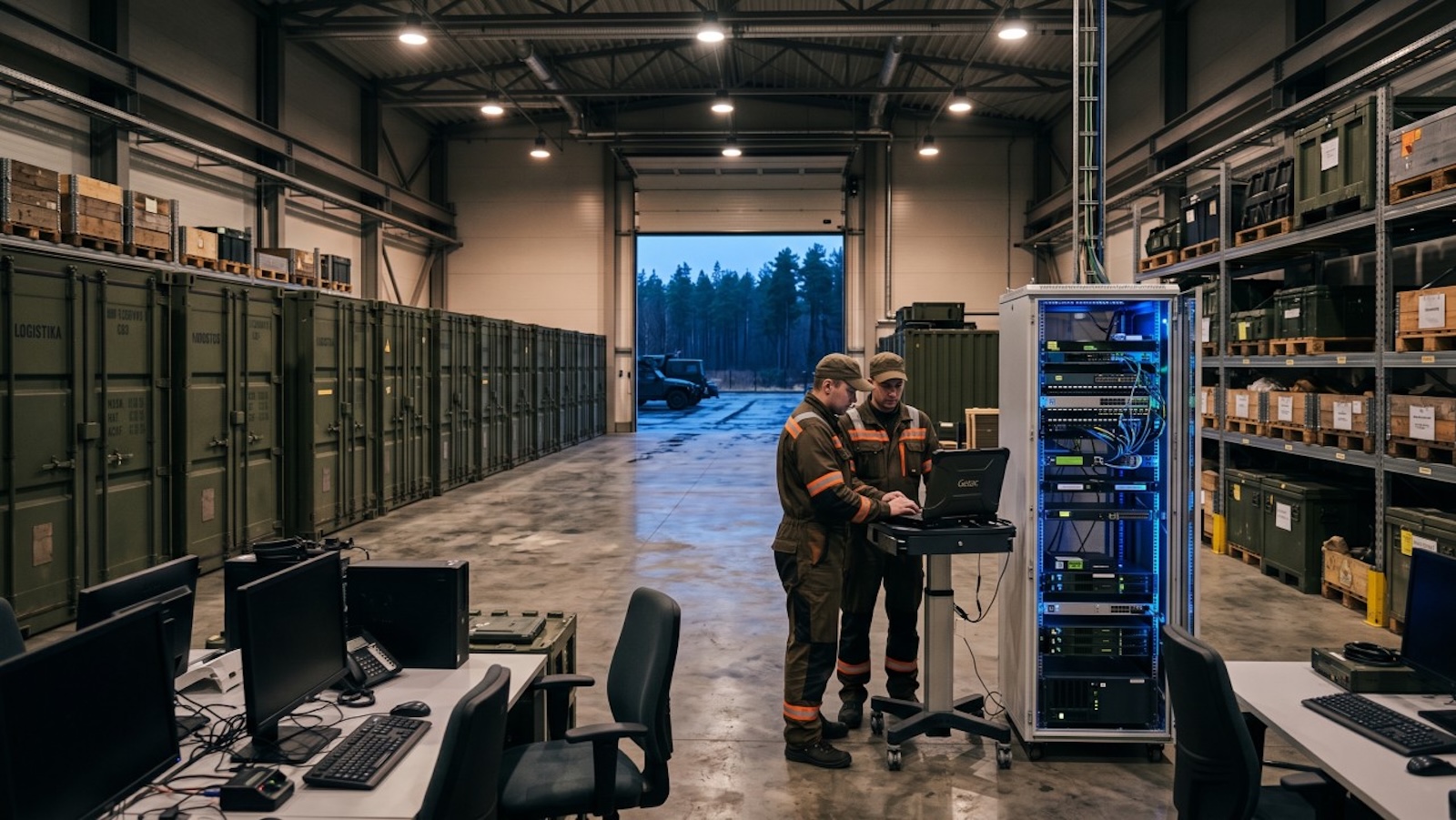
On September 14, 2026, Germany's Ministry of Defense announced mandatory transfers to fill remaining positions in Tank Brigade 45 in Lithuania, driven by a shortage of qualified personnel, particularly in logistics and IT. This reflects a broader trend of increasing demand across military and civilian sectors, impacting service provision strategies.

On September 14, 2026, the Ministry of Defense decided to fill the remaining positions in Tank Brigade 45 in Lithuania through mandatory transfers and secondments. According to the ministry, this affects a small number of positions requiring extensive training—primarily in logistics and information technology—numbering in the mid three-digit range. The media’s focus on “compulsion” obscures two key facts: the procedural normality of the process under military law and the Bundeswehr-wide shortage of these specific qualifications. For suppliers and service providers in the defense market, this signals a demand that will persist for several years, as Jan Hesselbarth explains in his SPARTANAT article.
What Was Decided on September 14
On September 14, 2026, the Federal Ministry of Defense reported that the voluntary expansion of the Lithuania Brigade covers approximately 80 percent of the service posts. According to the ministry, the staffing rate for units already present in Lithuania stands at 92 percent. Since May 2026, more than 2,500 service members have volunteered. The target is approximately 4,800 service members and 200 civilian employees by the end of 2027.
To fill the remaining positions, mandatory measures will be implemented immediately: short-term assignments, rotation models, and short-term official stays. The ministry estimates the number of mandatory assignments to be in the mid three-digit range and identifies areas of shortage as those requiring lengthy training, particularly logistics and information technology. Minister Pistorius articulated the principle: “In case of doubt, operational readiness takes precedence over voluntarism.”
An interview conducted by the German Council on Foreign Relations also classifies reconnaissance assignments as being in short supply and cites employment opportunities for partners, childcare, and travel connections to home as reasons for the reluctance. This assessment comes from a research institute; there is no public official confirmation regarding the reconnaissance sector.
Transfer is the standard procedure under military law
The deployment in Lithuania does not constitute the use of armed forces within the meaning of the parliamentary reservation. The Federal Ministry of Defense (BMVg) bases it on Article 24, Paragraph 2 of the Basic Law and classifies a military presence for deterrence as a task within the system of mutual collective security. A resolution by the Bundestag is not required for this. A deployment would only require approval if there is a reasonable expectation that German soldiers will be involved in armed operations in the near future.
This forms the basis for the classification under personnel law. A deployment to Lithuania constitutes an overseas assignment within the framework of regular personnel management, supplemented by overseas service allowances in accordance with Sections 52 through 55 of the Federal Civil Service Compensation Act and the Overseas Allowance Ordinance. Zone Level 5 applies to Vilnius, while Zone Level 8 applies to Rudninkai, Rukla, Pabradė, Ukmergė, and Zapalskiai. The purchasing power adjustment is currently 0 percent because the purchasing power of the pay corresponds to the domestic level. Entitlement begins after three months of assignment with actual residence abroad.
Service members are not entitled to a specific duty station. Transfers and assignments are central to military personnel management and are ordered thousands of times each year. What is new about the decision of September 14 is the application of this measure to a project that had been advertised as voluntary for three years. The process itself follows standard procedure.
The gap exists throughout the Bundeswehr
As of August 31, 2026, the Bundeswehr had 186,356 service members and 81,751 civilian employees. [6] The 2025 Annual Report by Parliamentary Commissioner for the Armed Forces Henning Otte (Bundestag Document 21/4200 of March 3, 2026) lists 184,194 active-duty service members as of the end of 2025, an increase of approximately 3,000 compared to the previous year. The dropout rate during the first six months of military service was 19.8 percent. There were 55,958 applications, 11,590 rejections, and 5,045 withdrawals.
The Military Service Modernization Act has been in effect since January 1, 2026. It establishes a growth target of 460,000 service members by 2035—260,000 active-duty personnel and 200,000 reservists—with a requirement to report to the Bundestag every six months. A needs-based conscription system would require a separate legislative process.
This allows the scale to be determined. The Lithuania Brigade accounts for about 2.6 percent of the current military strength. The announced commitments correspond to about 0.3 percent. A force that is set to grow by about 74,000 active-duty soldiers by 2035 will cover an additional need for a few hundred specialists drawn from its own ranks. The shortages in logistics and information technology affect all organizational areas equally; Lithuania makes them visible by setting a specific deadline, as the end of 2027 has been established as the target date.
One Labor Market, Three Demanders
The very two areas of expertise identified by the ministry are in demand simultaneously by three groups: the armed forces as they expand, the civilian economy, and the defense industry as it ramps up.
In its 2025 Skilled Labor Shortage Analysis, the Federal Employment Agency identifies shortages in 157 occupational categories, even though there is no widespread labor shortage across the board. The DIHK survey conducted in early 2026 among approximately 26,000 companies reveals that 17 percent of industrial firms are integrated into the defense industry’s value chain, with 7.6 percent serving as suppliers and 6.9 percent as manufacturers of dual-use goods. An additional 12.3 percent consider this business sector to be of interest. The net business expectations figure in the defense sector stands at plus 11 points, compared to minus 9 points in the rest of the industrial sector.
For a company with 20 to 500 employees, this has two implications. First, it competes for IT administration, materials management, and maintenance staff with an employer that, since January 2026, has been systematically recruiting every age cohort and building up conscription capacity. Second, demand arises precisely where the armed forces have failed to fill their own positions for years.
The Legal Framework in Lithuania
The German-Lithuanian Stationing Agreement (Bundestag Document 20/14020 of December 3, 2024) governs the legal status of German forces, civilian support staff, seconded German personnel, and German state-owned enterprises. Article 2, paragraph 3, defines German state-owned enterprises as commercial legal entities majority-owned by the Federal Government, whose primary business purpose is to provide services to the German armed forces; they are listed in Annex B and are granted the status of civilian support personnel. Article 9 provides for a status certificate for stays exceeding three months. Article 7, paragraph 3, exempts seconded German personnel from foreigner registration. Article 8 obligates Lithuania to provide logistical support in exchange for reasonable reimbursement of costs and to treat them in a manner equivalent to that of its own armed forces.
A question regarding private contractors remains unresolved. The text of the agreement links the privileged status to majority ownership by the Federal Government and listing in Annex B, and Annex B is not included in the printed document. Whether employees of private contractors fall within the scope of the agreement—and under what conditions—cannot be conclusively determined from the publicly available text. Companies wishing to post personnel to Lithuania should seek legal clarification on this point before submitting a bid, as right of residence, labor law, and tax and customs treatment depend on it. This analysis does not replace legal advice in individual cases.
Implications for Small and Medium-Sized Providers
The decision of September 14 reveals a pattern of demand that extends beyond Lithuania. Where military positions in logistics and information technology remain in short supply for years, service provision is shifting in three directions: toward civilian employees of the Bundeswehr, toward federally owned companies, and toward contracts with the private sector. The brigade’s target staffing level already includes 200 civilian positions in addition to 4,800 military ones.
Three key areas can be identified:
- Operation and maintenance: Services that were previously offered as product deliveries can be structured as operator or availability models, including spare parts supply, on-site technical support, and documented response times.
- Information technology: Network operations, end-device management, and security monitoring at overseas locations require security-cleared personnel who are eligible for deployment.
- Infrastructure: The Rūdninkai base is estimated to cost over 1.2 billion euros, partially financed by a 540-million-euro loan from the European Investment Bank, and comprises approximately 150 buildings on 170 hectares with 11 kilometers of roads. The firing ranges have been operational since the summer of 2026, and the expansion of the Gaižiūnai training area is scheduled to be completed by the end of 2027. [12]
A significant portion of this construction project is being carried out through Lithuanian procurement procedures; the German side financed the logistics facility in Rukla, which opened at the end of September 2025. Any German contractor wishing to participate at the site must comply with both the Lithuanian and German procurement processes.
JAN HESSELBARTH, as co-founder and managing partner of BRAVO SIX ADVISORY GmbH, oversees the Defense division and brings over 20 years of operational and strategic leadership experience from the Bundeswehr, federal agencies, and the private sector. As a paratrooper officer and Joint Terminal Attack Controller (JTAC), he was responsible for territorial tasks and host nation support at the Hamburg Regional Command following a deployment in Kunduz, Afghanistan. His consulting portfolio includes NATO missions, programs involving up to 1,000 participants, training contributions for more than 5,000 Bundeswehr personnel, and co-authorship of a nationwide study on maritime security for the Federal Ministry of the Interior—a core topic in the context of KRITIS.
BRAVO SIX ADVISORY online
SPARTANAT is the online magazine for Military News, Tactical Life, Gear & Reviews.
Send us your news: [email protected]
Ad
similar
Get the weekly SPARTANAT newsletter.
Your bonus: the free E-Book from SPARTANAT.
