Get the weekly SPARTANAT newsletter.
Your bonus: the free E-Book from SPARTANAT.

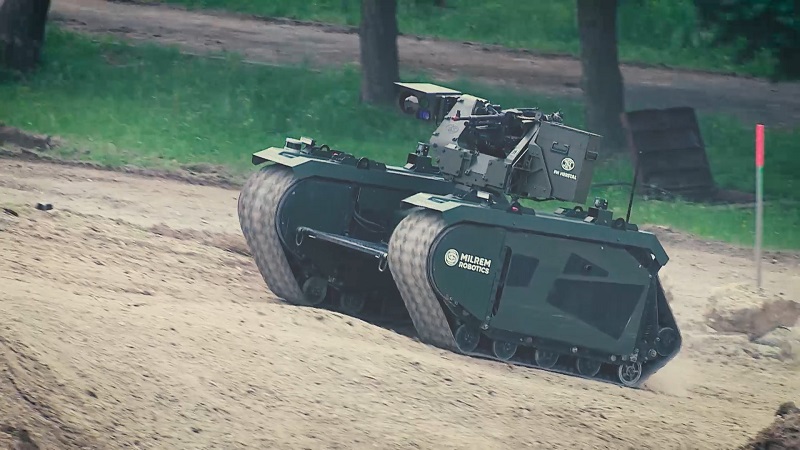
Armor (5): Warfare 3.0 - Will robots soon replace soldiers?
The text discusses the possibility of a world without soldiers but not without weapons. It explores the impact of technological advancements on warfare, raising concerns about the development of autonomous weapons systems. The article also highlights the role of countries like India in pursuing military power through Artificial Intelligence and Robotics, sparking a debate on the ethical implications of letting robots decide over life and death.

A world without weapons. This pacifist dream will probably never come true. A world without soldiers, on the other hand, is within reach. But would the world be better without soldiers? Because then there would be no one left to use the weapons?
A look at the technological developments of recent years answers the question with a clear no. In Pakistan alone, since 2004, at least 2,500 people have been killed by CIA drone strikes. By people who piloted the drones from a control center thousands of kilometers away.
The arms industry, along with the aerospace industry, is considered the most important driving force for technical innovations. Many technologies that are now an integral part of our daily lives were originally developed for warfare; like the telephone or computer, the internet and navigation systems, but also antibiotics and canned food.
So when the world talks about Artificial Intelligence today, it would be a logical step to develop war machines that can autonomously choose and kill targets. What sounds like science fiction could soon be technically feasible.
Friend or Foe?
But can autonomous weapons distinguish between friend and foe? How far does artificial intelligence go? Should robots be allowed to decide over life and death? Defense ministries and the arms industry have reached a point where they are considering whether what is technically possible should actually be implemented. At the end of August, a conference took place in Geneva devoted to the question of whether autonomous weapons systems should be fundamentally banned. Representatives from 75 countries attended the conference.
On the sidelines of the discussions, chairman Amandeep Singh Gill reassured the journalists present: "Robots will not take over the world." Coming from Gill, these words have a bitter aftertaste. Gill is an Indian top diplomat and disarmament expert. Few countries are currently arming themselves as strongly as India, no country imported more weapons last year.
The soon-to-be most populous country in the world also wants to become a political and military power. India's Prime Minister Narendra Modi made this claim very clear in May 2018: "Artificial Intelligence and Robotics are likely to be the key technologies in the future, for both defense and the offensive capabilities of every army."
That doesn't sound like a renunciation of autonomous weapons systems.
Addendum article series on Austria's role in the arms market:
The introduction on SPARTANAT: Austria's role in the arms business: Creating peace with weapons?
Part 1: Who Austria supplies
Part 2: Austria's Armed Forces want to detect combat agents for the EU and NATO
Part 3: In context: Arms in red-white-red - weapons for peace?
Part 4: The Austrian Arms Complex
Part 5: Warfare 3.0: Will robots soon replace soldiers?
More to come...
This article was first published on ADDENDUM. Copyright Text: ADDENDUM. Images: ADDENDUM. Video contributions, graphics and audio contributions: ADDENDUM.
ADDENDUM on the internet: www.addendum.org
SPARTANAT is the online magazine for Military News, Tactical Life, Gear & Reviews.
Send us your news: [email protected]
Ad
similar
Get the weekly SPARTANAT newsletter.
Your bonus: the free E-Book from SPARTANAT.
