Get the weekly SPARTANAT newsletter.
Your bonus: the free E-Book from SPARTANAT.

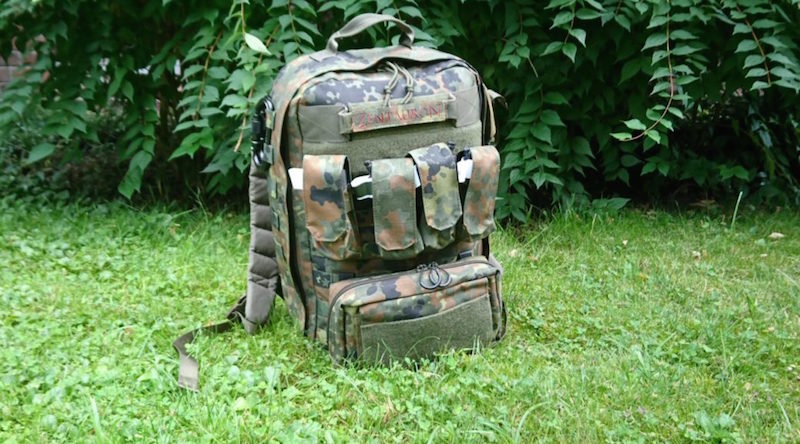
REVIEW: ZENTAURON ZFR Rescue Backpack in Action
This review discusses the Zentauron ZFR Rescue Backpack and its practical application in emergency situations. The backpack is well-constructed, versatile, and allows for easy organization and access to essential medical supplies. Various bags and compartments inside the backpack hold a range of tools and materials needed for different emergency scenarios. Overall, the ZFR Rescue Backpack proves to be a reliable and efficient tool for first responders and paramedics.

Gear is only as good as it proves itself in action. This review is about the Zentauron ZFR Rescue Backpack in action. The article was first published on the Zentauron Blog, and we are allowed to publish it here with kind permission, as it is of general interest. How to pack your San backpack for emergencies. The review was written by someone who is a first responder and paramedic Bravo:
The ZENTAURON ZFR rescue backpack, together with several other bags, forms the basis of my work if I need to act accordingly.
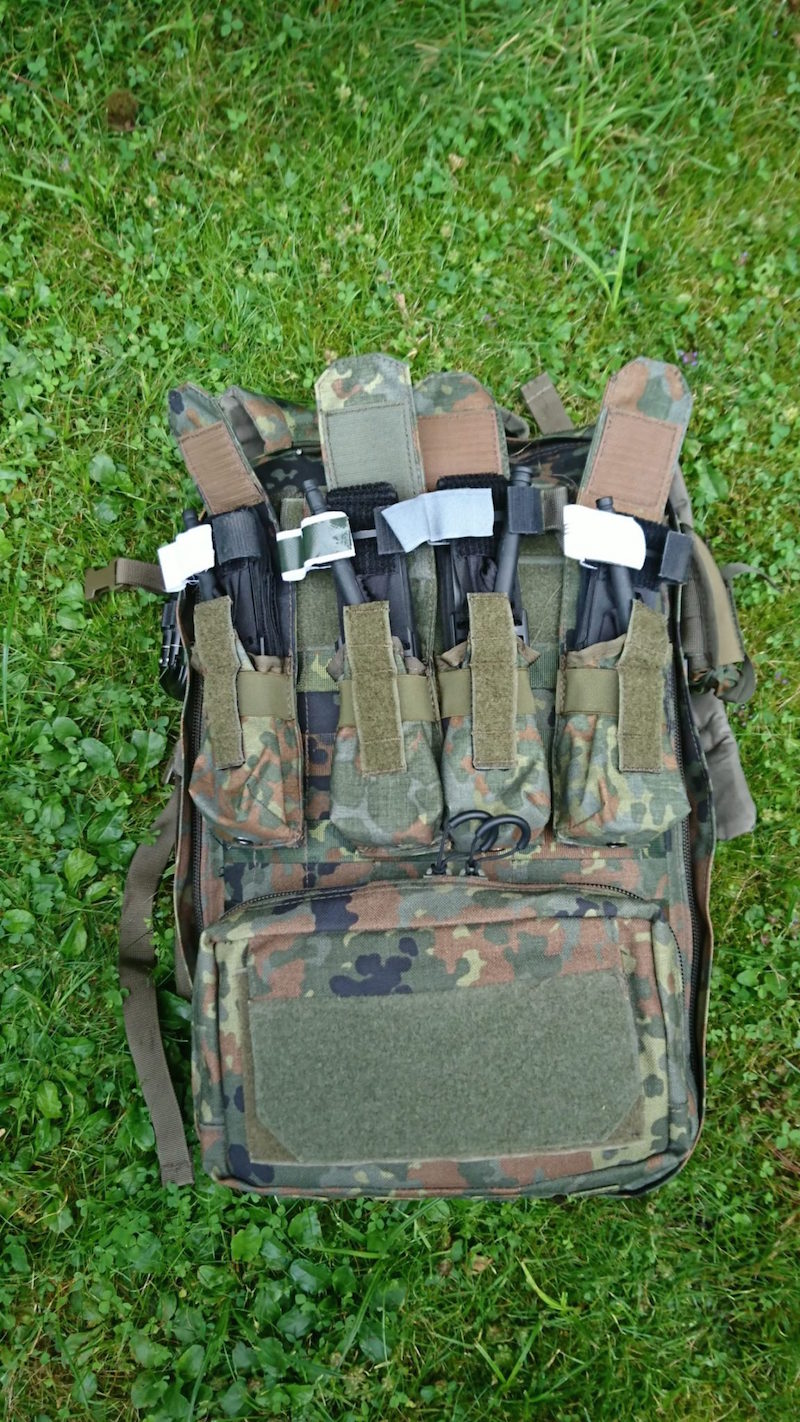
ZENTAURON Tourniquet Bag on the ZFR
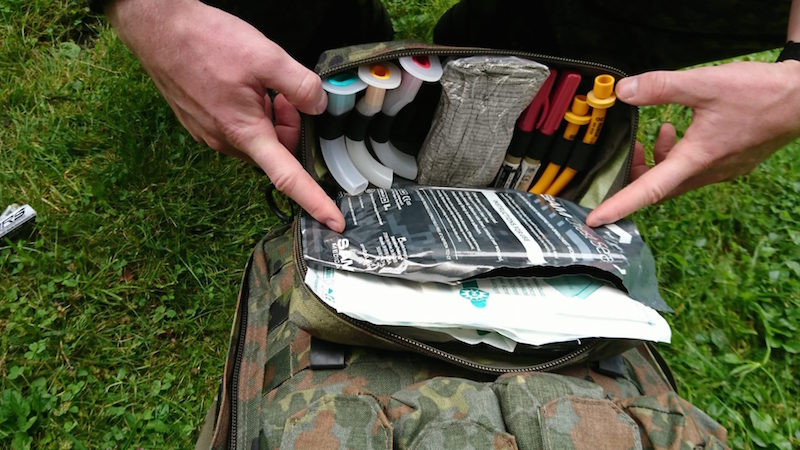
In addition to the backpack, I use four tourniquet bags, one multipurpose bag horizontally, as well as a drop pouch. Inside, I have stored my equipment in several internal bags (1xS, 2xM, 1xL, 1xXL). Furthermore, I use several Velcro modules to secure pens, glow sticks, decompression needles, as well as various Guedel and spiral tubes.
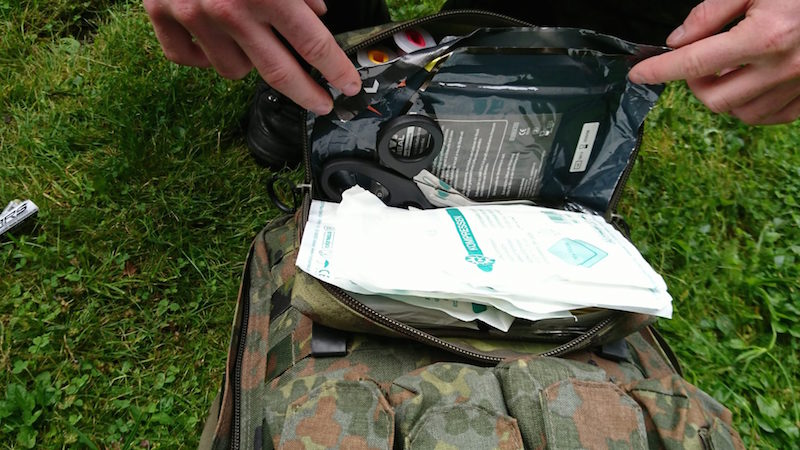 The backpack, as well as all other bags, are typically high-quality and solidly sewn as ZENTAURON products. The "outer shell" is made of Cordura in 5-color Flecktarn according to TL.
The MOLLE strips running around the entire backpack allow additional bags to be attached at any time.
The shoulder straps are lightly padded and make carrying comfortable. At the same time, the quick-release fasteners make it easy to drop the backpack quickly when I have to start working.

Rear view of the ZFR rescue backpack
Adapters would also be offered here, which would make it possible to attach the backpack to a vest or plate carrier.
However, it must also be said that the backpack, as it is currently packed, also has a good weight. It comes filled at around 10 kilograms.
Personally, I have decided against using a (un/padded) Smartbelt, as this would restrict me more in my freedom of movement and I already carry additional equipment on my belt.
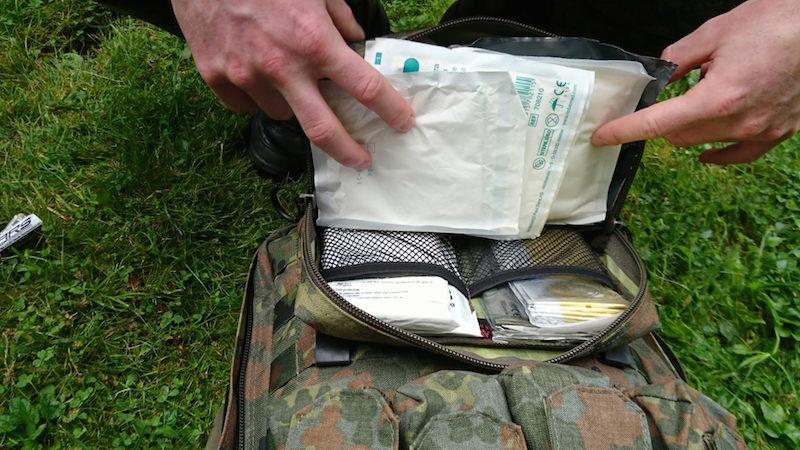
Medical equipment in the multipurpose horizontal bag
As mentioned before, I have attached several bags to the outside of the backpack to be able to take the necessary measures in case of emergencies without having to open the backpack.
In addition to the tourniquets, I have quick access to: several tubes, chest seals, decompression needles, emergency bandages, and rescue blankets stored in the multipurpose bag.
The drop pouch is used as a waste disposal to leave no material behind. As further relief of the interior space, a bag attached to the bottom of the backpack where a recovery tool is stored would be suitable here. Two more MOLLE rows would be suitable for this purpose.
The Interior
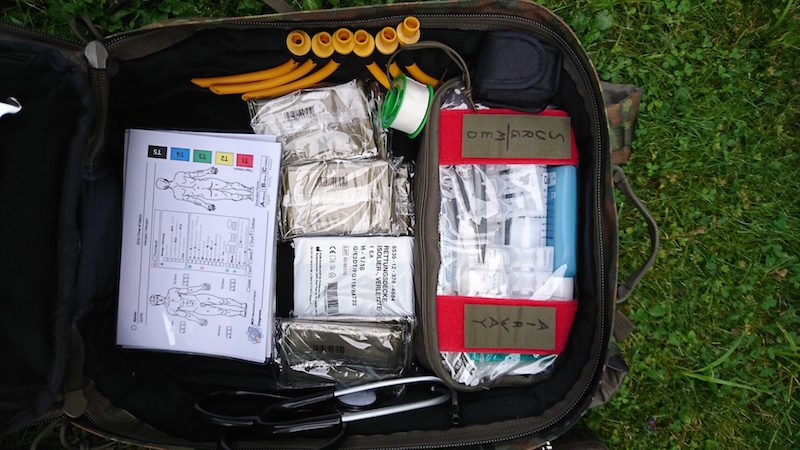
I have built the interior of my ZFR backpack less according to the ABCDE algorithm, but more based on the individual measures. I have attached several Velcro modules inside the lid compartment to attach more spiral tubes, decompression needles, as well as glow sticks, pupil lights, and pens. I have also attached a net module 1010 to store gloves.
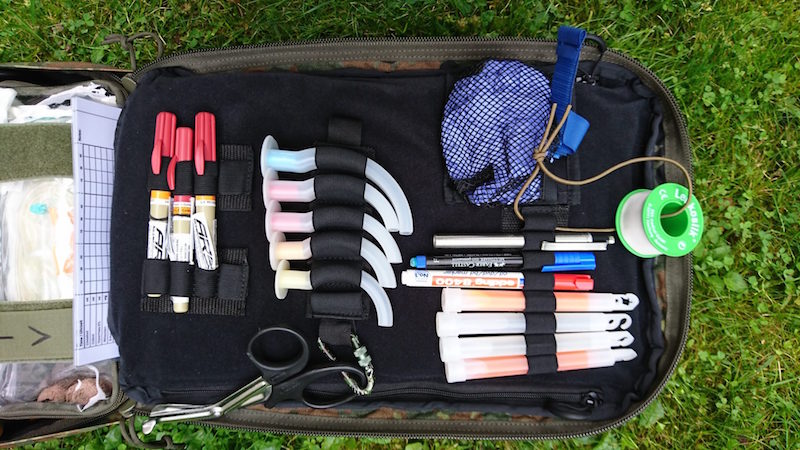
Velcro modules on the inside of the ZFR rescue backpack
In the lid compartments, I have stored Samsplints and triangular bandages, as well as a rescue blanket with a recovery belt. Especially due to the recovery belt, the lid compartment increases in volume, which, however, is still within limits. To be cautious, I have nevertheless replaced the rubber pulls on the outer zippers with paracord.
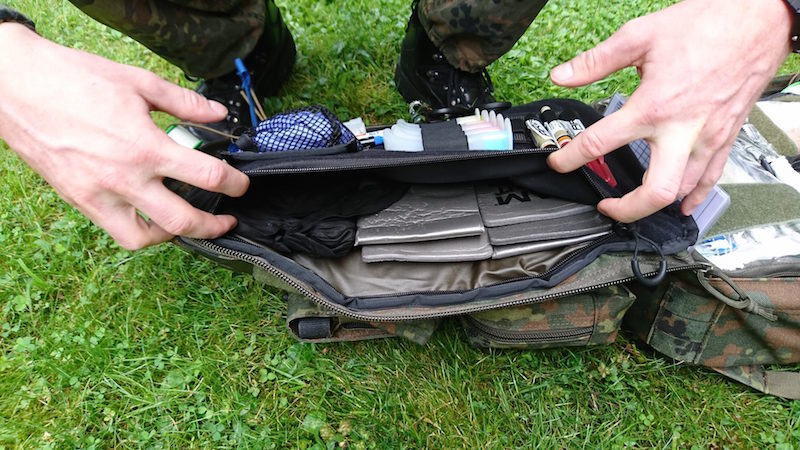
Insert compartments in the lid of the ZFR rescue backpack
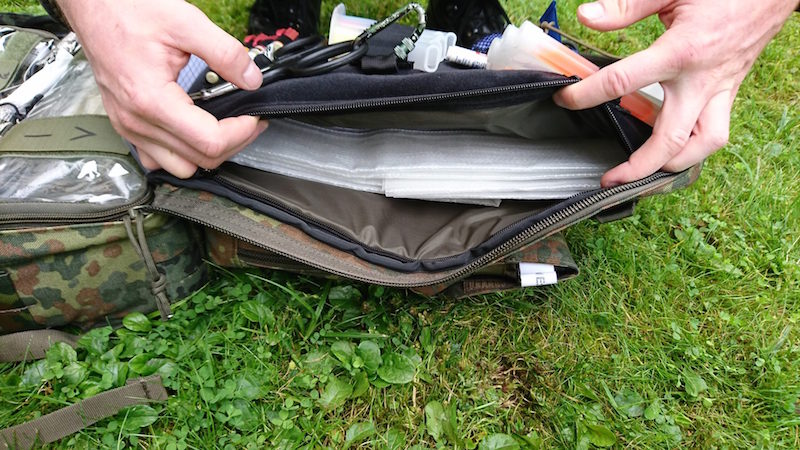 For intravenous accesses, infusions, and other necessary materials, I use an XL sized internal bag. This can accommodate up to three ready-made "Pfullendorfer-Packages" and additional materials (dust bins, drop containers, bandages, swabs, disinfectants, and other accesses).
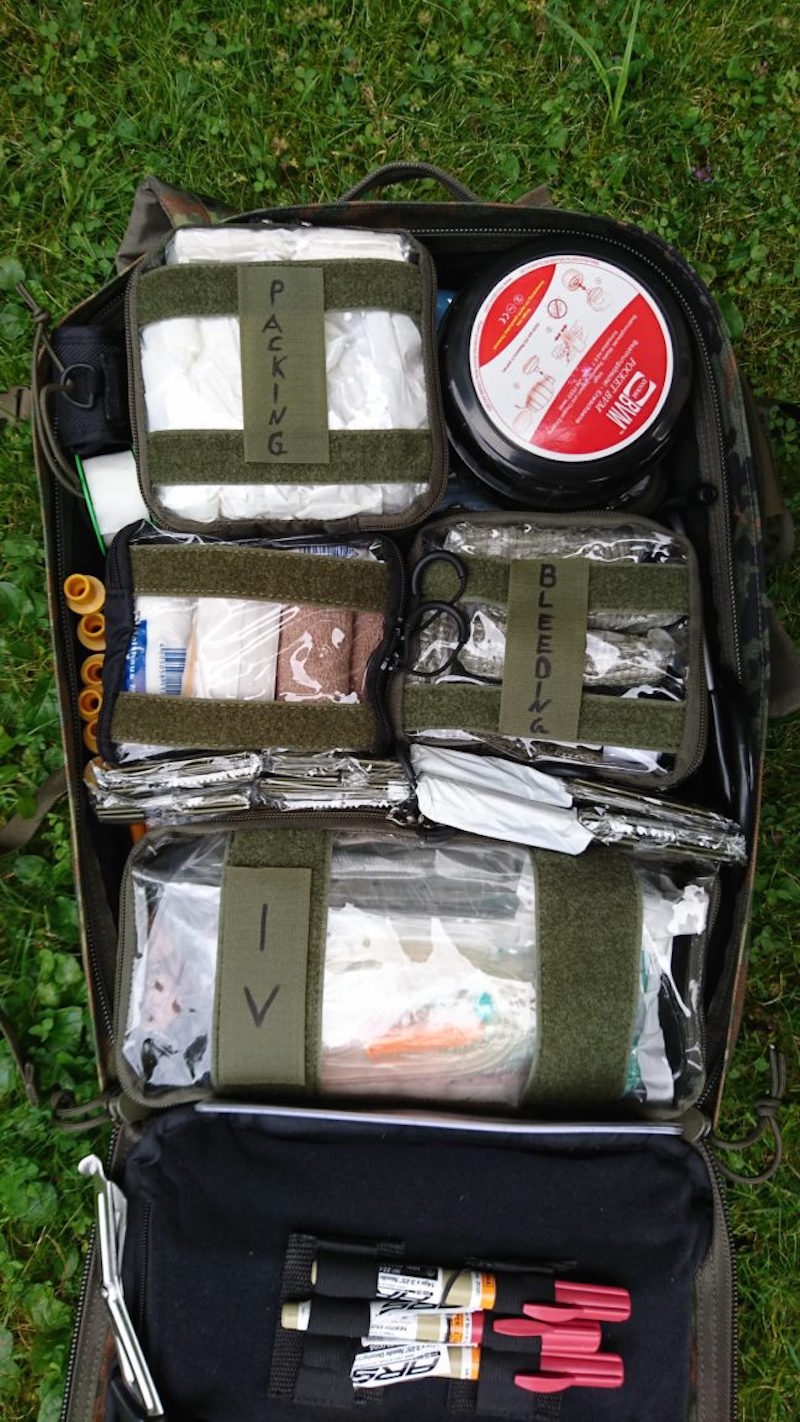
Internal bags in the ZFR rescue backpack
I have stored materials for bleeding control or hemostasis in an M- or S-sized internal bag. In there are several emergency bandages as well as two more tourniquets.
In the S bag, I have stored wound packing, hemostatics, and Kerlix rolls specifically, as it is much more complex and time-consuming than applying a pressure bandage or tourniquets.
SPARTANAT is the online magazine for Military News, Tactical Life, Gear & Reviews.
Send us your news: [email protected]
Ad
similar
Get the weekly SPARTANAT newsletter.
Your bonus: the free E-Book from SPARTANAT.
