Get the weekly SPARTANAT newsletter.
Your bonus: the free E-Book from SPARTANAT.

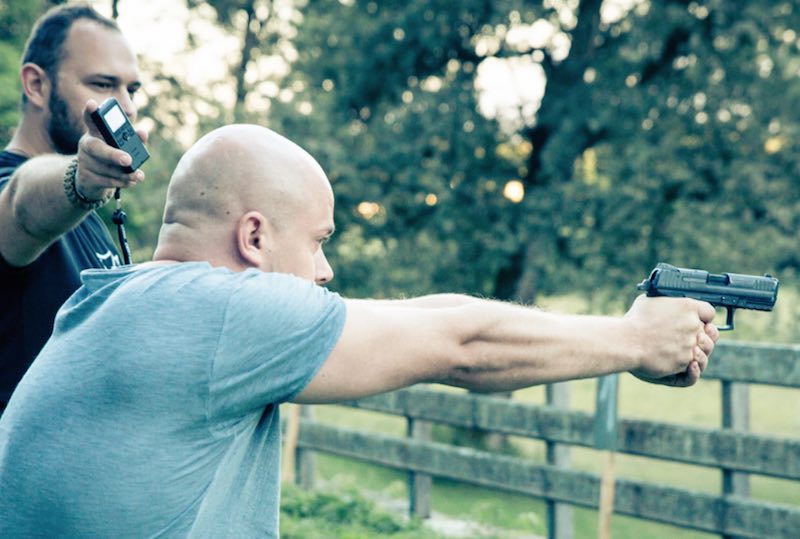
PROTECT and PREVENT (5): Be safe with the weapon
The text discusses the importance of effective communication in personal protection, especially when using firearms. The trainer, Khi Pa Landgraf, emphasizes the significance of clear communication to navigate dangerous situations safely. The abstract highlights the trainer's role in supporting students to become better shooters through personalized guidance.

The use of firearms is also the last resort in personal protection. That is why practice and routine are crucial – as well as correct communication in moments of danger. Khi Pa Landgraf from KL STRATEGIC deals precisely with this challenge at PROTECT AND PREVENT. The personal protection conference takes place from July 14th to 16th in Austria – HERE you can find all the information and the last opportunity to register for the event.
SPARTANAT: You are once again participating in Protect & Prevent this year and training personal protectors. Why do they need to learn how to communicate with each other?
Khi Pa Landgraf: It is mainly about effectively communicating with each other. In certain situations, it is necessary to ensure a comprehensive transfer of information with few words. It is not only important what is said, but also how it is said. In dangerous situations, it is important that all acting persons have the same information and know what the other person wants. In short, A must know what B means, and B must be able to rely on A to understand what is meant.
My goal is to convey to the participants a sense of this type of effective communication in stressful situations, whether verbal or nonverbal.
SPARTANAT: Your training primarily focuses on the use of firearms. Why do you emphasize communication?
Khi Pa Landgraf: The use of firearms in personal protection is the last resort when all else fails. Especially in these specific situations, it is crucial not to lose the connection within the team and between the different elements while effectively coordinating the use of firearms. Such situations are inherently chaotic and difficult to control. That is why a constant flow of information is of immense importance to quickly and safely navigate out of the situation. Only through clear and unambiguous communication can control be reestablished; anything else would result in a wild shootout that endangers both one's own forces and innocent bystanders and leads to being overwhelmed in a dangerous situation.
"Personal protectors are not meant to engage in firefights or neutralize perpetrators. The main focus is to safely navigate out of a dangerous situation as quickly as possible."
SPARTANAT: In the military, they call it the "Small Unit Leader Communication." It can be loud and intense. What is special about its application in personal protection?
Khi Pa Landgraf: When things get loud and dangerous, communication is no different from that in the military. Someone takes charge and coordinates everything. This must be done loudly and clearly. Additionally, coordinating multiple elements plays a significant role here. Personal protectors are not meant to engage in firefights or neutralize perpetrators. The main focus is to safely navigate out of a dangerous situation as quickly as possible. Everything revolves around this – including communication within the team and between the individual elements. This continuous flow of information is necessary to maintain a clear situational awareness for everyone and to be able to think and act proactively and comprehensively.
Today's imaginable scenarios hardly differ from military firefights and therefore require similar actions, including in communication.
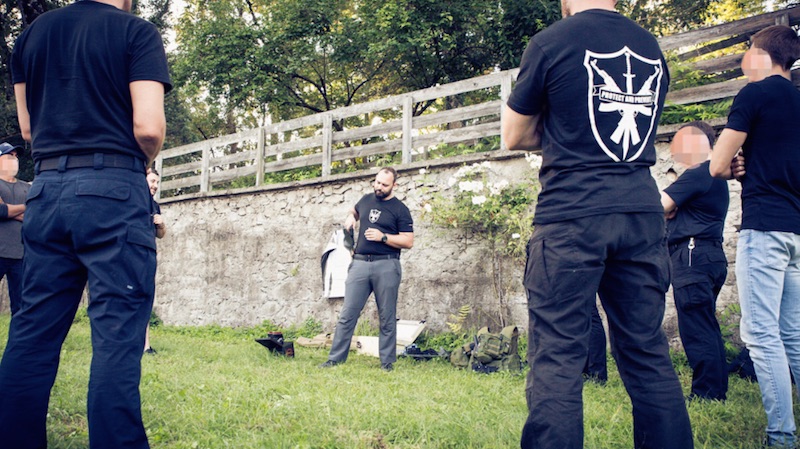 SPARTANAT: Learning to handle a weapon also means taking responsibility. What role does a good trainer play for you? What are their most important qualities?
Khi Pa Landgraf: For me, a good trainer's task is not only to teach the student how to shoot, but to show how that student can become a better shooter. This means addressing individual characteristics and thus truly enabling a safe and responsible handling of firearms. The trainer plays the role of a companion from the point where someone first picks up a weapon to the point where that person can actually handle the weapon securely, including under stress. This also means that as a trainer, you do not only impart THE one way, but show the student different paths and together find the best way for that individual. Continuing to guide them in this way is essential for a trainer in my view.
A trainer must instill in the student the desire to challenge themselves and further develop. When someone leaves a training course, they must have the will to continue practicing and refining what they have learned. A trainer must be able to convey insights and awaken an understanding of the connections in the student. Only then can, for example, home training be meaningfully and effectively continued. In addition, a trainer must not only master what they teach but also be convinced of it. This can only be the case if the skills taught actually work. Pure theoretical knowledge is definitely not enough.
Lastly, an instructor must also be able to educate, i.e., have some pedagogical skills. Especially in the area of firearms handling, it is not enough to have just been trained oneself. One must be able to deal with different types of learners and personalities, know how to convey the material to each one in a way that sticks, and of course be able to assess and evaluate all the accompanying circumstances, and promptly address situations and solve problems without immediately scrapping the entire program. Furthermore, one must be able to prepare and follow up on a lesson/course/workshop, not over or under-challenging the target audience, not exceeding time and resources, etc.
There are indeed many qualities that a trainer must possess.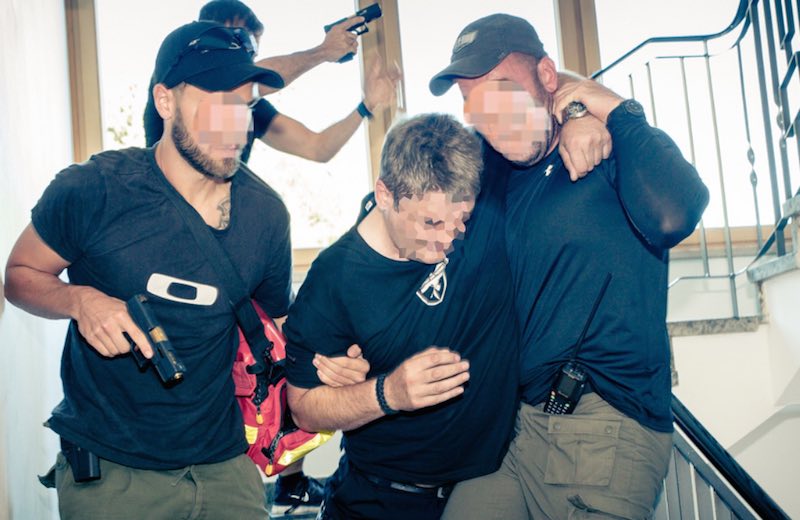 SPARTANAT: What weapon do you prefer shooting?
Khi Pa Landgraf: In principle, I do not prefer any specific weapon. A good instructor must be able to handle everything that comes their way. I use various firearms from different manufacturers and calibers, depending on what is needed for a particular assignment.
I am not a fan of excessively customized weapons. I believe that only when one is proficient with "off-the-shelf" firearms can one truly shoot, not merely operate devices.
SPARTANAT: Shooting instructors don't just appear out of nowhere. Where does your competence as an instructor come from?
Khi Pa Landgraf: I have been involved in firearms training for over 18 years and have been a certified shooting instructor and operational trainer for 14 years. Additionally, as a firearms and ammunition expert, I have insights into aspects that significantly influence the focus of my training (stress resistance) in terms of firearms handling. I regularly update my knowledge and exchange with other trainers and instructors in a well-developed network. This way, I do not limit myself to my own operational experiences but can – like others – learn and benefit from current experiences, which naturally enhances the design of my training and the techniques I teach.
 KL STRATEGIC online: http://kl-strategic.com
KL STRATEGIC on FACEBOOK: www.facebook.com/KL-STRATEGIC
SPARTANAT is the online magazine for Military News, Tactical Life, Gear & Reviews.
Send us your news: [email protected]
Ad
similar
Get the weekly SPARTANAT newsletter.
Your bonus: the free E-Book from SPARTANAT.
