Get the weekly SPARTANAT newsletter.
Your bonus: the free E-Book from SPARTANAT.

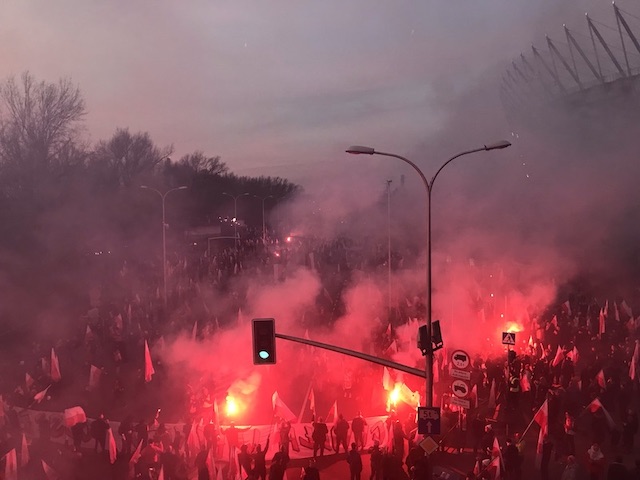
Press coverage at demonstrations - a typical security job?
The increase in attacks on media professionals has led to a growing demand for press escort services, as traditional personal protection does not adequately address the unique risks faced by journalists.

Attacks on cameras, physical violence against individuals, and explicit death threats - in the past year, the number of assaults on media professionals has not only nearly doubled, but also reached a new level of quality alongside the usual offenses such as insults, spitting attacks, and angry shouting.
While it is primarily the responsibility of the state to guarantee press freedom and accordingly ensure the safety of press representatives, in practice this is often different. Reasons for this are not only the nearly impossible feasibility but also the question of whether reporting that can only take place under the protection of state authority can still be considered free. For these and other reasons, more and more journalists and media organizations are turning to the services of private security companies.
Although these services are often offered under the same title, they differ significantly from traditional personal protection.
First and foremost are the different objectives. While in traditional personal protection, the primary goal is to recognize potential dangers early and avoid them as best as possible, the task of a press escort is to make these dangers accessible to the client. This also means giving the customer the opportunity to continue their journalistic work in these situations for as long as possible. So, if there are provocations from enraged demonstrators, for example, it is the task of the escort to observe the situation and determine whether and at what point intervention is necessary. Premature intervention contradicts the above-mentioned objective and usually leads not only to an unsatisfied customer but also often to the next contract being awarded to a competitor. The possible consequences of delayed intervention need not be further elaborated on here.
Saving on protection is a wrong savings
Another point is the personnel. As with everything, money is also saved here. In normal daily business, several escorts are often assigned to one person, while in press escorting it is usually the other way around. A camera team often consists of 3-4 people, while the escorts are often lucky to have more than two security personnel. Saving is necessary everywhere, so why not here? This, coupled with the fact that one voluntarily enters a potentially hostile environment, leaves the question open as to the extent to which action can be taken if things get tough.
A sad example of this is the attack on a ZDF camera team on May 1, 2020, in Berlin. On the way back to the vehicles, the seven-person group of television team and security staff was attacked by a masked and armed mob. The result was four injured, including a security escort who was kicked to unconsciousness while lying on the ground.
And then - as is often the case in private security - there is also the issue of legal foundations. Press freedom allows journalists, for example, to pass through police lines in order to pursue their work. A simple display of the press ID is sufficient for this, and the line opens. However, at least up to now, no press credentials have been issued to needy security personnel by reputable bodies such as ver.di and the German Press Council. Also, "security card" and security mission do not provide a legal basis for accompanying the client through a police barricade. Escort protectors are therefore always dependent on the leniency of the respective police units. And what if the crowd breaks through that police barricade? The journalist has the right to follow the crowd in the interest of press freedom, but what about the legal certainty for the accompanying security personnel?
Escort protection as a relevant market segment
Ultimately, it can be said that there has always been escort protection for press representatives in various forms. Nevertheless, the relevance of this market segment has rapidly increased in the last two years with the increasing number of attacks on press representatives. Currently, for most security companies, this activity is still an ancillary activity, if not even a "bycatch" to existing orders. It does not seem like the situation will significantly improve in the coming years. This forces the industry to continue to evolve accordingly. Non-existent security concepts must be created first and foremost, and employees must be trained and briefed accordingly. But that's not enough. Media organizations, journalist associations, security companies, and authorities must come together to adapt legal framework conditions accordingly so that affected security personnel are no longer in legal gray areas and can fully focus on their protective mission.
By the way: According to a request from the Green Party parliamentary group in 2020, there were 252 criminal acts against representatives of the press that year. (2018: 93, 2019: 104) A large part of these attacks occurred during or immediately after reporting on demonstrations and other political events. Noteworthy are 22 cases of bodily harm, 33 cases of property damage, and 4 cases of arson, among others. But other criminal offenses such as threats, coercion, robbery, and various propaganda offenses also played a significant role in 2020. As a consequence, Germany slipped two places on the Press Freedom Index of "Reporters Without Borders" from 11th place to 13th place. And this despite the decision of the Federal Constitutional Court in the same year to declare the worldwide monitoring of internet traffic by the Federal Intelligence Service (BND) as unconstitutional.
Special THX to Frank Farmer for the article
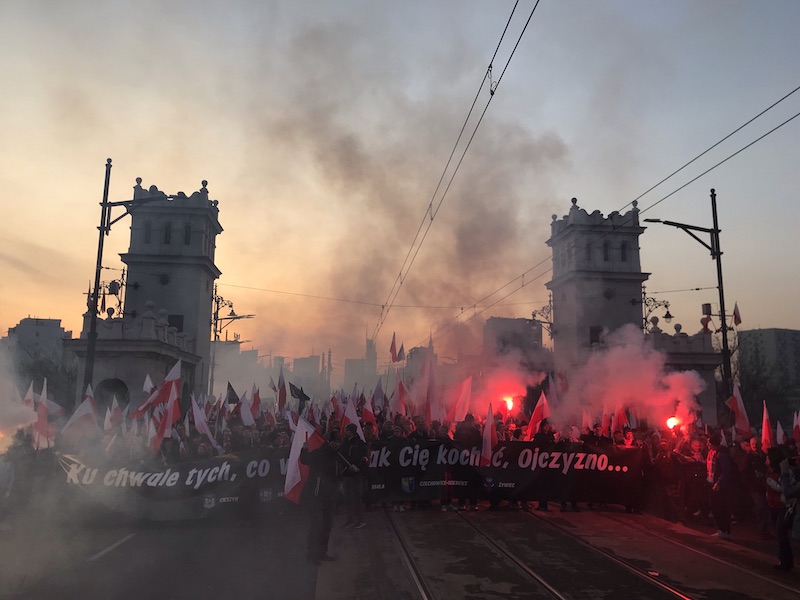
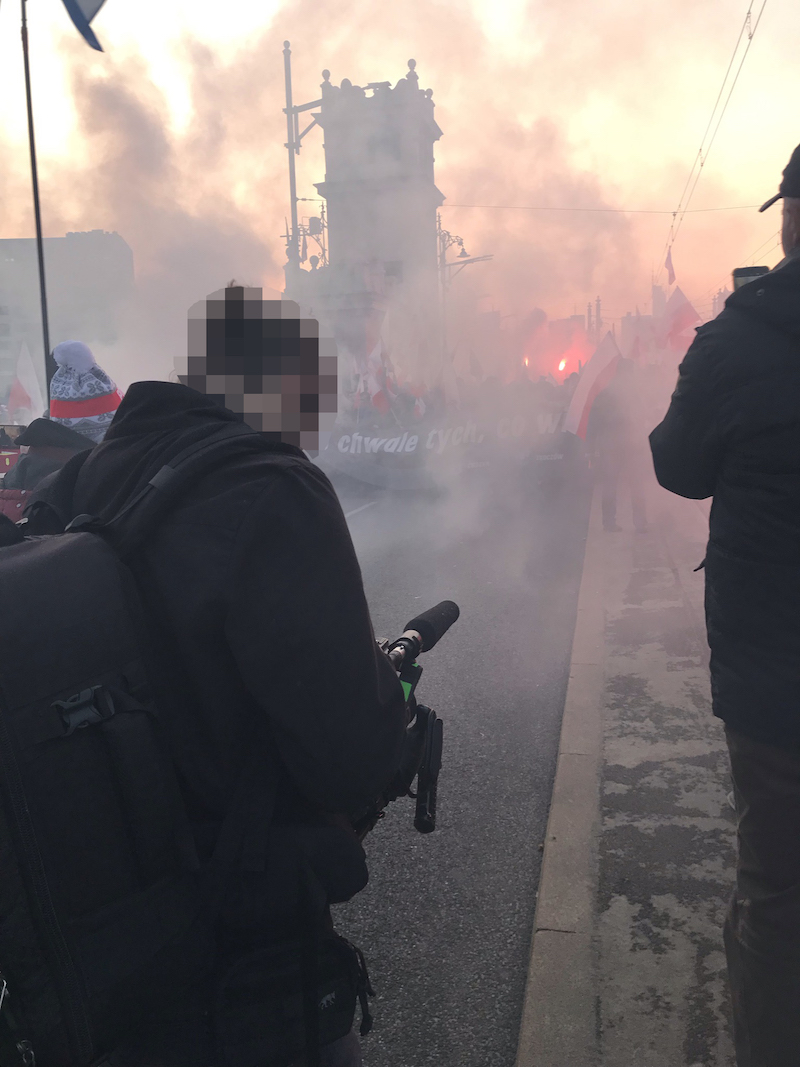
The photos for the article come from a protection escort assignment for a large demonstration in Poland.
SPARTANAT is the online magazine for Military News, Tactical Life, Gear & Reviews.
Send us your news: [email protected]
Ad
similar
Get the weekly SPARTANAT newsletter.
Your bonus: the free E-Book from SPARTANAT.
