Get the weekly SPARTANAT newsletter.
Your bonus: the free E-Book from SPARTANAT.

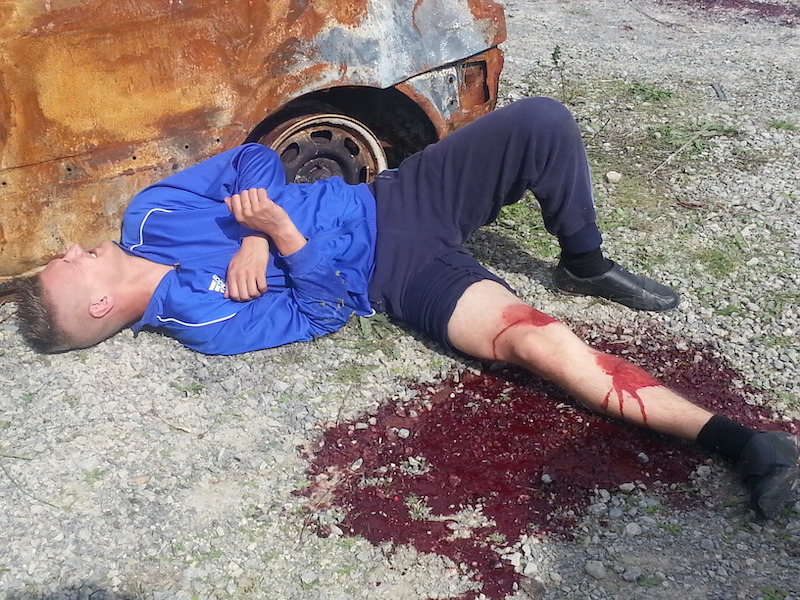
Personal Protection First Aid (1): Stop the bleeding!
Carsten Dombrowski introduces a theory on worst-case training and offers assistance through the "Personal Protection First Aid" series. Addressing tactical medicine and bleeding scenarios, practical steps are outlined to handle emergencies effectively.

Carsten Dombrowski from CA has essentially put forward a theory in his SPARTANAT article on permanent worst-case training. Now he wants to start providing assistance for different groups of people. We are starting with the article series "Personal Protection First Aid".
These and the following articles cannot and should not replace thorough training. However, they can stimulate self-reflection in the respective role and activity. I will try to always address the situation and thereby work out the different necessities individually. Following the principle of "good - better - best".
In Tactical Medicine, which involves the medical care of patients with altered rescue chains, limited resources, and potential threats, we as first responders are forced to approach things differently than in a peaceful environment. So, I am only considering the phases until the arrival of the respective ambulance service.
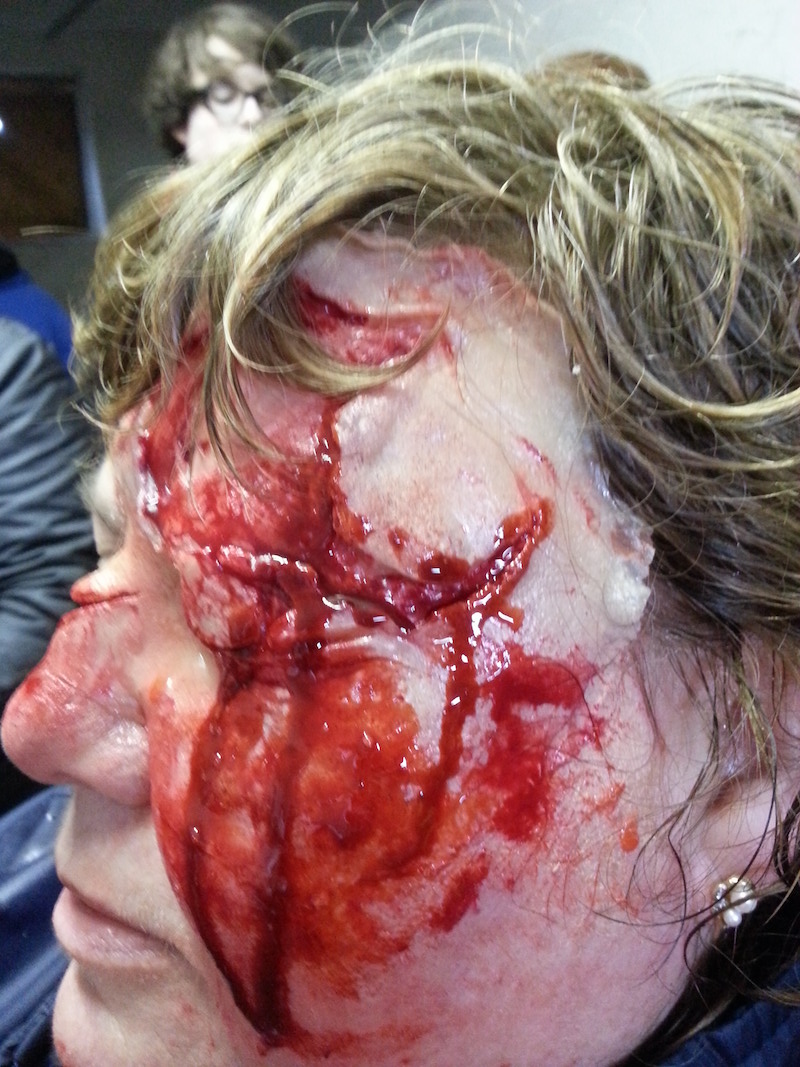
Let's take the part "severe, possibly life-threatening bleeding". Images "Made in Hollywood" determine the imagination of most of us. Severed limbs, bloody stumps, and spurting bleeding. The reality surely has such scenarios, but for most first responders, bleeding and wounds usually look different.
Let's assume your protectee, your client, or a person you are responsible for has an accident in some way. They are lying on the ground, in a vehicle, or running towards you.
What do you do now?
Self-protection always comes first. Hopefully, you are familiar with the SICK approach. If not, let me briefly explain the acronym here.
S Scene Safety
I (first) Impression
C Critical Bleeding
K Kinematics
If there are concerns at the first "S", meaning safety is not ensured, establish it or evacuate the patient to a safe area. TCCC (Tactical Combat Casualty Care) talks about Care under Fire, PHTLS (Pre Hospital Trauma Life Support) or TECC (Tactical Emergency Casualty Care) talk about the "red zone". Here, you should quickly identify whether there is an extremity bleeding or not. The assignment to kinematics, which means what happened with what energy and led to this injury, helps with this.
For example, the person was bitten by a dog on the arm, or a criminal stabbed a knife into your protector's thigh. These are exceptional situations. But, among many other possibilities, they can also cause severe bleeding.
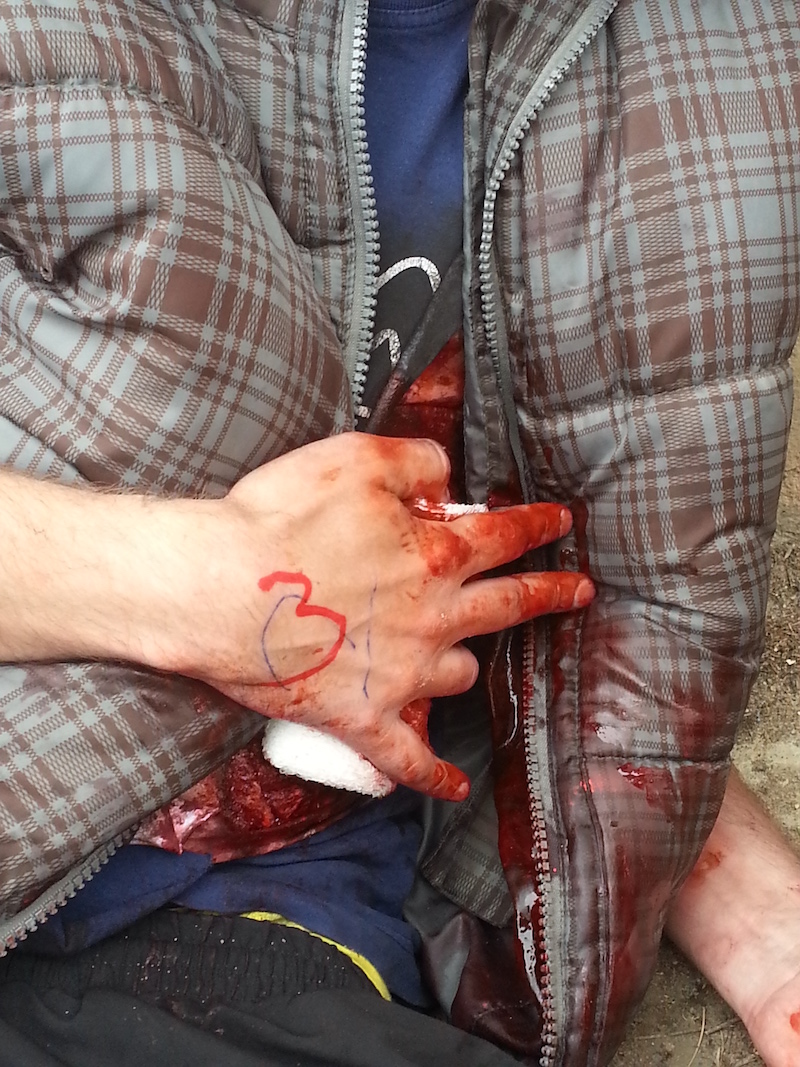
The use of a tourniquet is a simple procedure that quickly and efficiently stops such bleeding and can prevent acute bleeding. This needs to be practiced, as significant errors can be made in applying it.
However, more common bleeding is minor and usually does not require a blood clot with a tourniquet. How you handle such minor but still significant bleedings depends on the security of the location. If the perpetrator is still on-site and a quick evacuation in a vehicle would be helpful, a tourniquet can also be temporarily applied. During the drive, or at the latest afterwards, the wound can be treated with a compression bandage to stop the bleeding.
Upon closer examination afterward, which may also include a first cleaning of the wound area, it is often possible to see that even simple adhesive bandages are sufficient. Let's be honest, how many can apply serious and efficient adhesive bandages? Very few people can do that. This also needs to be practiced, as well as the use of butterfly bandages as an alternative to a missing suture.
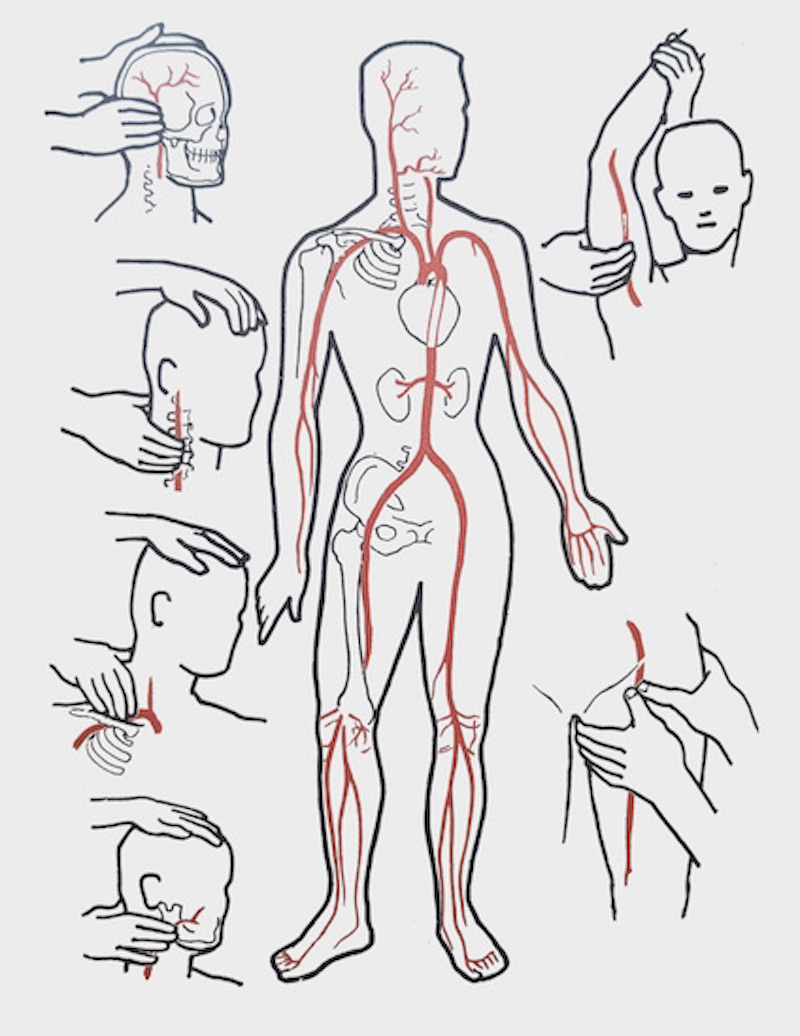
Just consider this illustration and the resulting suggestions for care, and you will see that exclusively applying tourniquets is clearly not enough. I don't mean the urban area of a German city on a summer day. Here, one of the simplest measures, direct pressure while observing hygiene measures, is sufficient. Just as typically taught in most first aid courses. The ambulance service then takes over the further measures.
We at Capsarius Akademie are happy to advise you. Contact us and discuss the next steps with us. We are very experienced and extremely flexible in solving challenges. A fantastic and experienced team of doctors and medics are waiting for you.
If you want to receive the current newsletter CALLSIGN DOC exclusively and automatically without missing one, sign up HERE. CALLSIGN DOC will then arrive by email. Old issues are available in the archive on the Capsarius Akademie website.
CAPSARIUS AKADEMIE on the Internet: www.capsarius-akademie.com
SPARTANAT is the online magazine for Military News, Tactical Life, Gear & Reviews.
Send us your news: [email protected]
Ad
similar
Get the weekly SPARTANAT newsletter.
Your bonus: the free E-Book from SPARTANAT.
