Get the weekly SPARTANAT newsletter.
Your bonus: the free E-Book from SPARTANAT.

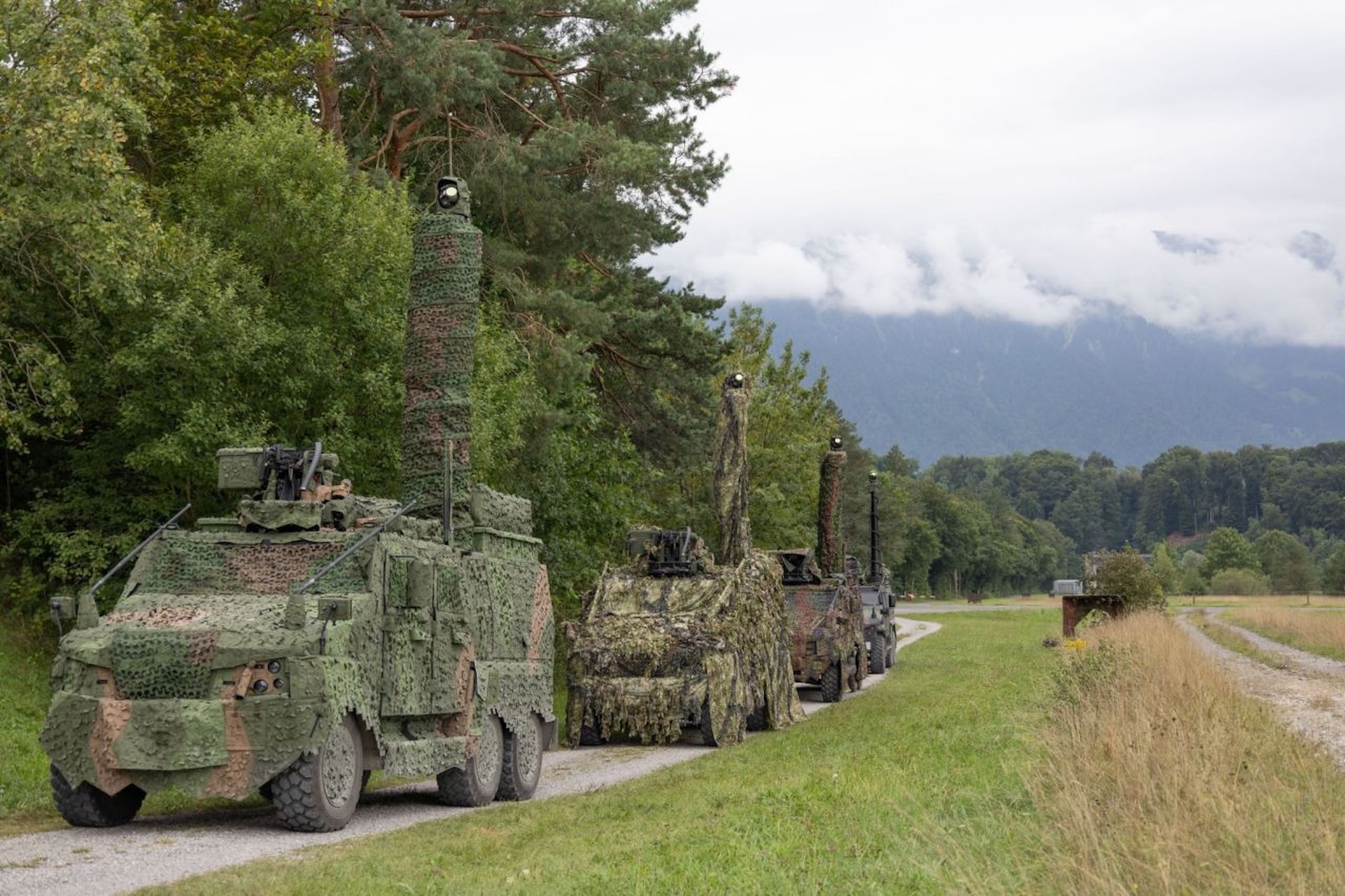
Now it's time for multispectral camouflage
The Federal Office for Armament armasuisse has awarded the contract for multispectral camouflage systems (MSTS) to SSZ Camouflage AG, with Saro GmbH and Saab Barracuda AB also shortlisted. The systems will enhance troop protection by reducing detectability across various electromagnetic spectra, supporting Switzerland's defense strategy.

The Federal Office for Armament armasuisse has made its decision on the award of the contract for multispectral camouflage systems (MSTS). In addition to the performance of the systems, their operational integration as well as logistical and economic criteria were also taken into account. The procurement process will continue with all three European suppliers on the shortlist: SSZ Camouflage AG from Switzerland, Saro GmbH from Germany, and Saab Barracuda AB from Sweden.
The contract comprises fourteen lots, which will be awarded to the most suitable supplier based on the technical requirements. The tested camouflage and deception systems reduce not only optical signatures but also infrared and radar-based signatures (response of an object to electromagnetic waves). The camouflage and deception systems thus make a significant contribution to reducing detectability by modern sensors and improving the protection of troops. This represents an important milestone in the modernization of protection against enemy reconnaissance.
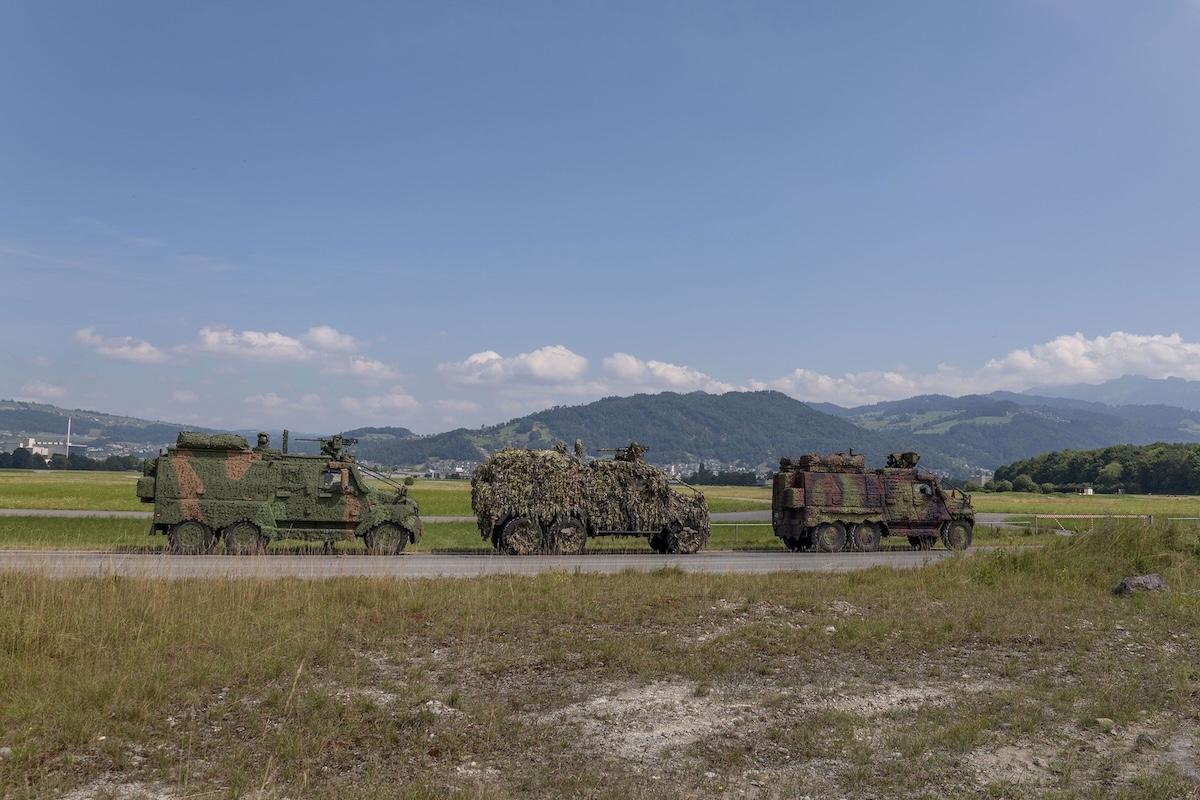
Testing of the candidates
As part of the invitation procedure, the systems of the three shortlisted candidates, SSZ Camouflage AG (Zug, Switzerland), Saro GmbH (Hechingen, Germany – better known as GHOSTHOOD) and SAAB Barracuda AB (Gamleby, Sweden, with a branch in Thun), were tested and evaluated on the basis of technical and operational criteria. The tests took place between July and September under the direction of armasuisse at the Thun and Bure military training areas. The Operations Command, the Air Force, the Army, the Armed Forces Staff (ASTAB), and the Armed Forces Logistics Organization (LBA) were also involved in the tests. The test results formed the basis for the award decision that has now been made.
Results and award decision
The test results show that all three suppliers fulfill different characteristics in terms of their effectiveness and, when combined, offer the best possible protection against modern reconnaissance technologies. The selected camouflage and deception systems reduce signatures in various electromagnetic spectra and thus meet the requirements of the Swiss Armed Forces. The contract was awarded to the Swiss supplier SSZ Camouflage AG on condition that the systems are suitable for use by troops.
The award of the contract for multispectral camouflage systems (MSTS) to one Swiss supplier and two European suppliers contributes in two ways to the implementation of the Federal Council's armament policy strategy of June 20, 2025. On the one hand, the strategy aims to strengthen the domestic security-related technology and industrial base so that Switzerland continues to have key security-related technologies and core industrial capabilities and capacities at its disposal. To this end, 60 percent of the total defense procurement volume should be carried out in Switzerland if possible. At the same time, the strategy provides for increased procurement in neighboring countries and other European states, as these countries are of particular importance to Switzerland in terms of defense policy. In order to have the option of defending itself in cooperation with other countries in the event of an armed conflict, Switzerland must procure systems and equipment that are either identical to or at least compatible with those of other countries. Furthermore, procurement in European countries strengthens supply chain security and increases resilience in the event of a crisis or armed attack.
Multispectral camouflage systems MSTS
Multispectral camouflage is an effective measure for achieving optimal camouflage, which provides protection against current reconnaissance methods. Today, reconnaissance is no longer limited to the human eye; ground- and air-based sensors, such as drones, detect not only visual signals but also infrared signals in the short, medium, and long-wave ranges of the electromagnetic spectrum. Various reconnaissance systems are also capable of locating ground targets using backscattered microwaves (radar reconnaissance). A powerful camouflage system therefore enables the signature of the object to be camouflaged to be adapted to the respective operational environment in all relevant spectral ranges. The MSTS multispectral camouflage system helps to protect soldiers and infrastructure from enemy reconnaissance.
SPARTANAT is the online magazine for Military News, Tactical Life, Gear & Reviews.
Send us your news: [email protected]
Ad
similar
Get the weekly SPARTANAT newsletter.
Your bonus: the free E-Book from SPARTANAT.
