Get the weekly SPARTANAT newsletter.
Your bonus: the free E-Book from SPARTANAT.

In the engine room of the protective equipment
Protective textiles face challenges regarding procurement, cost, comfort, and sustainability. The 2026 TECHTEXTIL and TEXPROCESS fairs showcased scalable solutions, advancing materials like UHMWPE and innovative production methods. The focus is on enhancing performance while addressing environmental and operational needs in defense applications.

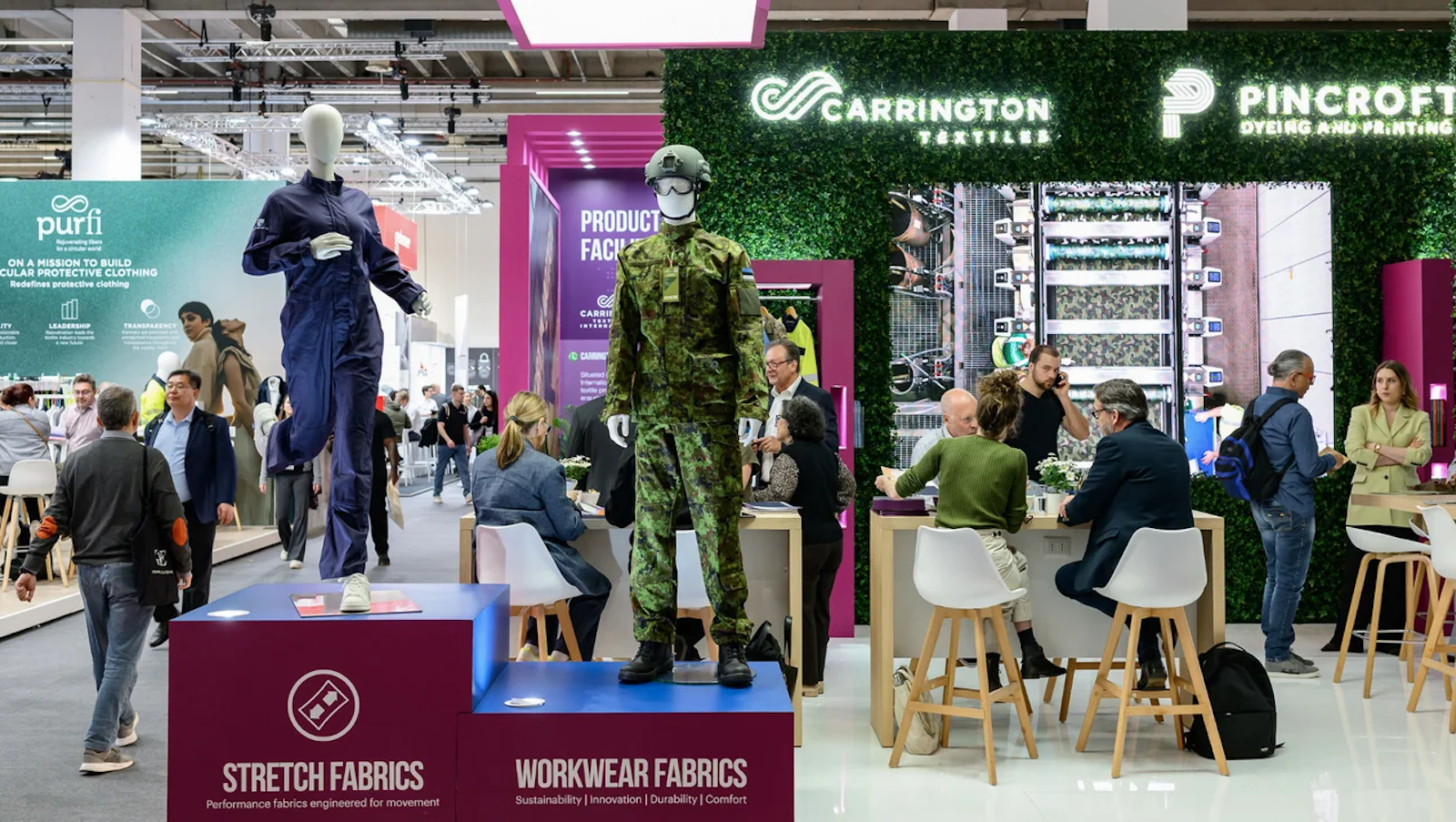
Protective textiles are facing a critical test: the challenge of procurement versus availability, cost pressures in Europe, protective effectiveness versus comfort, and performance versus sustainability. How these tensions can be translated into scalable, procureable textile solutions was demonstrated from April 21 to 24, 2026, at the leading trade fairs TECHTEXTIL and TEXPROCESS in Frankfurt am Main.
European defense spending reached a record high of approximately 381 billion euros in 2025; the European Defense Fund lists “smart and multifunctional textiles” as a separate focus area, and many armed forces are actively procuring additional protective equipment. The Bundeswehr Procurement Acceleration Act is further boosting demand for protective textiles, but it cannot magically produce suitable materials, components, or certified suppliers. In addition to price, delivery capability has become the crux of defense procurement.
A Platform for Supply Security
Whether it’s a combat shirt, waterproofing, a helmet, or a backpack—good protective equipment doesn’t start with the finished product. It begins with the question of which fiber provides ballistic protection, which yarn doesn’t melt in a fire, which coating repels oil even without PFAS, and whether all of this can be produced in sufficient quantities. Here, TECHTEXTIL and TEXPROCESS provided a platform for professional exchange between material suppliers, weaving mills, processors, chemical companies, machinery manufacturers, research institutions, and system providers.
From Tender to Real-World Application
This dialogue within the supply chain is essential to ensure that technical performance requirements and real-world application align in the finished protective system. On the one hand, specifications and procurement procedures vary from one army to another. On the other hand, in practice, there is a gap between the specifications of an individual material or component and their implementation within a protective solution.
For example, in the case of a rubber band, not only must the tensile strength be correct, but also the weight, flame retardancy, and IR behavior. Furthermore, IR values cannot simply be transferred from one material to another—as is sometimes common in tenders—and a RAL value on paper does not correspond exactly to the color on the fabric.
And the web of requirements is becoming increasingly complex. For multi-standard requirements, multiple protection classes must be combined in a single fabric—for example, heat and flame protection according to EN ISO 11612, antistatic properties according to EN 1149, and chemical protection according to EN 13034.
In this context, TECHTEXTIL and TEXPROCESS strengthen the foundation of Europe’s security of supply. After all, it is only through the interplay of all materials, components, and processing steps that it is determined whether equipment can be reliably supplied—and whether it provides proper protection and camouflage in the field without restricting soldiers’ movements.
The Fiber Question: Lighter, Stronger, More Flexible
Ballistic protection starts with the fiber. Even in 2026, UHMWPE (ultra-high molecular weight polyethylene) will remain a key material for lightweight protective solutions. The polymer is up to 15 times stronger than steel and combines high mechanical strength with minimal weight.
And if such a key material for body armor, helmets, or related protective applications can be produced without the use of solvents that pose regulatory risks, it enhances process stability, scalability, and the future resilience of the supply chain. In this context, the British fiber specialist Fibre Extrusion Technology (FET) received the TECHTEXTIL Innovation Award 2026 in the category “New Production Technology, Digitalization & AI Solutions” for a solvent-free process for manufacturing UHMWPE. Instead of toxic solvents such as hexane or dichloromethane, FET uses supercritical CO₂. The fiber’s mechanical strength and low weight are preserved in the process.
When heat, flames, shrapnel, and mechanical stress come together, aramids are the material of choice. Para-aramid is in demand due to its strength and is used, among other things, in soft and hard ballistics as well as cut protection. Meta-aramid, thanks to its thermal resistance, is ideally suited for heat-protective clothing, such as firefighter jackets.
Focus on Flame Retardancy
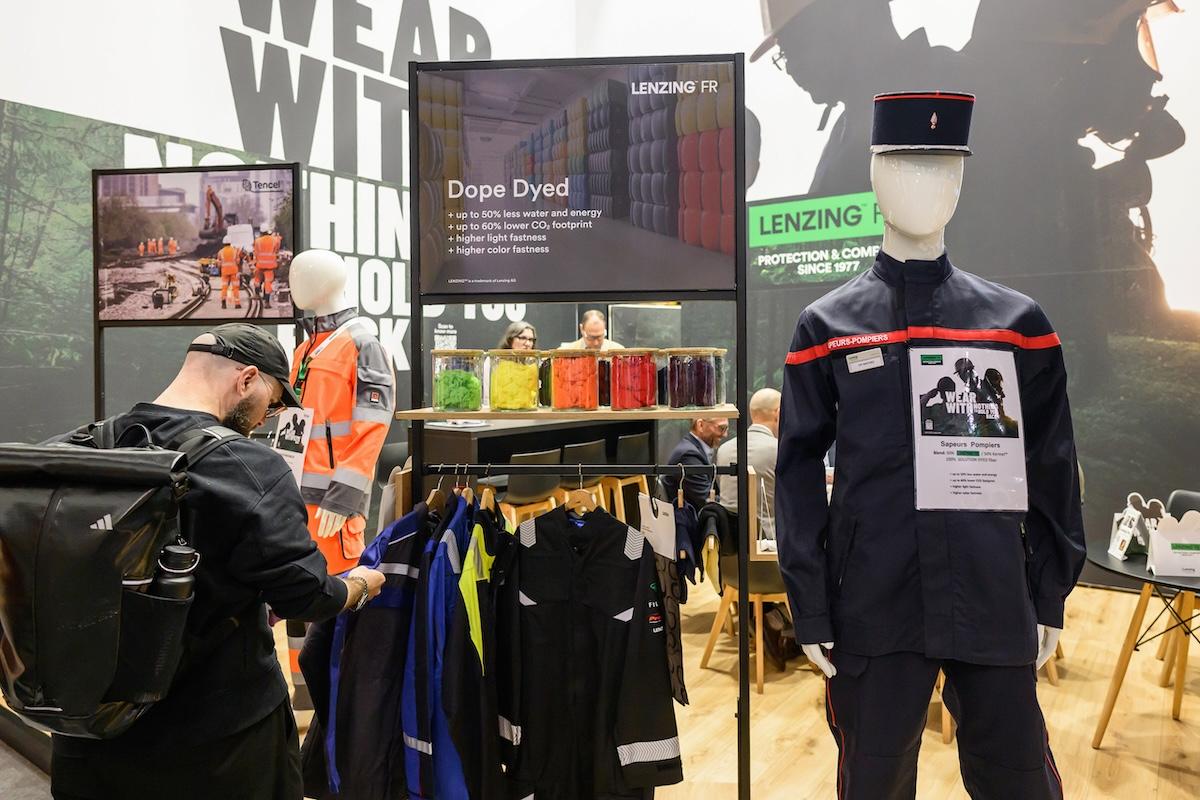
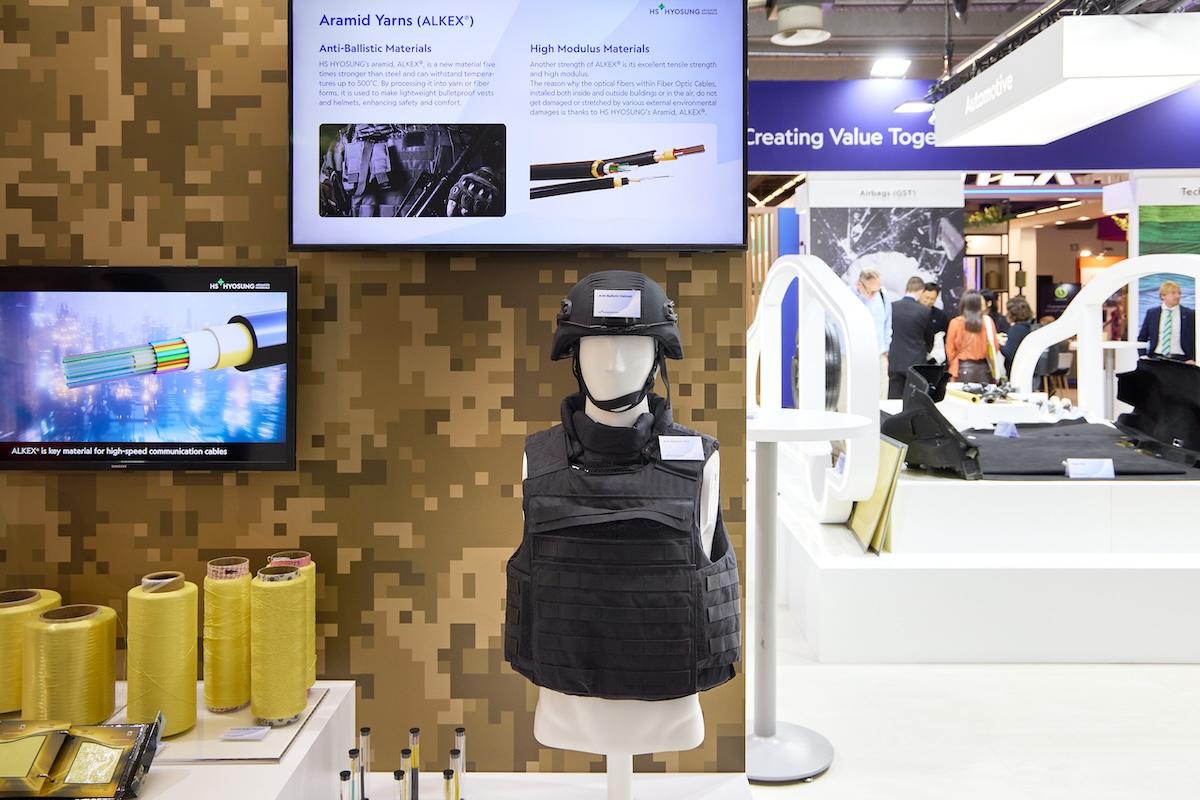
Protective functions should no longer be applied as a finish on the surface of the fabric, as abrasion and washing erode coatings. Consequently, protection—such as flame retardancy—is increasingly being incorporated into the fiber itself. Aramid-based systems, such as meta-aramids like Nomex or para-aramids like Kevlar, provide heat- and flame-resistant properties. Depending on the fiber type, the focus is on thermal protection, strength, or cut resistance. As part of this trend, the LENZING GROUP showcased flame-retardant cellulose fibers at TECHTEXTIL. HS HYOSUNG presented high-performance synthetic yarns with similar functionality.
TECHTEXTIL online
The special exhibition “Performance Apparels on Stage” brought the versatility of modern flame-retardant gear to life. The Molotov Cocktail Protective Suit from STFI is designed for special forces on long-term missions lasting ten hours or more; it protects against fire attacks while remaining lightweight and breathable. TEJIDOS ROYO showcased Royotec Timeless, a multi-standard PPE fabric with inherent flame retardancy, a 25 percent recycled content, and protective effectiveness even after 100 industrial washes.
PFAS: Sustainability vs. Operational Capability
Water-, oil-, and dirt-repellent finishes are standard in military apparel. Water absorption can weigh down ballistic aramid or UHMWPE structures, reduce comfort, and affect performance. Water repellency is now achieved without PFAS in many applications; oil repellency remains more challenging. Nevertheless, oil repellency continues to be required across the board in many tenders. As a result, PFAS and C6 chemistry remain relevant.
Solutions include processes such as EC0Tex from BÄUMLIN & ERNST and EMPA. Dry plasma technology is used here to permanently treat yarns to make them water-repellent and quick-drying, without PFAS or large amounts of process water. The functionality is not achieved by treating the finished fabric, but directly at the filament level. H&B MATERIALS, winner of the TECHTEXTIL Innovation Award 2026 in the “New Chemicals & Dyes” category, showcased a bio-based, PFAS-free water-repellent finish based on fatty acids derived from agricultural waste.
The fundamental question remains: Which requirements in tenders are functionally necessary, and which are carried over out of habit? Regulation and actual performance in the field must be considered together. This requires new testing procedures, new limit values, and, above all, more dialogue between procurement departments, material manufacturers, and end users.
Camouflage has long been more than just color
Modern protective and operational textiles must function reliably in the visible spectrum and in the near-infrared (NIR). Depending on the application, thermal signature may also be a factor. This also applies to cords, straps, Velcro, plastic parts, and coatings. A perfectly camouflaged fabric is of little use if the hardware “gives itself away” under night vision. IR/NIR reflectance is therefore a key selection criterion for defense applications. This brings processing technologies into focus alongside chemistry and yarn: printing systems, warp knitting technology, and precise process control all play a decisive role in ensuring that camouflage and protection remain reproducible in mass production.
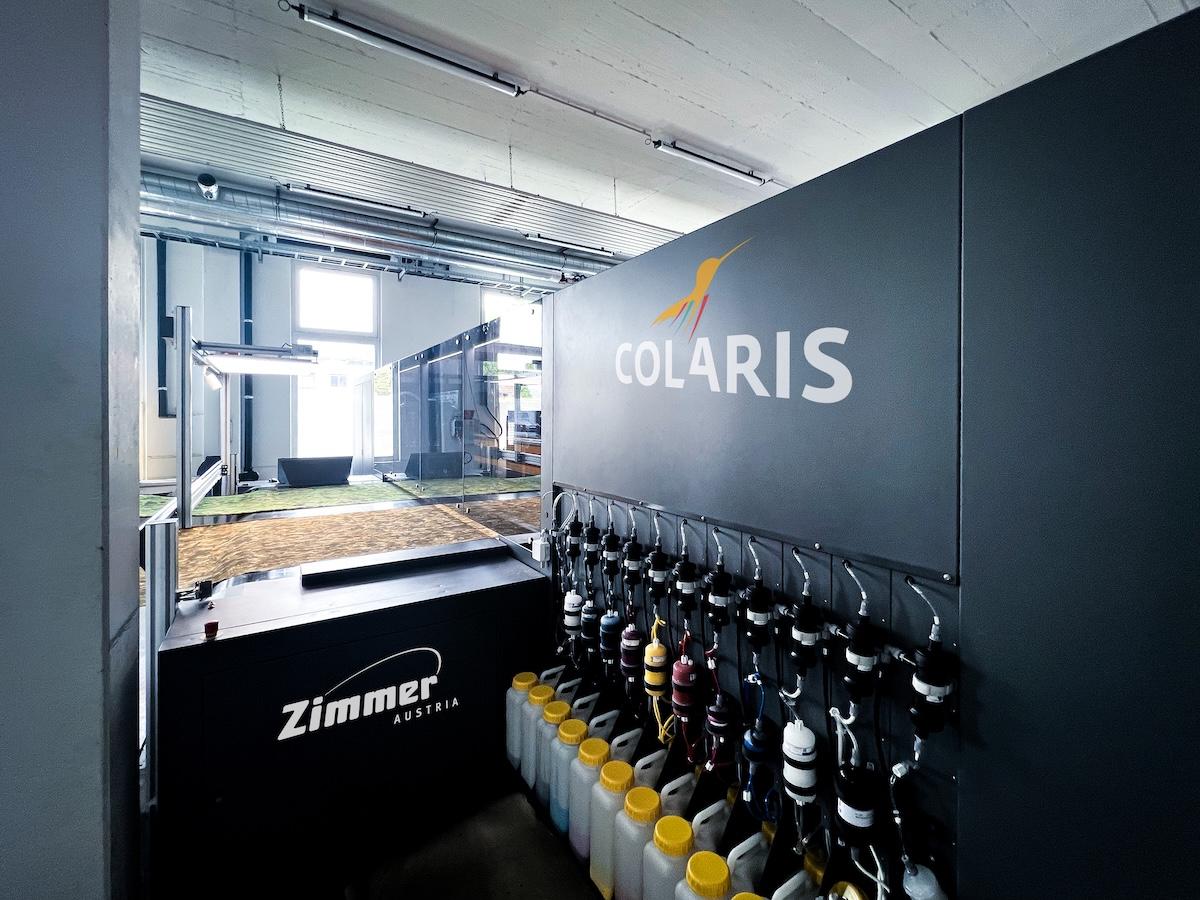
ARCHROMA is pursuing water-based pigment printing systems with TOUGH CAMO to meet military camouflage requirements, including infrared reflectivity. J. Zimmer is working with COLARIS on digital inkjet printing for camouflage patterns, including specific dye bath colors for military applications. The advantage of digital systems lies in reproducibility, speed, and pattern flexibility. The requirement remains the same: the fabric must still provide camouflage after abrasion and washing.
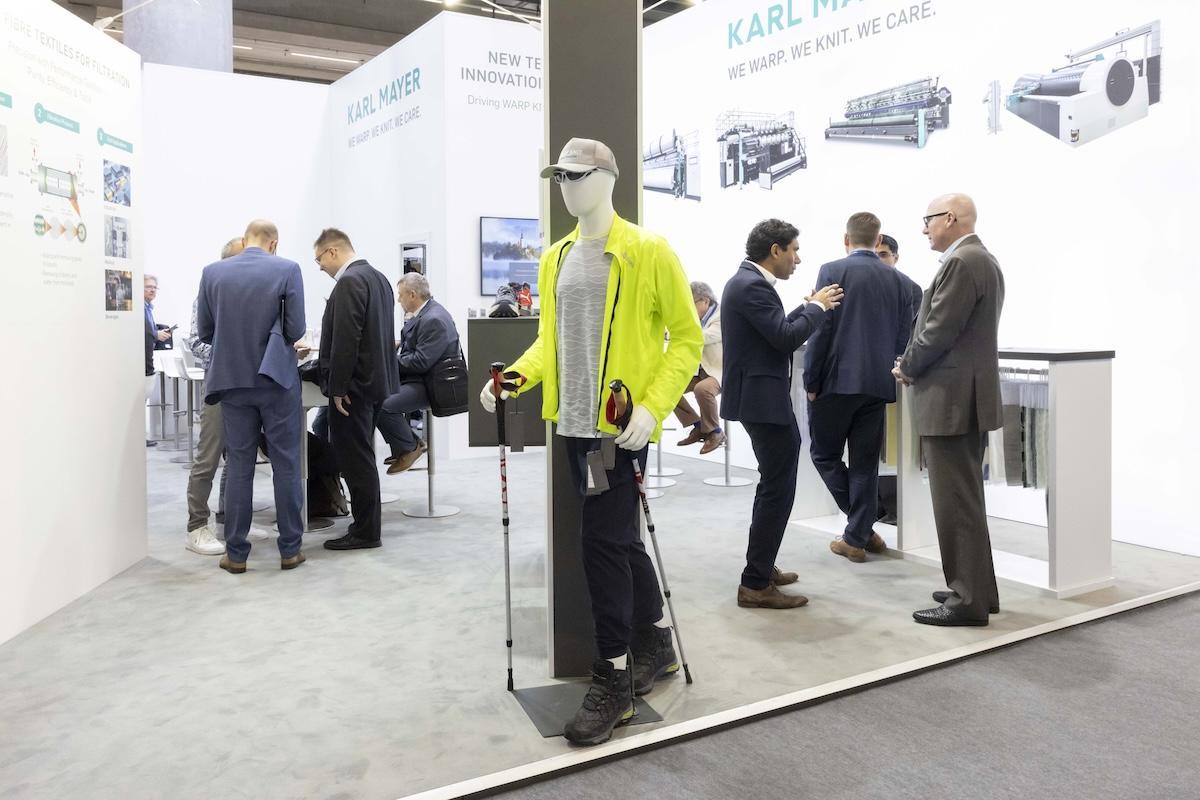
KARL MAYER showcased another example of protection through structure rather than chemicals with the Warp Knitted UV Protection Jacket. UV protection 50+ is achieved here solely through a dense warp-knitted structure. At the same weight, the material is said to be more breathable than comparable circular-knit fabrics.
CBRN, Activated Carbon, and the Question of Wearable Protection
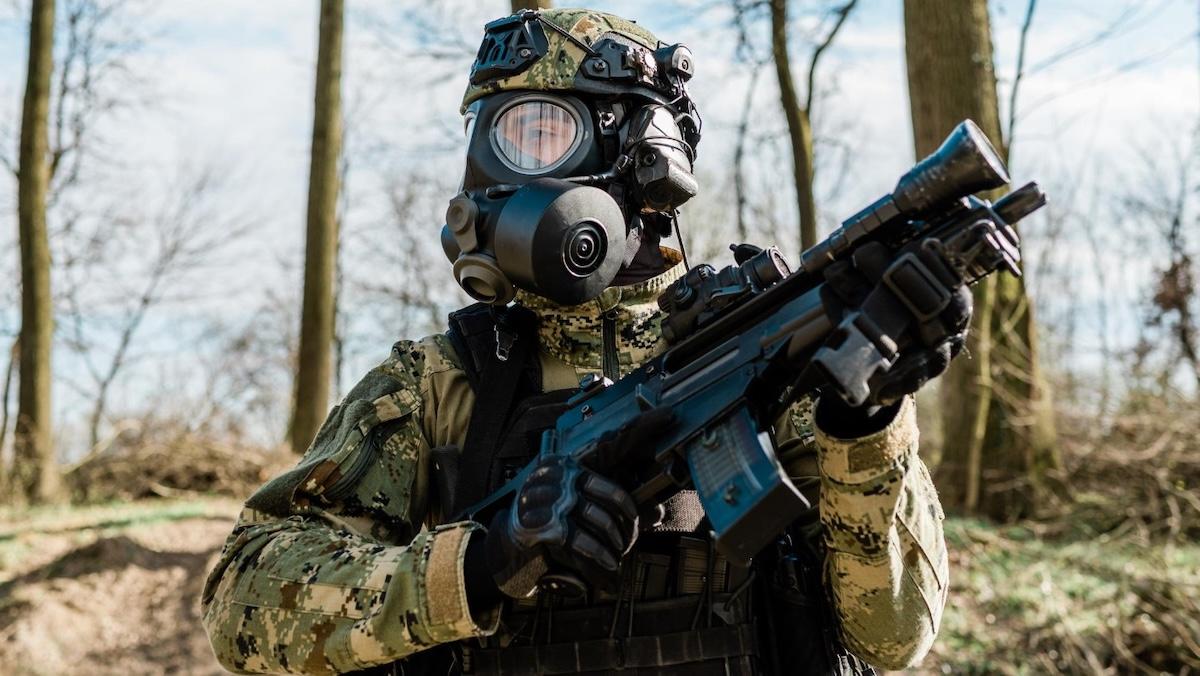
CBRN protection is a good example of the conflicting goals of various properties in protective textiles. Protection against chemical and biological threats requires a barrier effect or adsorption. The body requires airflow, moisture transport, and heat dissipation. CBRN protection must therefore become lighter, more breathable, and more comfortable to wear for longer periods.
CHEMVIRON presented Flexzorb at TECHTEXTIL 2026—an activated carbon fabric for protective suits that requires no binder or backing material. The goal is to reduce weight while maintaining the same level of protection against chemical and biological weapons, including for field operations as well as protective suits for helicopter and fighter jet pilots.
Other developments go a step further: moving away from purely passive adsorption toward active decontamination. The NeutraliZr fabric from exhibitor HEATHCOAT is impregnated with zirconium hydroxide and is designed not only to absorb chemical warfare agents such as VX, GB/sarin, or mustard gas, but also to hydrolyze them. In tests, a universal decontamination agent was able to remove over 99 percent of chemical warfare agents from equipment and over 90 percent from skin simulants.

For first responders, the duration of wearable protection is what counts. A CBRN system that offers excellent protection on paper but causes heat stress will not prove effective in the field. That is why lighter activated carbon structures, breathable membranes, improved laminations, and targeted moisture management are coming together.
Wearing comfort is a performance reserve
Against this backdrop, protective textiles cannot be reduced to individual parameters such as thermal resistance or water vapor resistance. The interaction between the body and the textile is more complex. Simulations, such as those conducted by Empa, help narrow down material options before field trials. A simulation takes minutes; field trials take months. Especially in the defense sector, where real-world operational conditions are difficult to simulate and human subject studies are costly, simulations can accelerate development.
The goal is clear: heat stress and water loss must be reduced. Protection must not come at the expense of operational capability. Small differences in the material become more noticeable after hours than after five minutes in a showroom.
The exhibitor OUTLAST Technologies relies on phase change materials (PCM) and aerogel insulation for this purpose. PCM absorbs heat when the body heats up and releases it again when the temperature drops. AERSULATE uses aerogel and is designed to provide insulation even under pressure despite its very thin profile. This is particularly relevant under panel supports, shoulder straps, or backpack loads, because many traditional insulation materials lose effectiveness when compressed.
Webbing, cord, elastic: small parts, big impact
Narrow textiles seem unremarkable—until they fail. Webbing, cords, elastic bands, edging, and seams determine whether gear fits properly, supports a load, stays in place, and remains stable despite weather, washing, and movement. Seams and seam sealants are also critical to safety here. A waterproof laminate loses its effectiveness if the seam isn’t properly sealed. High-performance textiles become weak at their joints if tapes, yarns, adhesives, or welding processes do not interact properly with the base material.
GÜTH & WOLF demonstrated with Shock Absorbing Webbing that a strap can not only hold but also manage energy. Through controlled tearing structures, the force-time curve is altered during abrupt loads. This is helpful in impact scenarios, for retention lanyards, helicopter crews, or airborne applications.
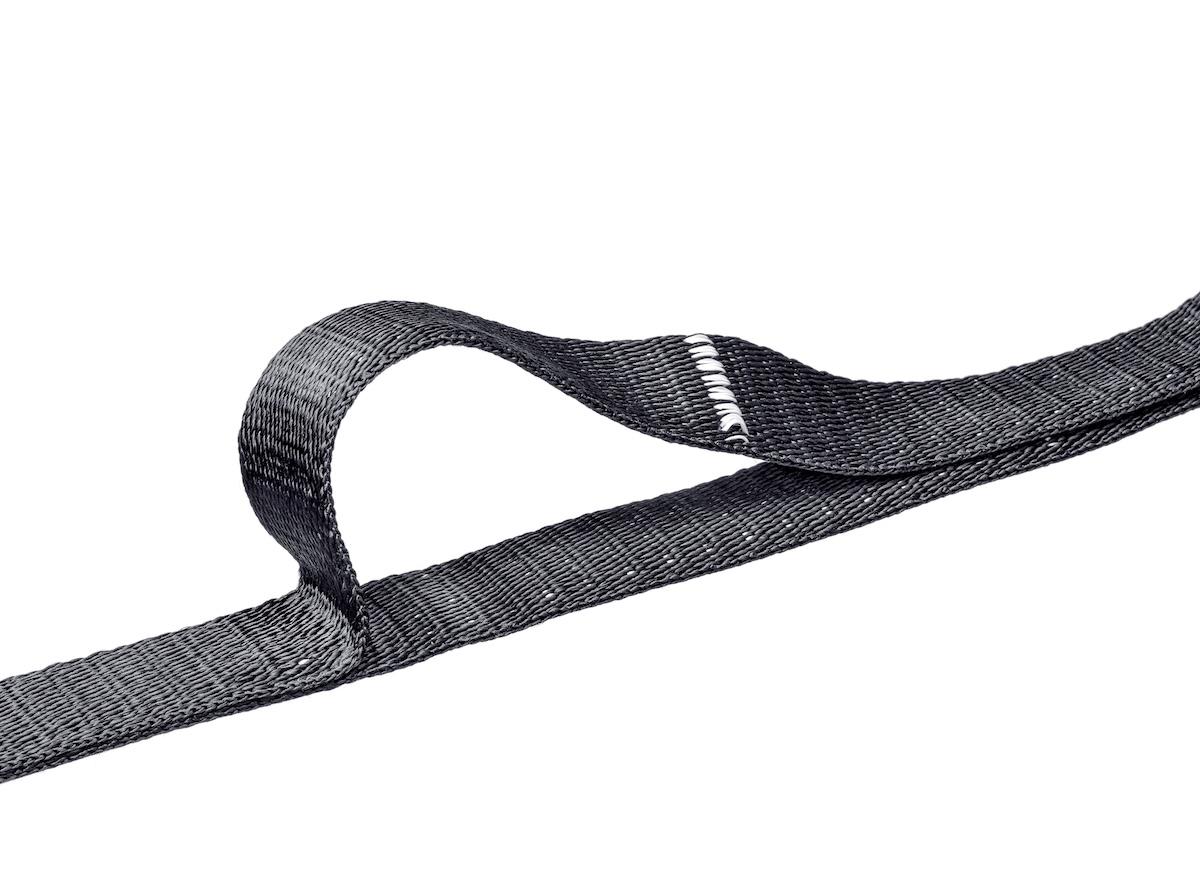
BOWMER BOND addresses water, salt, mud, and frost. Webbing coated with PU or PVC prevents moisture from penetrating the fiber structure. In maritime or winter environments, the webbing thus remains lighter, more flexible, and more mechanically predictable.
Hardware is becoming lighter, quieter, and more discreet
The focus is also shifting when it comes to buckles and hardware. Metal was long the standard because it is sturdy. But metal is heavy, can corrode, clinks, and does not automatically behave like the textile environment under IR. Modern polymer hardware aims to balance stability, weight, signature, and usability.
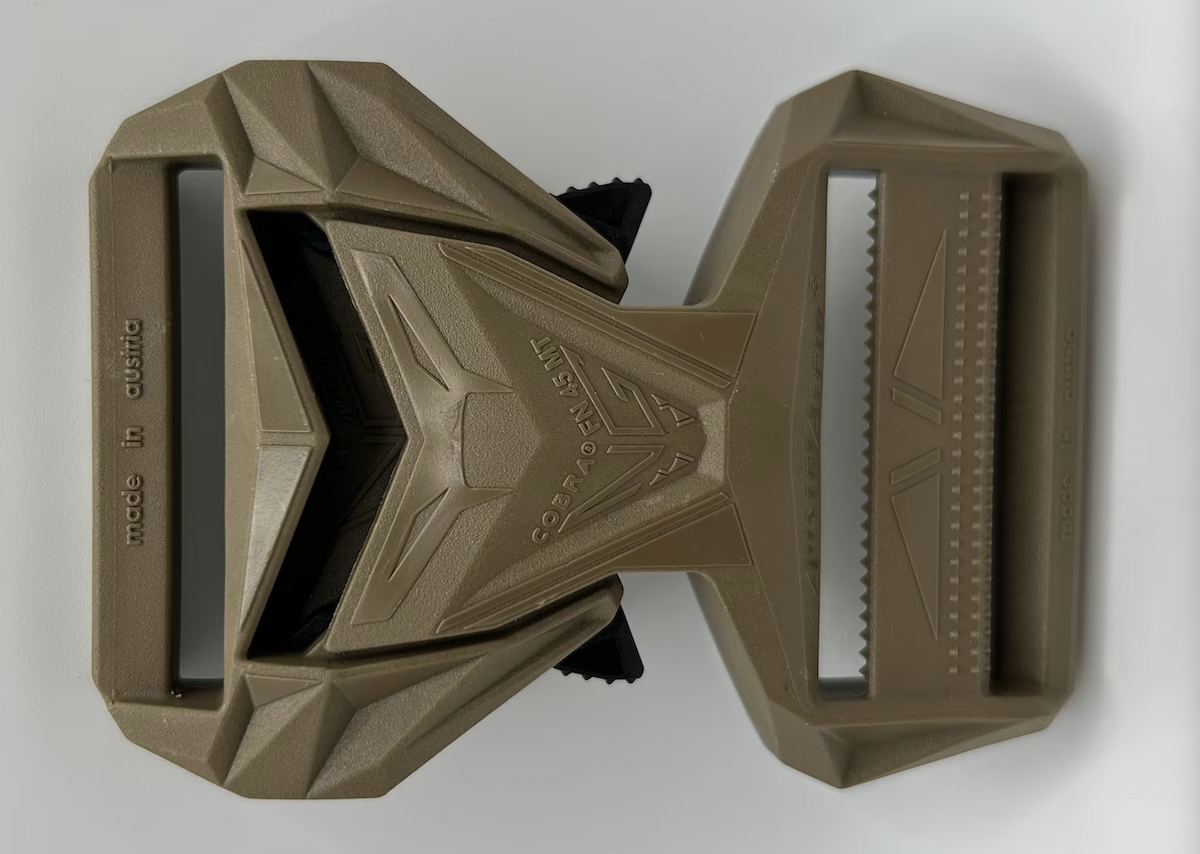
The COBRA NG from AUSTRIALPIN, weighing 24 grams and with a breaking load of 150 kilograms, is an attractive option for non-life-support carrying systems such as battle belts, backpacks, or lightweight plate carrier components. DUE EMME addresses plate carriers and tactical vests with its SPIDER Quick Release System. Polymer pullers and webbing management reduce noise and loose ends.
Smart Textiles: Useful Only If They Remain Durable
Do smart textiles still function after washing, creasing, or abrasion? Can they be incorporated into garments, and what about certification? These questions must be answered so that the “smart textiles” trend can translate into real-world equipment.
IMBUT is working on electrically conductive structures in fabric, for example for pressure sensors or data and energy transmission. And AweXome Ray, in collaboration with axrial, is exploring carbon nanotube filaments for EMI shielding—a kind of textile Faraday cage instead of a heavy copper wire structure. EMI shielding is becoming increasingly important because modern soldier systems incorporate more and more radio communications, optronics, power, sensors, and data. More electronics increase visibility—and thus vulnerability.
Circularity: Possible, but Not a Dogma
Sustainability has a different priority in the defense context than in the outdoor or fashion sectors. No military will accept compromises in ballistic protection for the sake of a lower carbon footprint. Nevertheless, recycling and circularity are becoming more important when they reduce dependence on raw materials and support secondary applications.
Not every recycled fiber is immediately suitable for a ballistic protection layer. Sensible starting points include carrier fabrics, training materials, padding, insulation layers, acoustic vehicle materials, backpack components, or non-critical fabrics. Chemical or enzymatic recycling can open up higher-value cycles in the long term, provided that quality and traceability are ensured.
Exhibitors at this year’s Techtextil showcased initial approaches in this area. The Aachen-based startup RE.SOLUTION, winner of the TECHTEXTIL Innovation Award 2026 in the “New Recycled Materials & Recycling Technologies” category, focused on electrochemical polyester recycling. In the same category, the Australian biotech company Samsara was recognized for its enzyme-based recycling technology. ANDRITZ showcased mechanical shredding systems such as reXline and X-PRO Crosslapper for recycling textile waste into nonwovens.
For defense textiles, it is no longer enough to simply compare material data sheets. What matters most is whether the fiber, yarn, finish, processing, and testing together result in a resilient system. This is precisely where Techtextil’s value lies: it brought the various stages of the textile supply chain together in one place and highlighted which solutions will be industrially viable by 2026.
Procurement professionals and system providers seeking lighter ballistic materials, PFAS-free finishes, IR-stable components, breathable barriers, or robust narrow textiles discovered in Frankfurt the prerequisites for reliable end products: available materials, scalable processes, suitable manufacturing partners, and verifiable standards.
TECHTEXTIL online
SPARTANAT is the online magazine for Military News, Tactical Life, Gear & Reviews.
Send us your news: [email protected]
Ad
similar
Get the weekly SPARTANAT newsletter.
Your bonus: the free E-Book from SPARTANAT.
