Get the weekly SPARTANAT newsletter.
Your bonus: the free E-Book from SPARTANAT.


Flight rescuer in the black mountains
The article describes the successful cooperation between the Austrian High Mountain Ranger Battalion 24 and the Montenegrin Armed Forces in the field of mountain warfare training. This partnership resulted in joint exercises, training programs, and the development of specialized skills for mountain combat operations.

As part of the EU's "Stabilization and Association Process," a mountain combat-related training project with the Montenegrin Armed Forces was already established in 2007. After successfully completing the relevant action plan of the Austrian Balkan Initiative in 2012, it was agreed to further intensify the successful cooperation in the field of mountain warfare training (Mountain Warfare Training Cooperation - Montenegro) and support a medium-term cooperation.
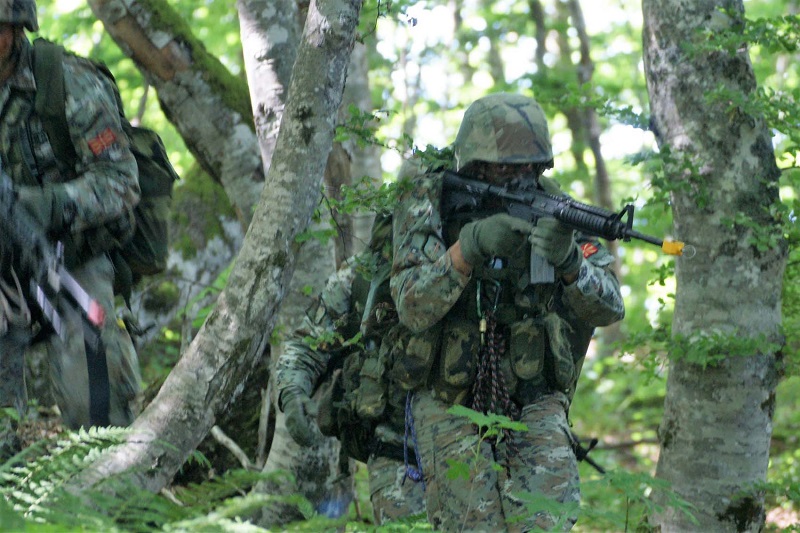
The first highlight of the cooperation was a joint exercise with the Montenegrin Armed Forces, the Field Training Exercise Common Challenge 2012 (FTX CC12). Subsequently, the further representation of national interests to support the Montenegrin Armed Forces was assigned as a partnership task to the High Mountain Ranger Battalion 24, and the necessary legal basis for this was established under the direct responsibility of the Attaché Department.
The 24ers in the black mountains
The Combat Exercise Common Challenge 2017 (FTX CC17) represented another highlight in the practical imparting of mountain combat skills and was carefully prepared on-site over two years by the High Mountain Ranger Battalion 24. The establishment of relevant mountain technical skills was also supported by the regular dispatch of so-called "Mobile Training Teams" (MTT) from the unit. As part of the safety technical advice for the Montenegrin Armed Forces, the 24ers also ensured the expansion of another exercise area near the Kolasin garrison.
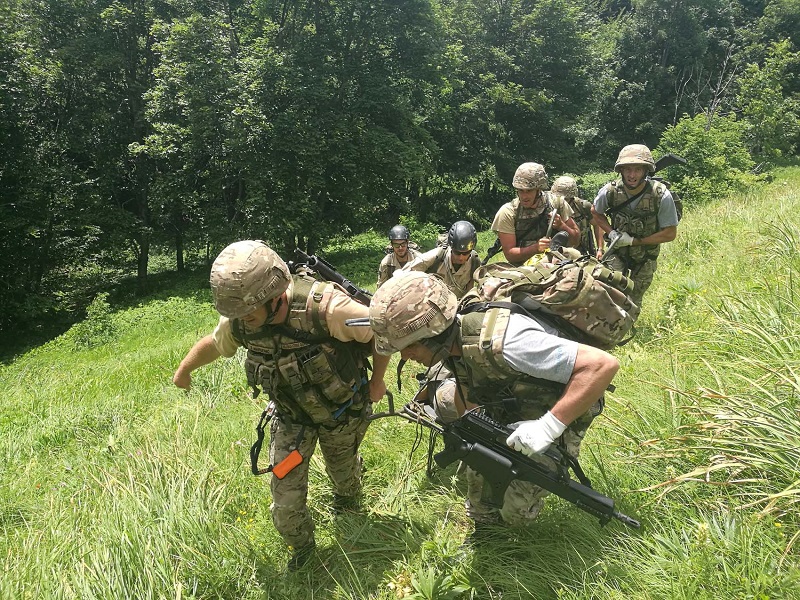
The FTX CC17 included a multinational mixed/reinforced mountain combat company and a battalion command. In total, 280 soldiers from Montenegro, Austria, and North Macedonia participated in the exercise. The Austrian contingent consisted of 38 cadre soldiers of the 24ers High Mountain Rangers from the Lienz and St. Johann garrisons. The battalion commander, Colonel Bernd Rott, was represented in the exercise leadership with a mountain rescue group, a risk management cell, judges, and a liaison officer, as well as sniper, machine gun, reconnaissance, and mountain reconnaissance teams.
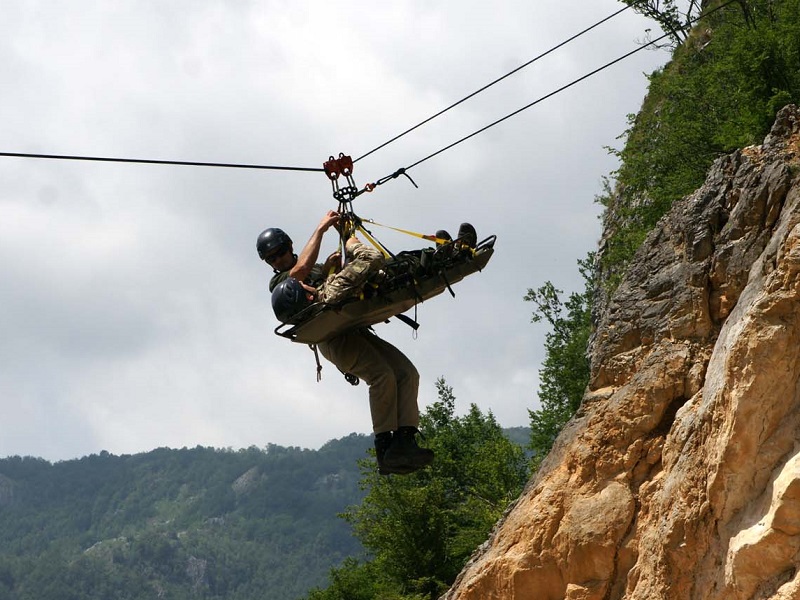
The valuable insights from CC17 and further training intensification enabled the conduct of the Common Challenge 2019 (CC19) in September 2019. The stated exercise goal of CC19 was to demonstrate and expand the level of professionalism and interoperability achieved by the units. The 24ers supported the endeavor in the areas of combat operations in the mountains, specialized logistics, risk management in extreme terrain, Combat Search and Rescue (CSAR), and mountain rescue. Ensuring combat mobility in extreme terrain by the 24ers' experts, as well as leadership, management, and coordination of specialized staff work, were further indispensable elements in the international exercise.
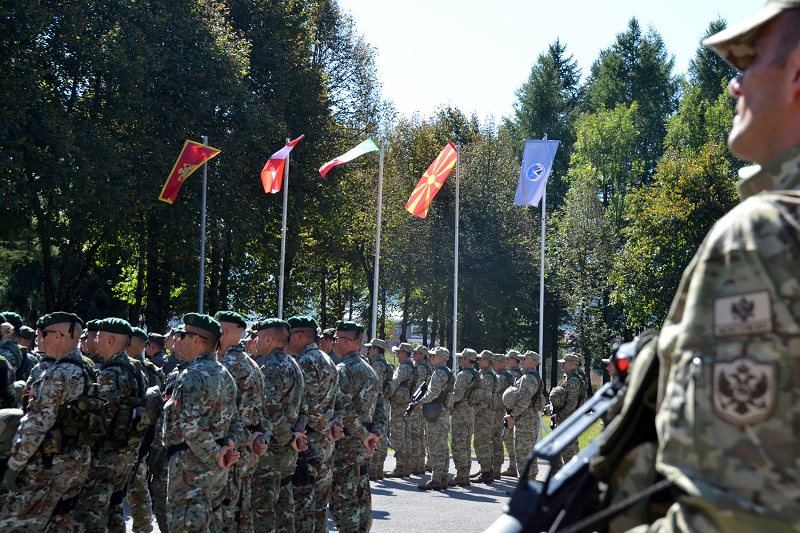
In these multinational exercises, mountain soldiers from Austria, Montenegro, North Macedonia, Italy, the USA, and representatives of the NATO Center of Excellence for Mountain Warfare had to complete a challenging attack exercise in extreme terrain under one command. The exercise scenario assumed a fictional peacekeeping UN-mandated mission in an exposed mountainous region where military operations are only feasible with specialized infantry. The combat exercises not only served to impart skills but also provided the specialists of the High Mountain Ranger Battalion 24 with the opportunity to enhance their competence in terms of compatibility, use in a multinational environment, and operational leadership in mountainous arid zones.
First flight rescuer training conducted
On November 19, 2021, the first seven Montenegrin flight rescuers received their course certificate in the presence of Montenegrin Minister of Defense Olivera Injac and senior representatives of the Montenegrin and Austrian Armed Forces. The dedicated soldiers had already completed the five-week training to become Austrian Army high mountain specialists and were able to acquire the basic skills for flight rescue in two intensive weeks. This ensures for the first time in the history of the young Balkan state a national capability for rescue and disaster relief in terrestrial difficult terrain.
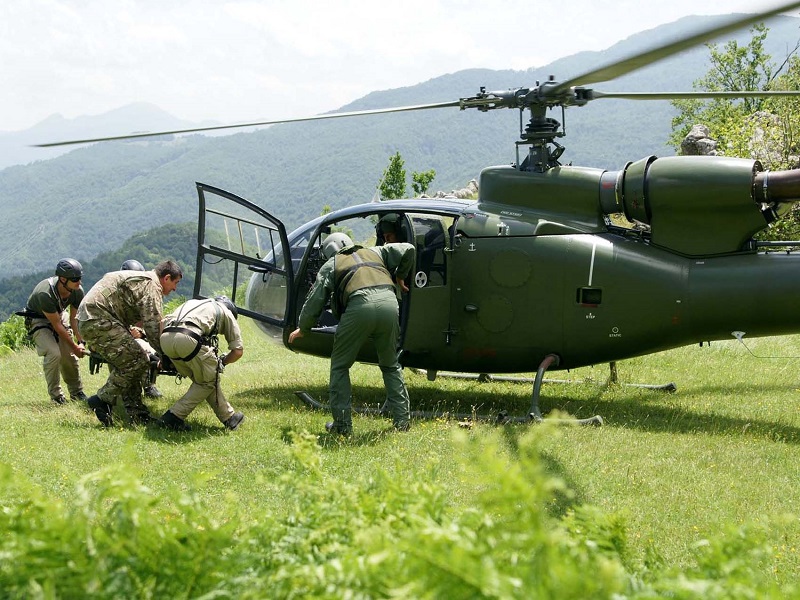
Together with the Montenegrin aviation technology, pilots, and the national training center, the deployed 24 MTT was required to create, test, verify, test, and nationally authorize all procedures independently according to NATO standards. Since, on one hand, the Bell 412EPl helicopter used and on the other hand, the rescue and recovery equipment used in Montenegro, as well as the flight regulations, differ significantly from those in Austria, new ground had to be broken here as well. The intensive collaboration eventually laid the foundation for creating the training curriculum as well as the didactic and organizational implementation planning.

Through experience and foresight, independent action, and high commitment of the training team, safety and success in daily operations could be ensured. In practical training, a solid foundation for future operational activities of the pilots, technicians, and flight rescuers was laid in 80 flight hours with two helicopters and 707 winch rides.
Kurnik, Vzlt
Email: [email protected]
http://gebirgsjaeger24.chayns.net
https://www.facebook.com/gebirgsjaeger24
https://about.me/gebirgsjaeger24
https://www.pinterest.com/gebirgsjaeger24
https://www.instagram.com/gebirgsjaeger24
https://twitter.com/Gebirgsjaeger24
Photos: Redaktion Gebirgsjäger
SPARTANAT is the online magazine for Military News, Tactical Life, Gear & Reviews.
Send us your news: [email protected]
Ad
similar
Get the weekly SPARTANAT newsletter.
Your bonus: the free E-Book from SPARTANAT.
