Get the weekly SPARTANAT newsletter.
Your bonus: the free E-Book from SPARTANAT.


Rare Earths, Magnets, and China's Control
China's recent addition of U.S. companies to its export control list highlights Europe's reliance on Chinese-dominated supply chains for rare earths and permanent magnets. Despite emerging alternatives, key industrial processes remain concentrated in China, creating significant risks for European industries reliant on these technologies.

China has recently added several U.S. companies in the rare-earth and defense sectors to an export control list, including MP Materials and USA Rare Earth. Both companies represent an effort to establish independent supply chains for rare earths and permanent magnets in the West.
This is a warning sign for Europe’s defense industry. Modern systems require not only electronics, ammunition, and production capacity, but also components such as permanent magnets. These are used in sensor technology, radar and communications systems, precision systems, propulsion systems, and aerospace applications, among others. Of particular concern is the upstream value chain: China dominates key stages, from rare earth refining—90 percent of which takes place in China—through metallization and alloying to magnet production (also 90 percent in China).
The new Prewave report “Magnetic West” shows why this dependence is easily underestimated at the direct supplier level. Those who focus solely on direct suppliers often fail to recognize how deeply European supply chains are integrated into Chinese-dominated processing and magnet networks. The report also outlines what should be done instead.
The risk begins where transparency ends
At the Tier 1 level, Europe’s magnet supply chain appears diversified. At the Tier 5 level, however, more than 81 percent of the companies surveyed are linked to Chinese-dominated permanent magnet ecosystems. It is precisely this discrepancy that makes permanent magnets one of the most difficult-to-identify supply chain risks facing European industry. While direct suppliers rarely point to China, exposure increases across the upstream supplier tiers from 0.6 percent at Tier 1 to 17 percent at Tier 2, 61 percent at Tier 3, 78 percent at Tier 4, and more than 81 percent at Tier 5.
The results highlight a fundamental problem with many resilience strategies: supply chains often appear diversified because companies are primarily familiar with their direct suppliers. The actual concentration risks, however, often lie several levels higher in the value chain. There, raw material flows, processing operations, and technological expertise are frequently concentrated among a comparatively small number of players.
For industry in the DACH region, this hidden dependence on permanent magnets from China is particularly relevant. Germany, Austria, and Switzerland are home to a high concentration of automakers, suppliers, mechanical engineering firms, automation specialists, and industrial exporters. Many of these sectors are among the key users of permanent magnets—in electric drives, servo motors, robotics, sensor technology, wind power technology, and precision systems.
The actual bottleneck does not lie in mining
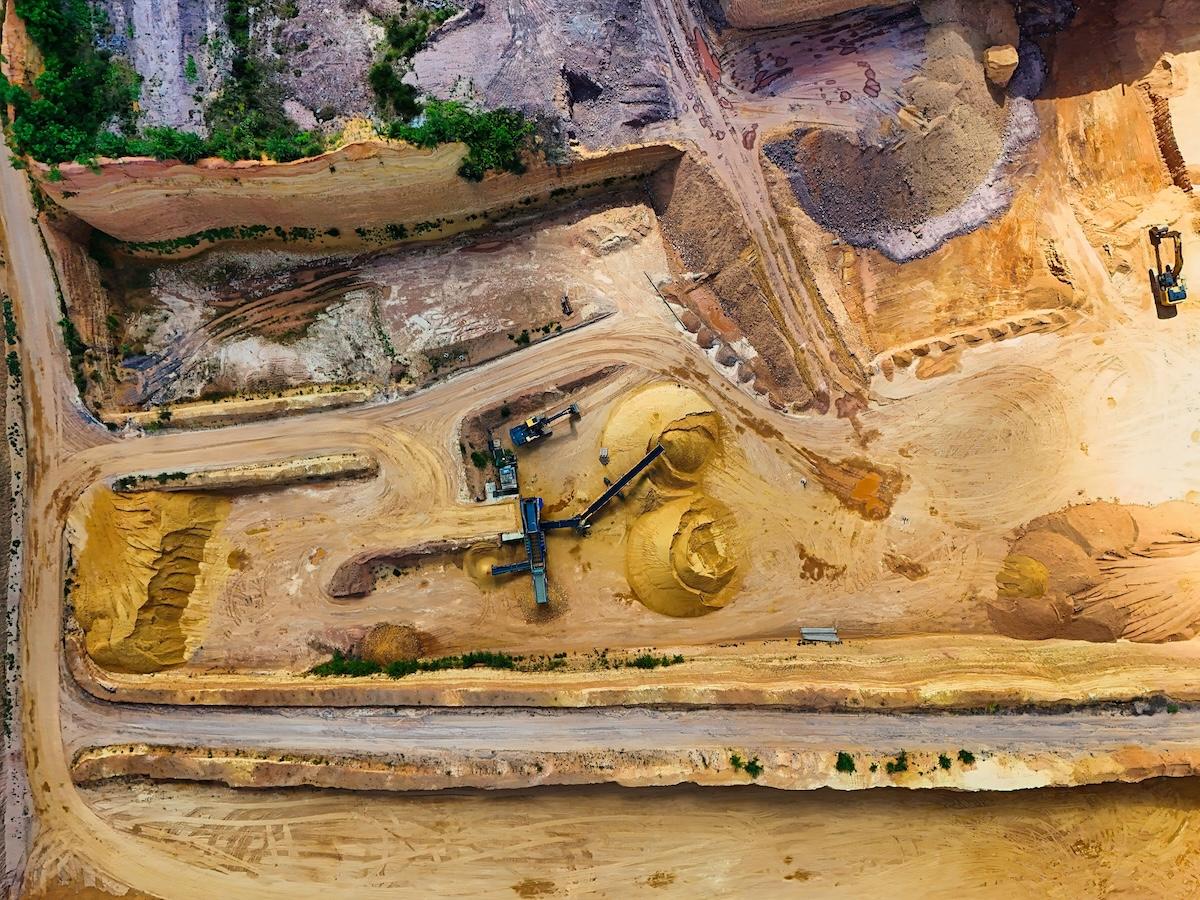
Public discussion about rare earth elements often focuses on raw material deposits. In fact, rare earth elements are by no means available exclusively in China. Significant reserves exist in Australia, North America, Europe, Brazil, and various African countries, among others. The decisive bottleneck therefore lies not in geology, but in industrial processing.
Numerous highly specialized process steps lie between the mining of rare earths and the finished permanent magnet. These include the separation and purification of the individual elements, refining, metallization, the production of alloys, and the actual magnet production. In particular, the processing of heavy rare earths such as dysprosium and terbium is considered technically demanding, capital-intensive, and environmentally challenging.
While many Western economies have outsourced these production stages for decades, China has systematically invested along the entire value chain. This has resulted not only in production capacity but also in technological expertise, industrial clusters, supplier relationships, and process knowledge that are difficult to replicate today.
The result is an extraordinary concentration of industrial capacity. Today, China accounts for approximately 90 percent of global rare earth refining capacity and 85 to 90 percent of global permanent magnet production. Added to this is its dominant position in the processing of heavy rare earths, which are indispensable for numerous high-performance applications.
The strategic risk therefore arises not primarily from a shortage of raw materials, but from the concentration of industrial capabilities.
Why the “Vietnam Gap” Has Not Led to True Diversification
Vietnam is regarded as a blueprint for successful diversification: its own raw material deposits, growing manufacturing capacities, and integration into Asian industrial supply chains made the country a supposedly attractive alternative. In reality, however, it is often only the final assembly that has been relocated. The upstream processing stages, on the other hand, remained closely linked to Chinese suppliers; companies in Vietnam continue to source raw materials, intermediate products, or technological inputs from China. At the same time, Chinese companies themselves are expanding into Vietnam, thereby accompanying the geographic shift of their customers.
Thus, no alternative ecosystem has emerged in Vietnam—only a new geographic gateway to the existing Chinese value chain.
Alternatives Are Emerging—But Only Slowly
New industrial ecosystems are currently emerging outside of China. Companies in Australia, North America, and Europe are increasingly investing in mining, refining, metal processing, magnet production, and recycling. These developments mark the first serious attempt in decades to build independent capacities along the value chain for rare earths and permanent magnets. Nevertheless, many projects are still in the early stages of development.
In particular, the processing of heavy rare earth elements remains a critical bottleneck. However, the projects currently in the planning stages are not expected to significantly alter the global supply balance until 2027–2030 at the earliest. A short-term decoupling from China appears unrealistic.
Resilience Instead of Decoupling
For now, companies must first gain a better understanding of their dependencies. This includes, in particular, analyzing tier-n supplier structures, qualifying alternative suppliers at an early stage, reducing the use of critical materials such as dysprosium and terbium, and actively participating in emerging non-Chinese value-chain networks.
The real challenge does not lie in tapping new sources of raw materials. The decisive factor will be whether—and how quickly—Europe can build its own industrial capacities for separation, refining, metallization, and magnet production. Until then, a central part of the industrial transformation will remain dependent on supply chains over which Europe has only limited influence.
About the Report
The new PREWAVE report “Magnetic West” examines the dependence of European supply chains on Chinese-dominated value chains for rare earths and permanent magnets. The analysis is based on a Tier-n network evaluation of the Prewave Supply Chain Graph, which examined 169 major European companies from the particularly relevant sectors of the automotive industry, energy, chemicals, advanced manufacturing, and defense. The result: Europe’s dependence on Chinese permanent magnet ecosystems is significantly greater than traditional supplier analyses suggest. HERE you can download the report.
About PREWAVE
PREWAVE is revolutionizing supply chain risk management with its comprehensive end-to-end platform. Founded in 2017, the company combines advanced AI technology with in-depth industry expertise to provide transparency and control over supply chain risks. The platform analyzes data from over 200 risk categories and more than 400 languages, enabling companies such as Lufthansa, Ferrari, and Toyota to anticipate and mitigate disruptions before they impact operations. From Tier 1 suppliers to the outer layers of the supply chain, PREWAVE’s solution ensures resilience, transparency, and sustainability at every stage. Prewave has been recognized as a leader in the Gartner® Magic Quadrant for Supplier Risk Management Solutions 2025.
PREWAVE online
SPARTANAT is the online magazine for Military News, Tactical Life, Gear & Reviews.
Send us your news: [email protected]
Ad
similar
Get the weekly SPARTANAT newsletter.
Your bonus: the free E-Book from SPARTANAT.
