Get the weekly SPARTANAT newsletter.
Your bonus: the free E-Book from SPARTANAT.

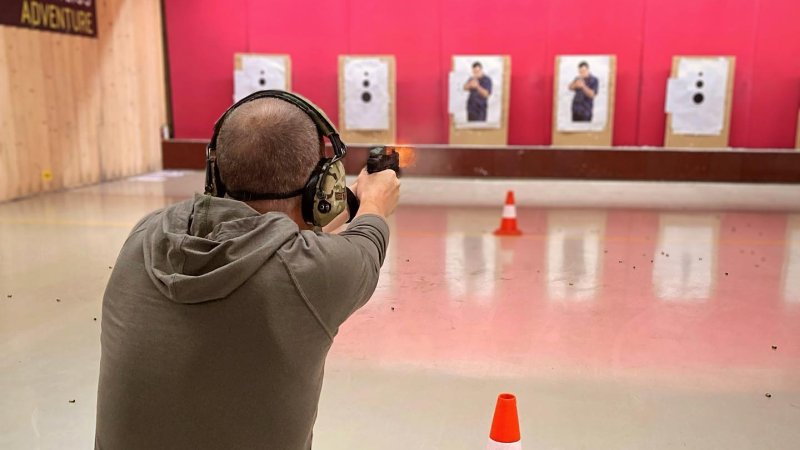
Edelweiss Adventure: Defense Shooting Module 2
Module 2 of defensive shooting at Edelweiss Adventure involved shooting in various positions, after body turns, step sequences, and parcour shooting. Participants practiced live fire drills and received feedback to improve their marksmanship.

Three weeks passed between the first two courses, which we also utilized. During a conversation, we were already advised that the jump in level between Module 1 and 2 should not be underestimated. During this time, we tried to internalize what we learned in Module 1 through dry fire training, and we were able to arrange for independent training on the range in live fire as well.
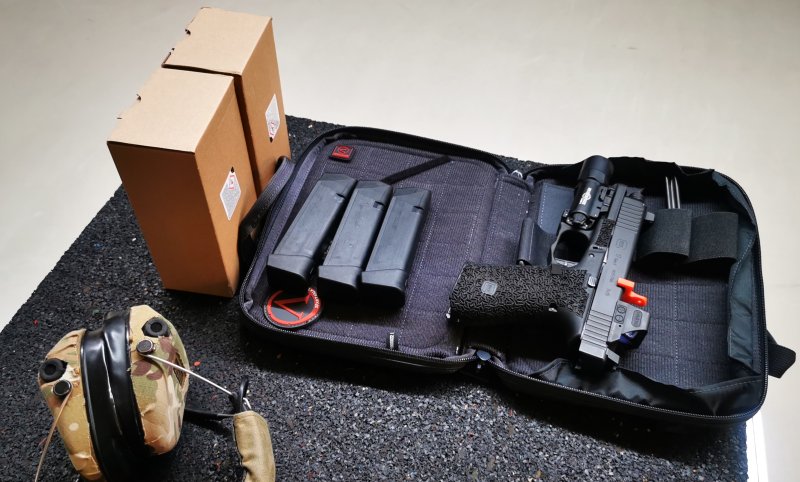
So, with great enthusiasm, we headed back to Edelweiss Adventure and the excitement was high to see if the training would be sufficient. Quickly, there was a repetition of things already known from Module 1, the nice welcome in the foyer, the registration, and signing up for the use of the shooting range. Soon, we were back in the facility and started putting on the shooting belt.
The weapon remained holstered and secured, the magazines empty as well. The course began and Heinz immediately asked if anyone had been able to train during the meantime. The group nodded somewhat hesitantly, knowing that the instructor would soon challenge them, and the merciless target would show the current training level.
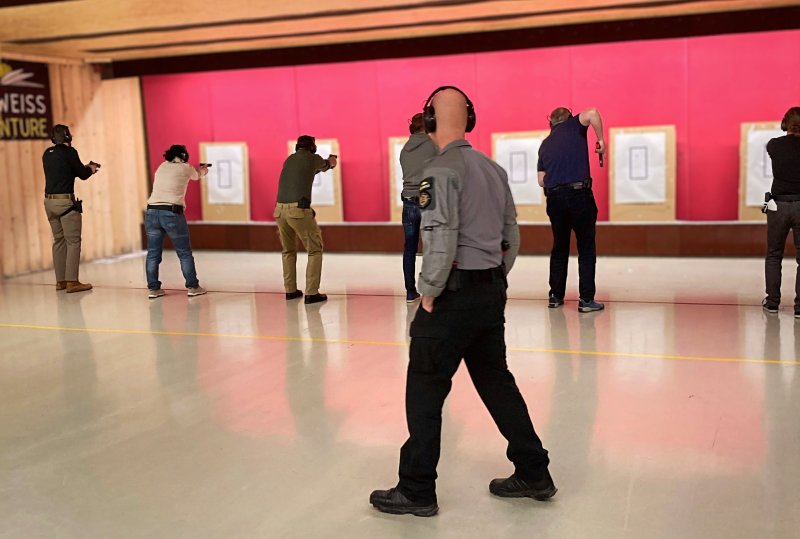
Without dry fire training, we went straight into the first simple exercise to make holes in the target at close range. Quickly, it became apparent to everyone, including us, at what level they were operating and how familiar the handling of the weapon actually was.
The hits on the target provided immediate feedback on whether one was focused or perhaps feeling somewhat driven by group dynamics, when others were shooting faster than oneself. Heinz gave the participants some initial feedback, and they immediately began working on themselves and their handling again.
Shortly thereafter, as is usual in every course: a qualification shoot. From 10 meters, participants shot at a man-sized target with one shot after a timer signal, holstered the weapon afterward, and repeated the process a total of three times. The motto here was "Accuracy before speed," because at the end of the course, each participant received a list of their hits, their shooting time, and the points achieved. This score sheet always serves as an official shooting proof for the authorities, should one not keep their own shooting log. (Although we highly recommend doing so.)
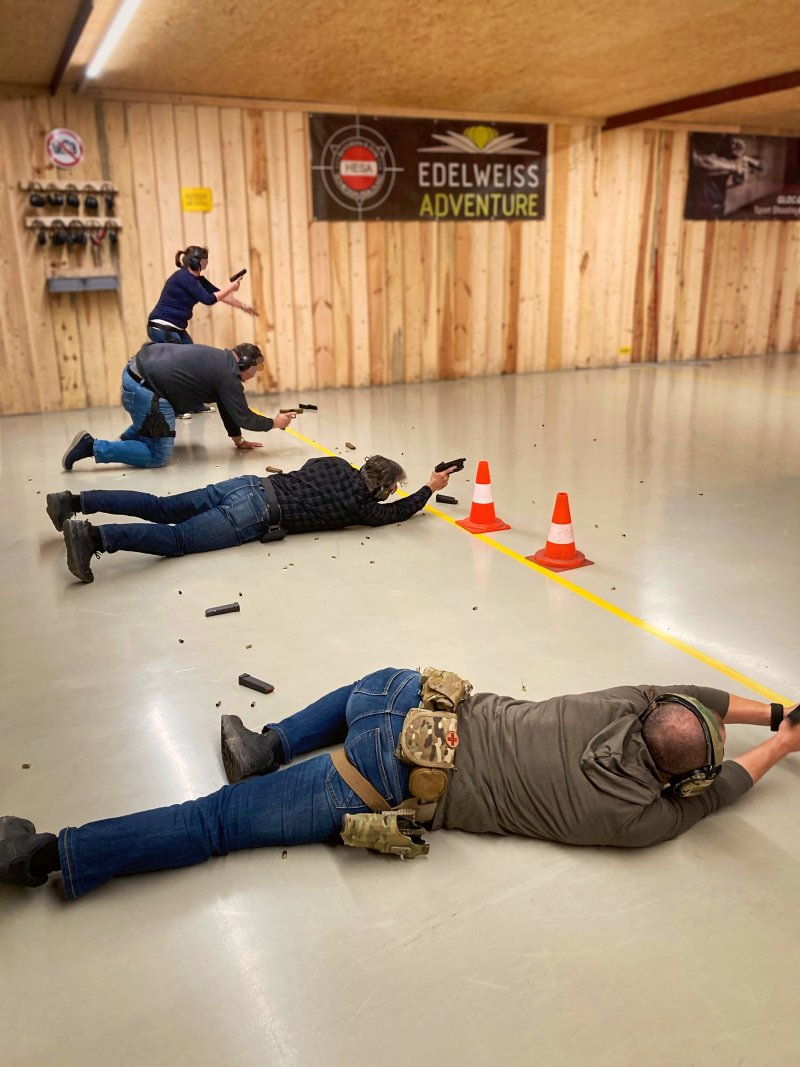
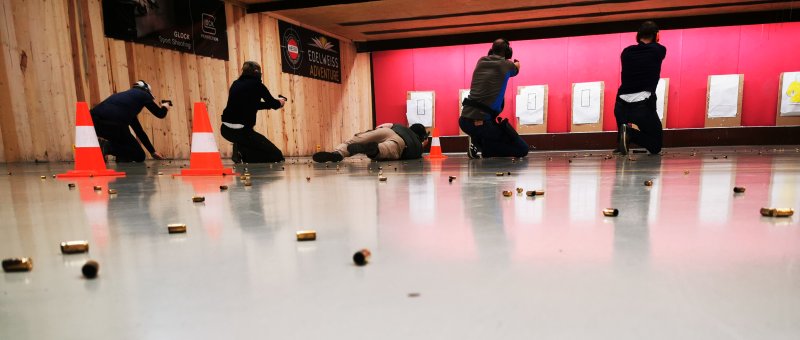
After this introduction, we dedicated ourselves to shooting in different firing positions. Until now, we were familiar with standing free shooting. Now, kneeling followed. Heinz demonstrated the process in dry fire training, and then we were able to imitate the movements right away. After a few repetitions, it was time to load the magazines, and the exercise was repeated in live fire. We also immediately moved on to combining different firing positions.
So, shooting was done standing and kneeling in one exercise. The logical conclusion after this drill was shooting from the lowest, namely the lying position. Heinz also demonstrated the correct sequence of movements in the various positions and how to best quickly and securely (knee-friendly) get to the ground. Again, the rule was the same: dry fire training first and then live fire drills. The exercises were now quite exhausting, whether lying on the stomach or on the back.
The individual positions were still quite unfamiliar, so one had to constantly ensure to handle, hold, and aim the weapon correctly. Thanks to constant feedback from Heinz, everyone improved their marksmanship in the respective firing positions, but some also struggled with their holsters. Some of them were not properly mounted on the belt and moved along with the weapon when drawn. This was obviously suboptimal for the shooters. From Module 1, we already knew that holsters should be securely attached to the belt to avoid such issues.
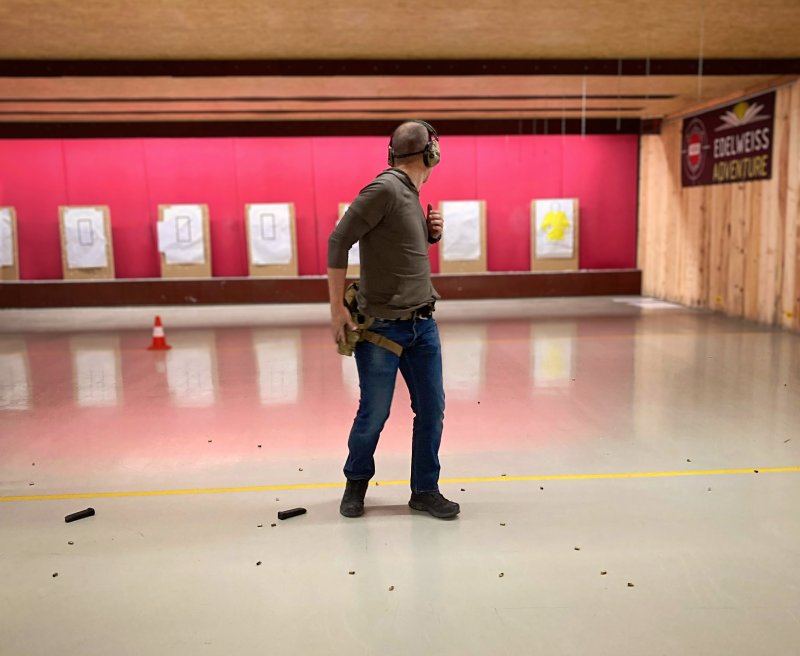
The program continued and shooting after a 90 and 180 degree body turn followed. Heinz explained the sequence in which the body should move. First, only the head turns to visually perceive possible dangers, then the body follows, and finally the weapon is drawn towards the target. The already familiar program of dry training followed by live fire practice. Once we turned 90° to the left, once 90° to the right, and once we stood with our backs to the target.
With eagle eyes, Heinz watched over his participants to ensure that the high level of safety required for this drill was maintained. None of the participants should draw their live weapon prematurely and accidentally graze bystanders with the muzzle, but rather present it only after visually perceiving the target and turning the body directly towards the bullet trap. But in our course, everything went well, the participants behaved properly and followed the safe sequence.
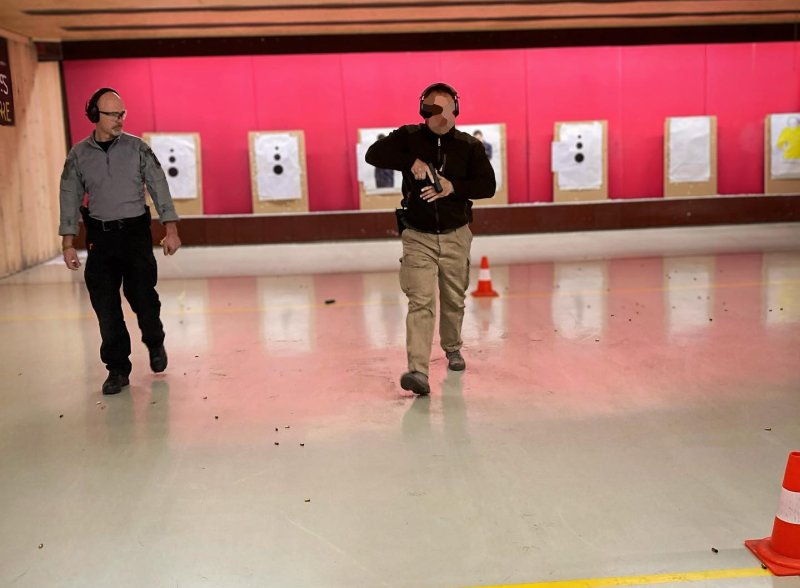
Shooting after a short sequence of steps was now discussed. Heinz explained in detail what it was about and also what to avoid. Since shooting was done in two groups, one group always performed the drill while the other watched.
The exercise was as follows - one moved towards and away from the target, only shooting on command. However, after the first steps, it became clear that "normal" walking had to be learned again. The head was already on high alert, knowing that one would soon be shooting, and so it happened that initially the pace and posture looked rather unnatural and tense. Heinz then explained that one should walk loosely, as if taking a leisurely stroll. Only then did the exercise make sense. So everyone refocused and tried to walk relaxed.
Heinz now repeatedly gave the command to shoot, which was followed by rapid stops and clean sequences of shots. Since everyone was moving in a line towards and away from the target, it was necessary to always pay attention to the other participants and one's own neighbor. But everyone concentrated and we always moved in a uniform line.
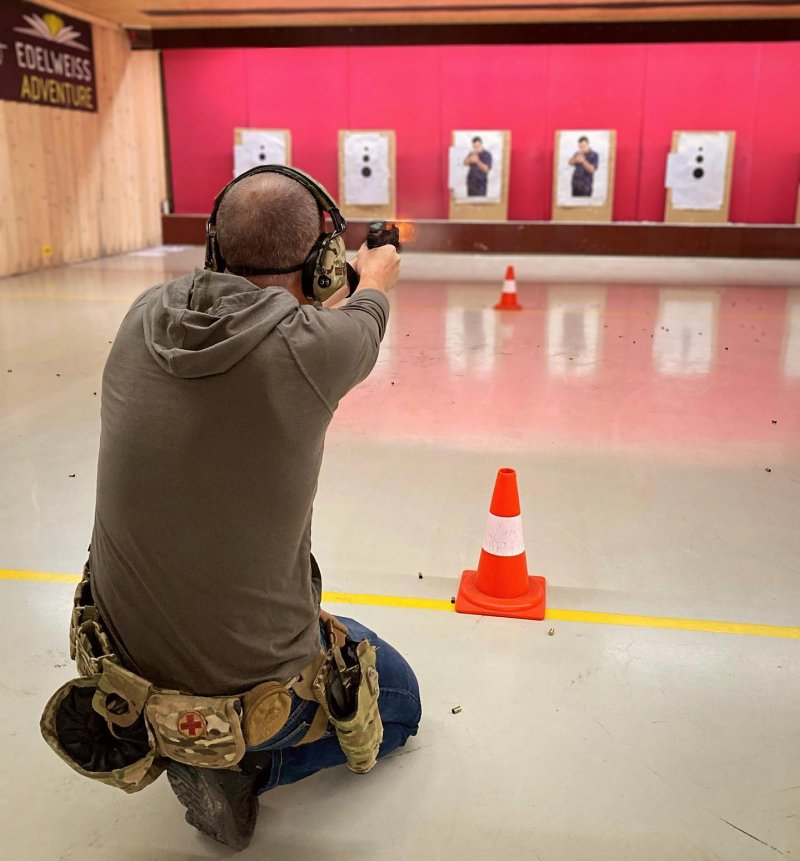
Finally, what was learned was brought together in a small course. One had to engage two targets at the same height from different distances. First standing from the 5m line, then kneeling from a distance of 10m, and finally lying down at a distance of 15m.
However, moving safely away from the target with the weapon also had to be learned, so Heinz demonstrated the SUL position. Armed with this knowledge, each participant went through the course individually and then received further individual analysis from Heinz.
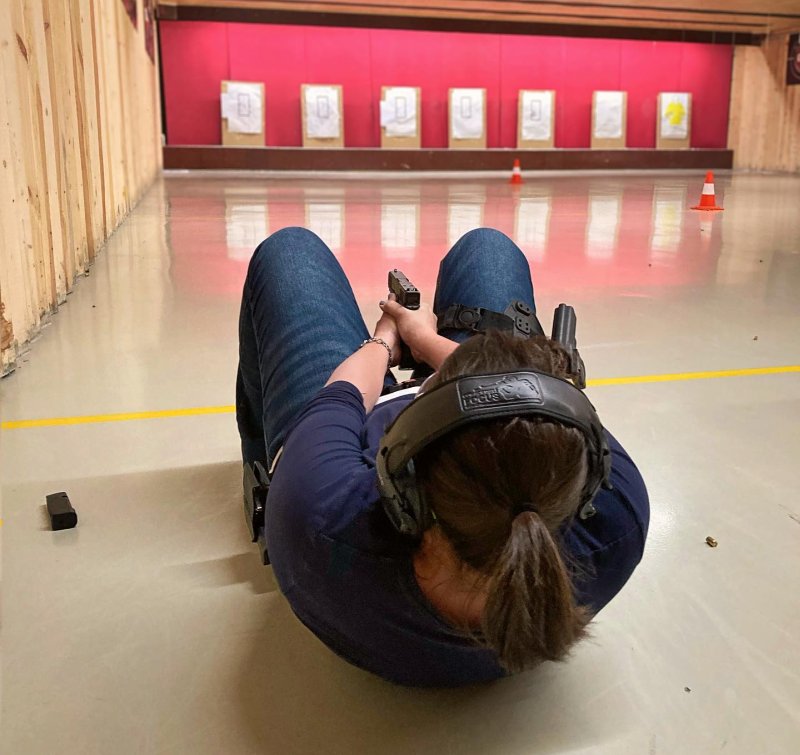
After about four hours and 310 shots, not only our weapons were smoking, but our heads as well, and unfortunately the course ended much too quickly once again. Although a lot of content was covered, we were able to implement everything and learn many new things. As with previous courses, it was clear that it was now up to us to practice.
It is best to practice natural exercises with live fire, but also conducting movement sequences in dry training helps to internalize the content correctly and safely. Only through repeated repetitions can one strengthen and automate the learning process - at this point, we can recommend Heinz's book Shooting Training. Here you can find the demonstrated techniques in written form, which is a big plus of Edelweiss Adventure compared to other course providers. In conclusion, we can highly recommend the course and look forward to Module 3.
If you would also like to attend courses by Edelweiss Adventure, you can find the relevant overview for your personal adventure HERE. Don't forget, the 1st Edelweiss Influencer Day will take place on July 11, 2021. More information can be found HERE.
EDELWEISS ADVENTURE on the Internet: www.edelweiss.world
SPARTANAT is the online magazine for Military News, Tactical Life, Gear & Reviews.
Send us your news: [email protected]
Ad
similar
Get the weekly SPARTANAT newsletter.
Your bonus: the free E-Book from SPARTANAT.
