Get the weekly SPARTANAT newsletter.
Your bonus: the free E-Book from SPARTANAT.

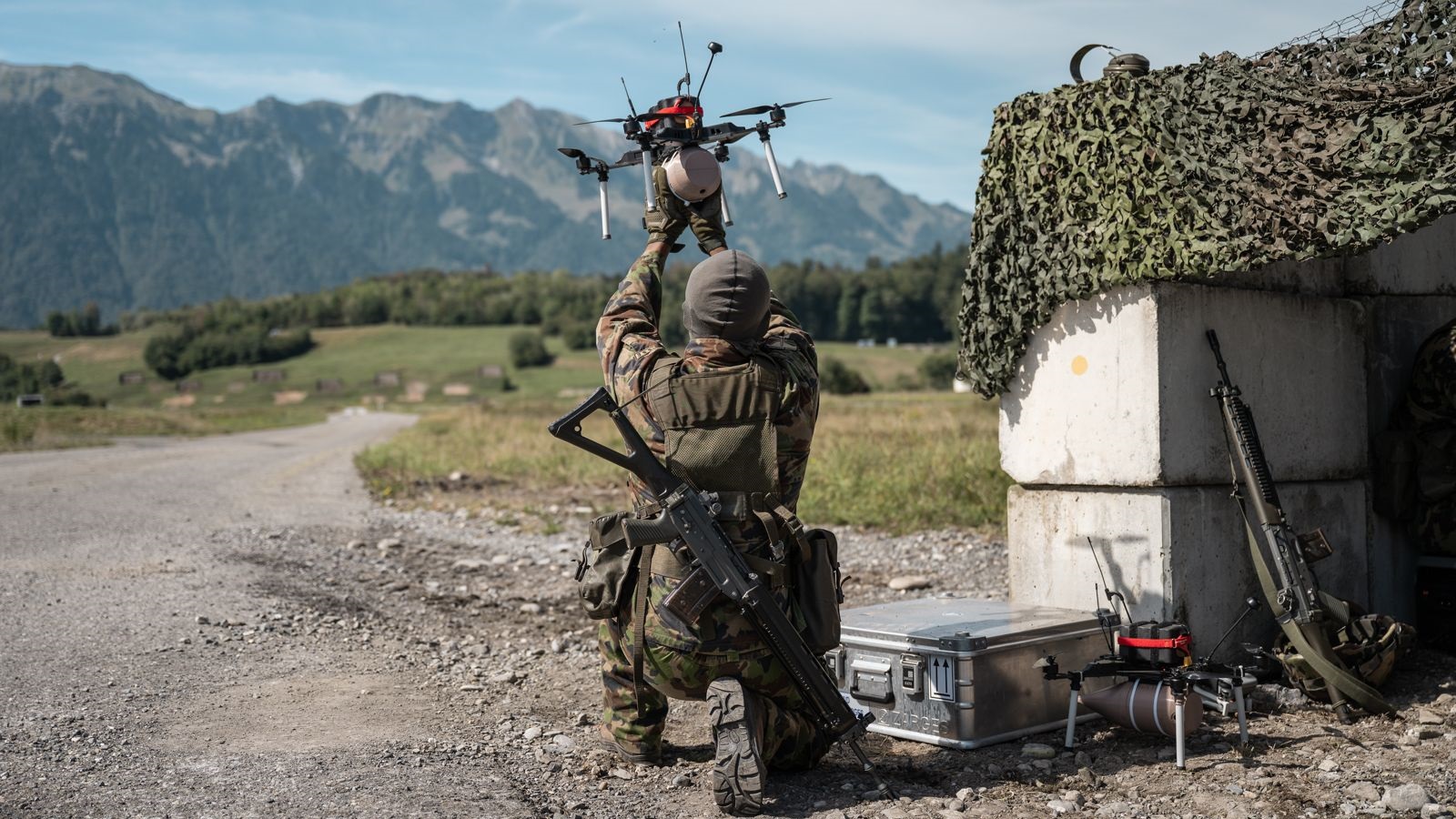
The Switzerland becomes drone-ready
The Swiss Federal Department of Defence is prioritizing drones and robotics, establishing the Center for Unmanned Systems to enhance military capabilities. A new drone battalion and recruit school will strengthen training and operations, while investments in drone defense and revised responsibilities aim to address emerging threats effectively.

In light of the threat situation, the Federal Department of Defence, Civil Protection and Sport VBS is focusing strategically on drones, drone defense, and robotics. With the "Center for Unmanned Systems," the VBS aims to develop, test, and integrate new technologies more quickly in collaboration with science and industry. A new drone battalion and its own drone recruit school will strengthen military capabilities and training. At the same time, the VBS is investing in drones and systems for their defense and aligning procurement with rapid technological development. Additionally, the legal foundations and responsibilities are being adapted to the threat situation.
Drones and robotics—intensified by artificial intelligence—have fundamentally changed warfare. At the same time, drones are increasingly gaining importance as a tool for hybrid conflict management. In Switzerland, there is also a noticeable increase in drone flights over military and critical infrastructures. Thus, with the defense guidelines of June 19, 2026, and the armament planning, the Federal Council has mandated rapid capability development in drones and robotics as well as their comprehensive integration into the army.
Center for Unmanned Systems VBS
With the Center for Unmanned Systems, the VBS is creating a civilian-military center for drones and robotics. It consists of a tech hub and a military command.
In the tech hub, the needs of the troops, the technological expertise of armasuisse, and the knowledge of universities, start-ups, and industry are bundled. New solutions are to be developed, tested, and quickly made usable for military deployment. The military command includes a testing and training organization. It tests new systems under as realistic conditions as possible and is responsible for the training of the drone battalion. Insights from the troops are to flow back to science and industry quickly through the tech hub.
The competence center is also intended to be open to other departments, cantons, and emergency services. The smooth collaboration of all state levels and organizations is central in light of the threat situation.
Drone Battalion and Drone Recruit School
Starting in 2028, the army will deploy its own drone battalion for reconnaissance, effect, and defense. At the same time, training in this area will be strengthened. An own drone recruit school will systematically build the required competencies and support the drone battalion.
Moreover, the VBS will embed drone competencies widely in the army. In doing so, the army can draw on the knowledge and experience of its militia members from business, science, and technology.
Investments in Drone Capabilities and Drone Defense
The VBS is investing in both the use of drones and their defense. Initial systems for drone defense have already been introduced. With the army message 2026, the Federal Council has initiated further capability increase. The armaments program 2027 provides for additional resources to protect further infrastructures and units and to equip the new drone battalion.
As technologies are continuously and rapidly changing, the army wants to procure systems more selectively, in smaller quantities, and in shorter cycles. What proves effective should be quickly deployed in the troops and further developed based on the experiences gained there.
Clear Responsibilities in Drone Defense
Currently, various authorities and agencies, as well as private operators of infrastructures, are responsible for drone defense. Therefore, an interdepartmental working group led by the VBS is reviewing the existing responsibilities and legal foundations and clarifying what adjustments are necessary in light of the changed threat situation. The work is also being conducted against the backdrop of a parliamentary mandate (Motion 25.4410).
SPARTANAT is the online magazine for Military News, Tactical Life, Gear & Reviews.
Send us your news: [email protected]
Ad
similar
Get the weekly SPARTANAT newsletter.
Your bonus: the free E-Book from SPARTANAT.
