Get the weekly SPARTANAT newsletter.
Your bonus: the free E-Book from SPARTANAT.

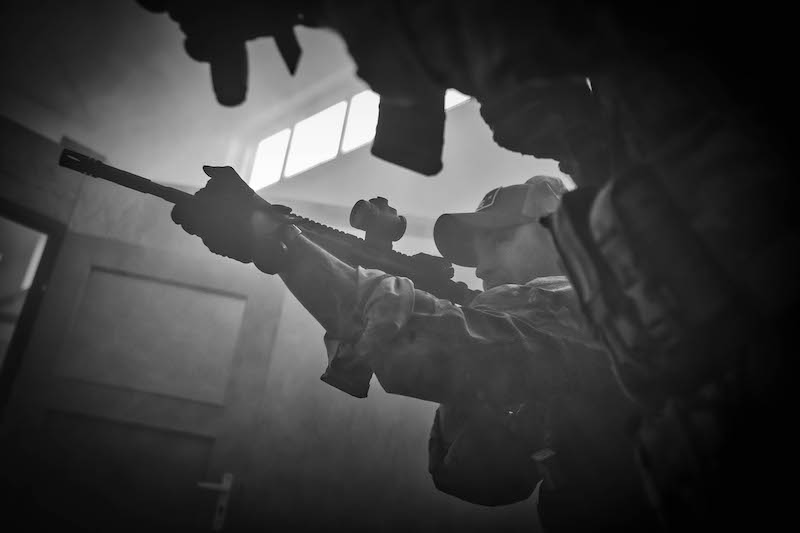
That was the 4th International Bodyguard Conference 2019.
An overview of the International Bodyguard Conference in Poland organized by Ralf Kassner, CEO of Wodan Security, featuring a diverse lineup of instructors and practical training sessions. Participants from around the world engaged in hands-on exercises, workshops, and lectures, culminating in a certificate presentation. The event showcased the latest tactics and techniques for bodyguards looking to enhance their skills and professional development.

From September 20th to 22nd, 2019, Ralf Kassner, the CEO of Wodan Security, invited for the fourth time to the International Bodyguard Conference in Poland. The event had a good reputation and after meeting Ralf in person at IWA 2019, I decided to sign up. I attended the event with two colleagues.
Once again this year, Ralf Kassner managed to organize a diverse portfolio of instructors from various countries, but more about that later.
 We arrived early at the meeting point, the Hotel Senator in Poland. We had enough time to talk to Ralf, have a coffee, and look forward to what was ahead of us. A large conference room in the hotel was rented for the IBC. Everything already seemed very professional, and our rooms were already prepared.
The group of participants was truly international, all professionals from around the world.
Once all participants arrived on time, there was a welcome speech and we were able to sign up for two groups based on our self-assessment. Group A "Experienced" and Group B "Less experienced." Since this was my first IBC and we were a mixed group, I signed us up for Group B. There was an introductory round. The group of participants was truly international. Participants were all professionals from around the world. Among them: Germans, Swiss, Austrians, Portuguese, Albanians, Kosovars, South Africans, Australians, and Japanese. The training language was clearly English. Each participant also received an IBC T-shirt, a nice gesture.
 Next was a quick lunch and the first task which we had to solve in teams of six people. The task was to create a security concept, based on a past assignment from Wodan Security, under time pressure. How we created this concept was up to us. More importantly, it was about improvising and acting in a group made up of people from various nationalities. It quickly became clear where the strengths of individual participants lay.
Now it was time for practical training. We moved to the range, Camp X. Our Group B started with Andrej. Andrej is a member of a special unit of an Eastern European army and brings incredible expertise with him. He first explained to us how to prepare vehicles in the event of a low-vis/high-risk scenario.
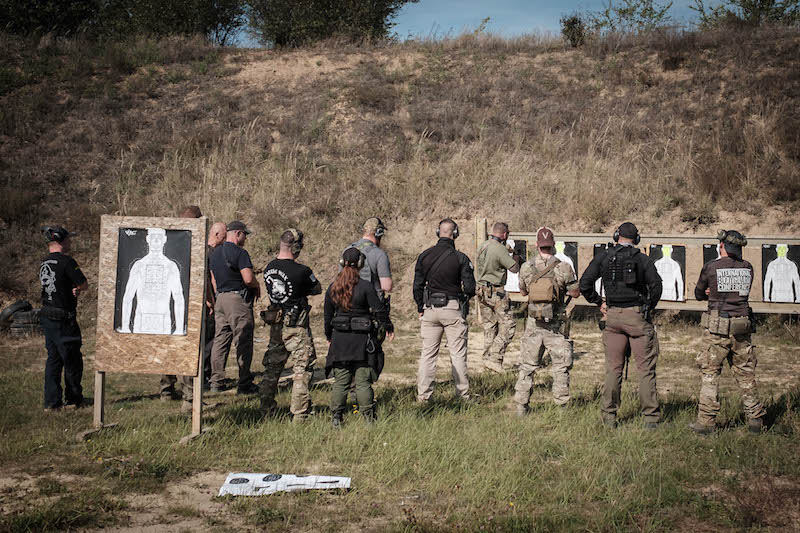 Andrej managed to surprise each of the participants with his ideas. Next was a safety briefing for the range before we moved on to practical exercises. We practiced movement patterns; first in the vehicle and then around the vehicle. As a driver, as a passenger, and as a team. The goal was to effectively engage targets from different positions with a handgun from the vehicle. Andrej, along with two assistant instructors, supervised three stations where there were different vehicle scenarios to deal with. With each station, we felt more secure and better. This was also due to Andrej's calm and professional demeanor; he turned out to be the epitome of a silent professional. Safety was ensured on the range, and we switched to FX weapons. A scenario was simulated in which two participants each sat in different vehicles and were supposed to engage each other on command.
Knife attacks are not only increasing in Germany, but it is also generally more likely to be attacked by an assailant with a knife than with a firearm.
Next, there was a group rotation, and we moved to Mark Human from South Africa. Mark is widely known as a specialist in the areas of knife combat, close-quarters shooting, and knife defense. To clarify, this was not a conventional knife defense seminar; it focused on reacting to knives with firearms, but also with one's own knife, as a firearm is not always the most effective tool. Knife attacks are not only increasing in Germany, but it is also generally more likely to be attacked by an assailant with a knife than with a firearm. Therefore, it was very relevant and important for Ralf Kassner to invite Mark Human, a specialist on this topic.
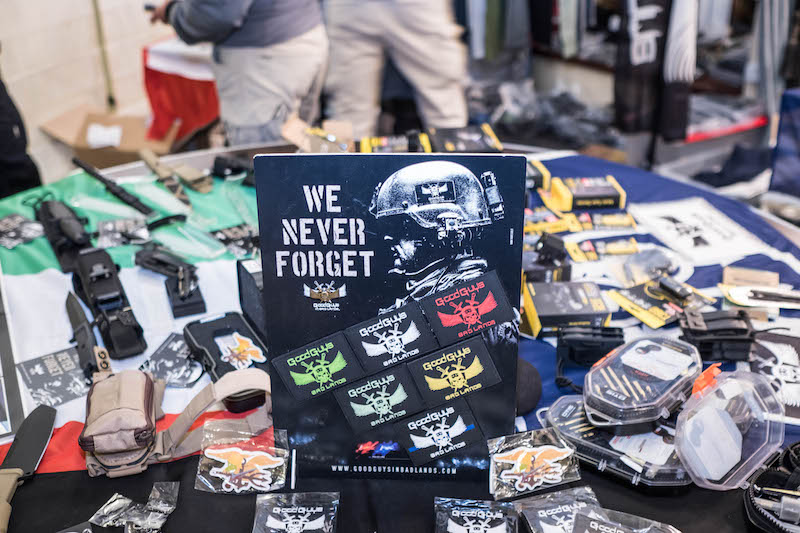 We then had dinner at the hotel and ended the evening. We had the opportunity to view the products of various exhibitors. That evening, Bonowi, Mayflower R&C, Velocity Systems, Crossfire Australia, TACWRK, FARO Public Safety, LALO, and Good Guys in Bad Lands exhibited their products. Exhibitors had the time to present their products face-to-face and in an application-oriented way.
We started day two with Mark, reviewing the content from the previous day and combining knife defense techniques with firearms. This showed how dynamic and yet simple Mark works with a handgun. We started with close-range shooting patterns, followed by weapon retention techniques. Dealing with multiple attackers was also practiced. Mark follows a strict concept of fire and movement.
After this station, we had lunch, and Camp X served a generous buffet and coffee. After an hour break, our Group B then went to the range. We trained with the AR15. Tactical magazine changes, emergency reloads, and principles of fire and movement were taught to us by Diego. Diego has roots in the US military and managed to make each participant better and safer with the AR15 in a very short time. This level of achievement deserves the highest respect and recognition. Within just a few hours, everyone was able to move, fire, seek cover, and identify the next suitable cover.
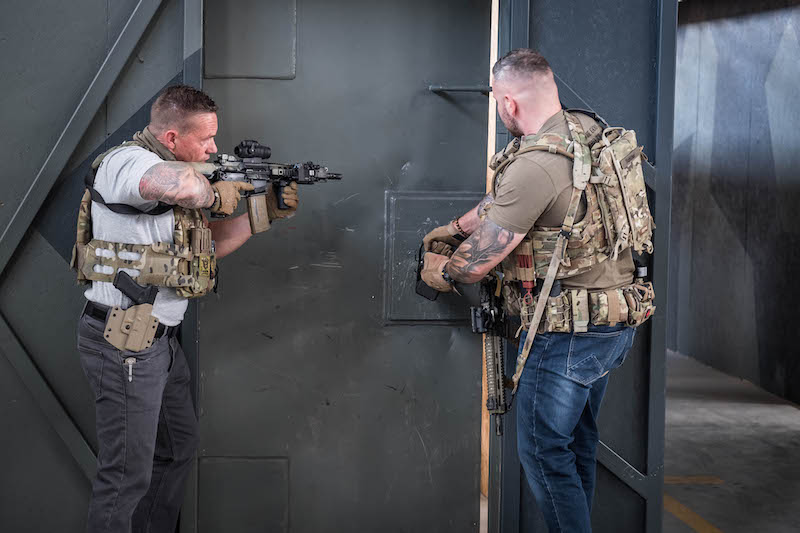
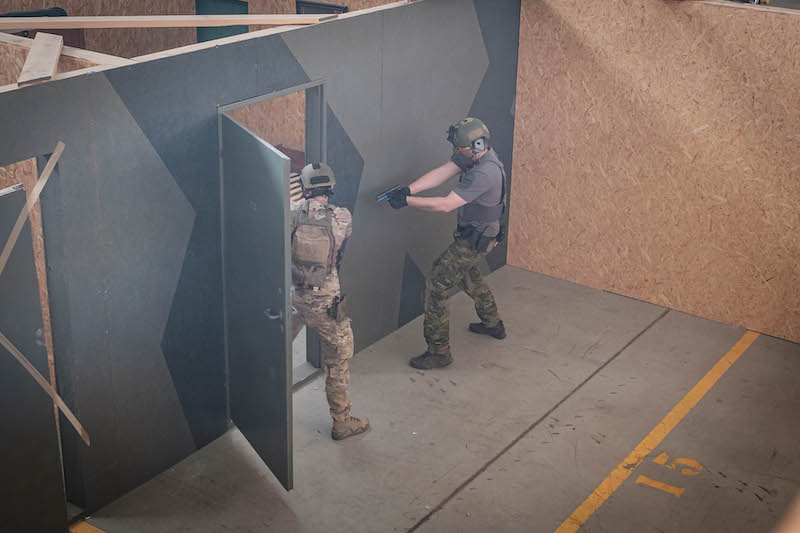
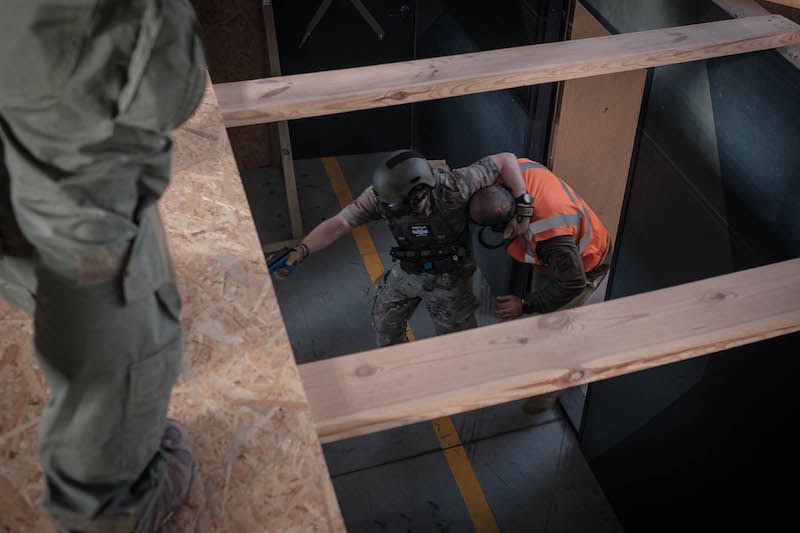 We then swapped groups and moved to a 360° indoor shooting range near Camp X. Here, the Wodan team was waiting for us. They taught us the fast and slow entry into rooms in a two-man team. Due to the small team size and the different levels of training within the teams, we had to find the right balance between speed and caution, as there was no reinforcement provided for us in the scenario. This already described the scenario we were about to face. In pairs, armed with FX weapons, we had to evacuate a VIP from a building occupied by intruders. Some intruders had firearms, others only knives, and some were actually innocent bystanders. This experience showed the harsh reality of room-to-room combat. No one emerged unscathed. But with each run, we improved, thanks in large part to the guidance of the Wodan team.
 We returned to the hotel, where Dr. Kurt Pelda, a lecturer and journalist, was waiting for us. Dr. Pelda had worked in crisis areas over 17 times, interacting with regular armies as well as guerrilla fighters, organized crime, and terrorist groups. The title of his lecture was "What we can learn from the wars in the Arab world," and we learned a great deal about IEDs, tactics, and equipment used by terror groups, as well as about the political background. The resourceful methods resulting from limited resources repeatedly amazed us. Improvised bedsheets against snipers, homemade mortars, and armored vehicle-borne IEDs were just some of the highlights of his lecture.
Each participant saw an opportunity to implement what they had learned in their everyday work as a bodyguard.
This was followed by a presentation from James Collier, a former member of a British special forces unit and CEO of 3 Corners Risk Consulting. His presentation focused on typical behavior of violent offenders, terrorists, and suicide attackers. How do I recognize a violent offender? How do I approach them? What do their gestures, facial expressions, and voice reveal to us? For example, there are distinct movement patterns and behaviors that potential attackers exhibit. Videos of actual crimes and attacks supported his arguments convincingly. Each participant saw an opportunity to implement what they had learned in their everyday work as bodyguards and take action against attacks before they happen. James' presentation was not only enlightening for the intelligence officers among the participants.
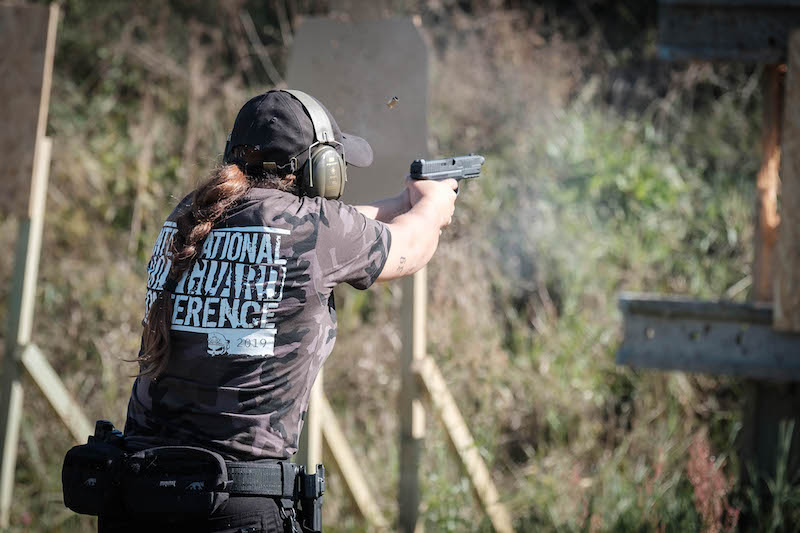
On the range, we first returned to Mark. We then repeated everything we had learned in previous days as dry runs before performing them as live fire drills with handguns. At this point, all aspects of Mark's dry training came together. Even participants with little experience in dynamic shooting seemed confident and fluid. We started with shooting patterns, followed by drills in movement, drills under stress, and close-quarters shooting at 0 meters. Finally, we practiced defending against a knife attacker with bare hands and then engaging two targets simultaneously with a handgun. Mark achieved what I thought was impossible. Participants with diverse backgrounds and experience levels managed to perform a dynamic drill that combined self-defense and shooting skills safely and smoothly.
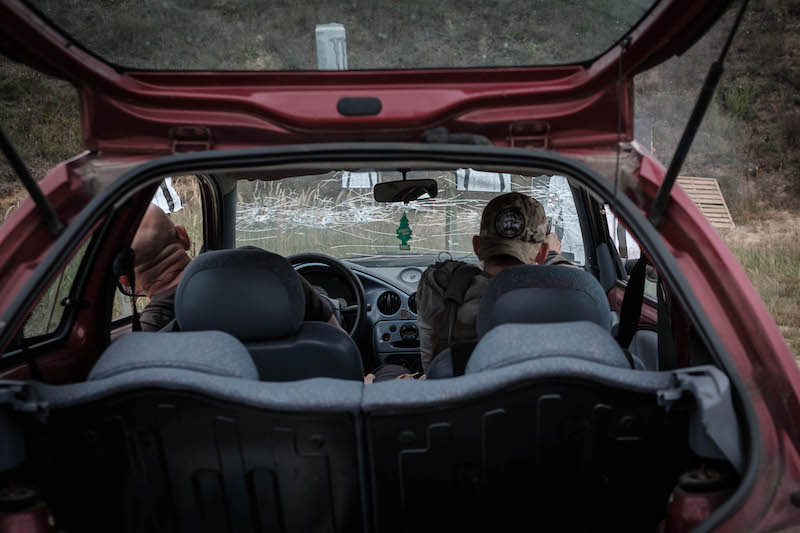 At the last station, Andrej and his instructors were waiting for us again. Andrej first explained the behavior of a vehicle crew caught in an illegal checkpoint or an attack by organized crime. We began with dry exercises for quickly dismounting the vehicle and for evading and disengaging from the enemy over the long-term. Participants with military experience like Kai and I were able to refine the infantry principles of fire and movement and bounding while others internalized these principles during training. We ensured security and trained live fire in three different stations, sometimes in pairs, sometimes in teams of four.
Three strenuous and instructive days had passed, and it was time for the certificate presentation, under the flag of Wodan Security. We thanked Ralf and the other instructors, each participant was visibly exhausted but satisfied. Wodan Security, of course, plans to hold a Bodyguard Conference in 2020, as well as CQB and tactics courses for bodyguards. I highly recommend Wodan Security to anyone working in Close Protection and looking to further their professional development.
Felix.
SPARTANAT is the online magazine for Military News, Tactical Life, Gear & Reviews. 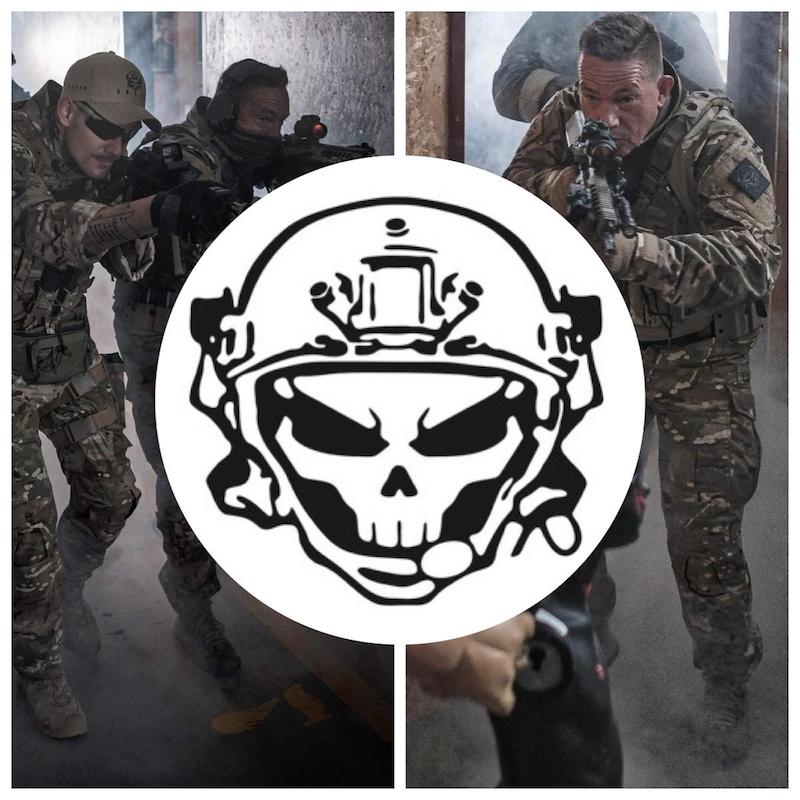
Send us your news: [email protected]
Ad
similar
Get the weekly SPARTANAT newsletter.
Your bonus: the free E-Book from SPARTANAT.
