Get the weekly SPARTANAT newsletter.
Your bonus: the free E-Book from SPARTANAT.


The new "Military History" 4/26
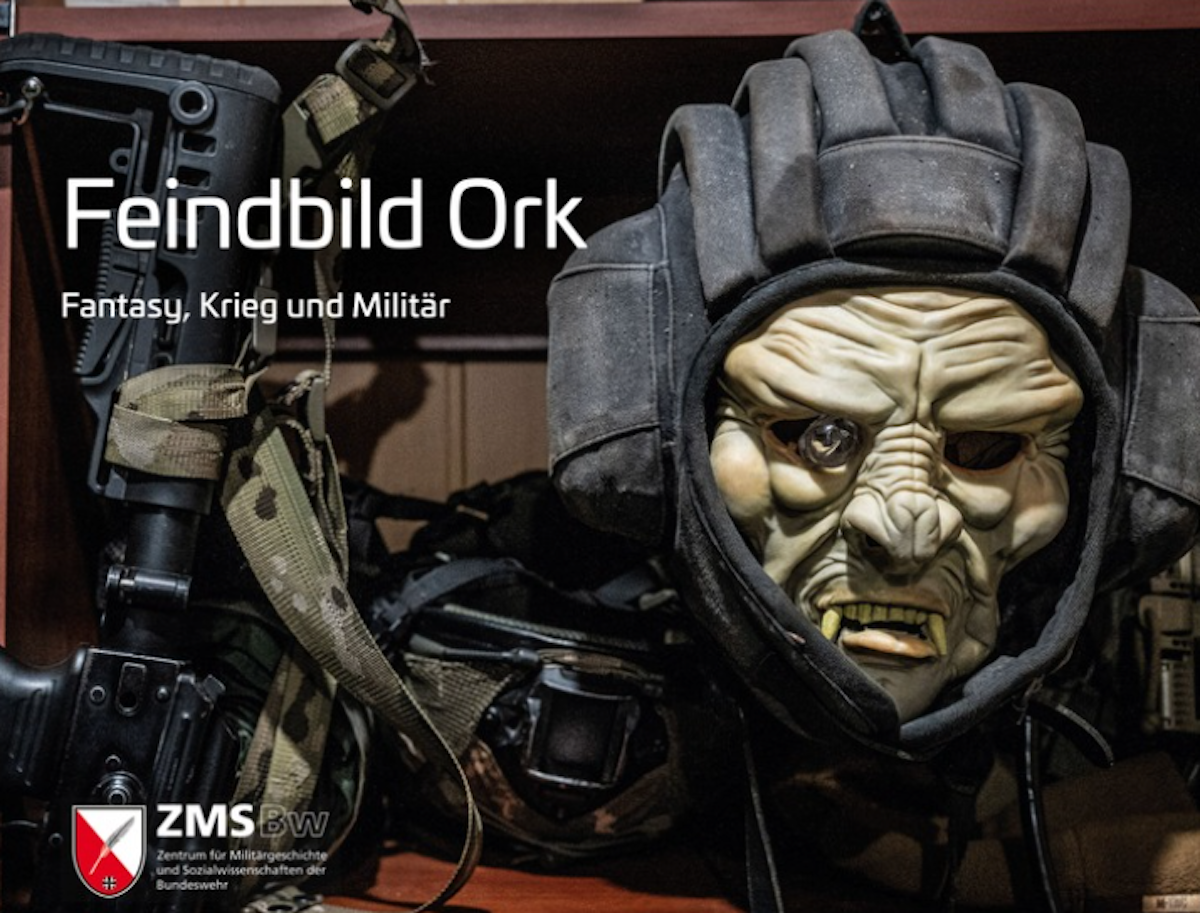
The latest issue of "Military History" explores the intersection of fantasy and warfare, focusing on orcs in the context of the Ukraine conflict, the historic Battle of Hastings, and the Suez War. It also examines Cold War civil defense, the SFOR mission in the Balkans, and the dangerous legacy of munitions in the Baltic Sea.

Fantastic military stories: The new issue of the magazine "Military History" focuses on orcs, fantasy literature, and the Russian war against Ukraine. It also covers the Battle of Hastings, the Suez War, the SFOR mission, civil defense, and ammunition in the sea.
Fantasy and Military
How did it come to be that the "orc" could play such a prominent role in the current war of aggression by Russia against Ukraine? How did the Russian invaders become "orcs," and why do they even appear in that guise on posters of the Ukrainian army? How did it happen that Google Translate turned "Russia" into "Mordor" when translating into Ukrainian? And how do war, military, and fantasy literature connect with each other at all?
Nils Birk explores these questions in his contribution and analyzes how stories shape wars. Starting from Tolkien's "The Lord of the Rings," he illustrates how myths, narratives, and especially the figure of the "orc" have made the leap into reality and provided a unique visual language for the Ukrainian defense struggle. But far beyond that, the Tolkienian fantasy worlds influence the language of modern warfare.
The Battle of Hastings
King Charles III, British Prime Minister Andy Burnham, and French President Emmanuel Macron stand in awe before a unique historical artifact in the autumn of 2026: the Bayeux Tapestry - a historical source that inextricably connects the histories of both countries. The tapestry depicts the Battle of Hastings. 960 years ago, in October 1066, the Norman Duke William the Conqueror set sail from the French coast to England, managing to deliver a devastating defeat to the English King Harold II. This battle is significant not only militarily, as Martin Hofbauer illustrates. William the Conqueror was subsequently crowned King of England. Norman culture and notions of power had a lasting influence in England.
The Suez War
Can a coalition withstand military unilateral actions by one or more of its partners? Naval blockades in the Middle East? The cooperation of individual allies with opposing states? What sounds like yesterday's news actually dates back 70 years in this case: all these aspects can be found in the Suez War of 1956. The Egyptian President Gamal Abdel Nasser nationalized the Suez Canal at that time.
The British and French wanted to counter this in a secret alliance with Israel. Militarily, the alliance was successful, but Nasser resisted through other means. He sank several ships in the Suez Canal, thereby jeopardizing the oil supply to Central Europe. Furthermore, the Allies did not expect the resistance from the USA, which had not been informed of their allies' plans. As a result, the USA cooperated with its arch-enemy, the Soviet Union, in the United Nations to stop the actions of its own allies. A military historical thriller that Winfried Heinemann tracks down in his contribution.
Civil Defense in the Cold War
The establishment of new shelters, the relaunch of a nationwide warning app, regular siren tests on September 6th every year, 100 billion for the Bundeswehr, but also 100 million for civil defense. Never before has so much been done for defense - both military and civil - as since the Russian invasion of Ukraine in 2022. Never before since the end of the Cold War. Because before 1989/90, the threat situation was also high. The Federal Republic prepared measures for a possible attack by the Warsaw Pact. That, as then and now, the civil and military aspects of defense are inextricably linked and even depend on each other, is shown by Cornelia Juliane Grosse in her contribution to the "In Focus" section. She portrays a comprehensive picture of the civil defense measures, which include much more than siren tests and shelter locations.
SFOR
At the beginning of the 1990s, the Western Balkans were a crisis region. In the Yugoslav Wars, starting in 1991, the ethnic groups of the region fought for independence, state sovereignty, and ethnic dominance. The bloody conflict was contained in 1995 by the Dayton Agreement. Under a UN mandate and NATO-led, the international IFOR (Implementation Force) was initially deployed, followed by SFOR (Stabilisation Force), which was equipped with a robust mandate to enforce the end of hostilities and stabilize the situation. To what extent this mandate was successfully implemented and how the Bundeswehr participated in the mission is examined by Agilolf Kesselring in his contribution.
Ammunition in the Sea
The Baltic Sea is seemingly a calm inland body of water, where - apart from the occasional whale - rarely anything extraordinary appears. But as calm as the Baltic Sea may seem on the surface, it becomes more turbulent when one looks beneath the water's surface. This is what Christian Jentzsch and Uwe Wichert illustrate in their contribution. They show how the Baltic Sea has become a repository for munitions remnants that still lie in abundance beneath the surface today. It is a dangerous legacy that, over 80 years after the end of World War II, still slumbers in the depths of the Baltic Sea, awaiting disposal.
You can find the issue for free for download on the ZMSBw website.
SPARTANAT is the online magazine for Military News, Tactical Life, Gear & Reviews.
Send us your news: [email protected]
Ad
similar
Get the weekly SPARTANAT newsletter.
Your bonus: the free E-Book from SPARTANAT.
