Get the weekly SPARTANAT newsletter.
Your bonus: the free E-Book from SPARTANAT.


BOOKS: "Be prepared - every time"
The book and magazine market reflects the worries and fears of the average population, with a rising demand for survival literature. Two exceptional publications address crisis situations in urban environments, offering practical advice for ordinary citizens. "The Prepper Handbook" provides guidance on dealing with mental and physical stress, while "Biological and Chemical Hazards" explores emergency strategies involving hazardous substances. These books offer valuable insights for preparing and coping with potential threats.

The book and magazine market is generally seen as a mirror and barometer of the average population, reflecting unfiltered the worries and fears of people. The events of the past months and years cast their shadows ahead and unsettle broad sections of the population. The book trade is currently responding to the increasing demand for specialist literature on the topic; survival techniques and self-sufficiency in and from nature, self-help in times of crisis, or combat techniques in urban environments. We also pick up on this clear trend and present two outstanding publications here.
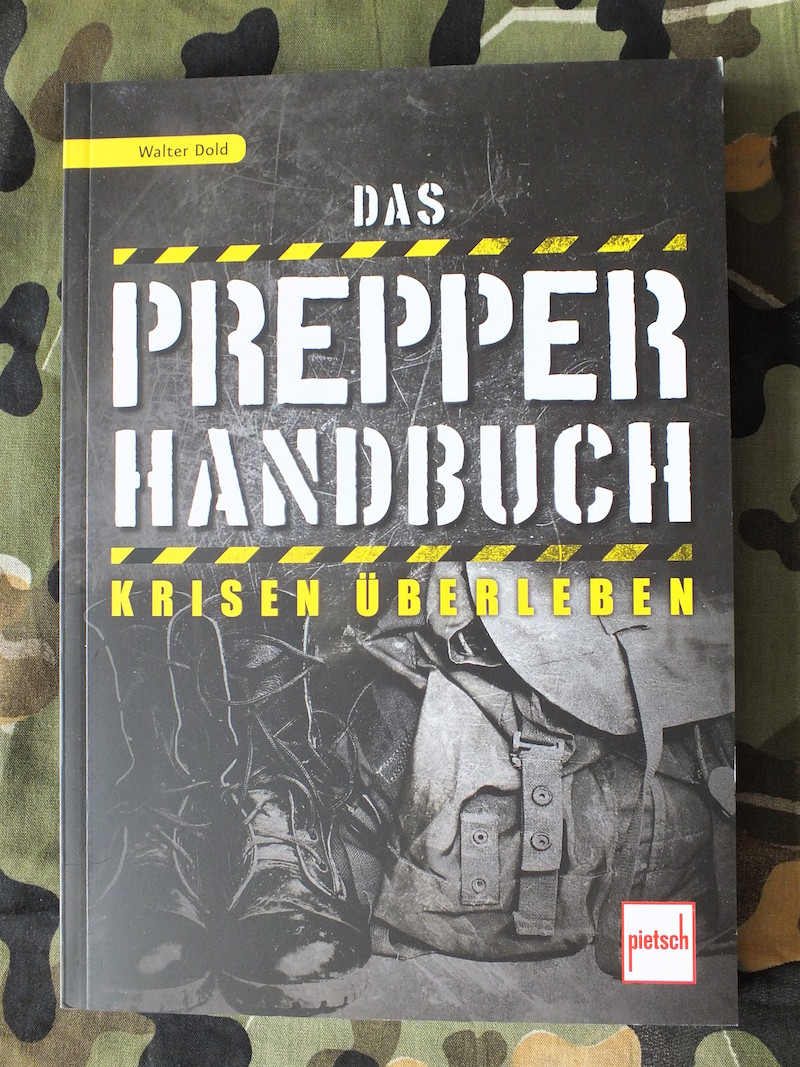 These survival books, published by Paul Pietsch Verlage, specifically deal with the description of crisis situations in urban environments and provide extensive advice and food for thought to effectively cope with these situations. The target audience is the "ordinary citizen" without special expertise.
In his book "The Prepper Handbook," author Walter Dold describes on 189 pages how an affected person should behave in a critical environment at a fixed place of residence/storage location or when on the run. 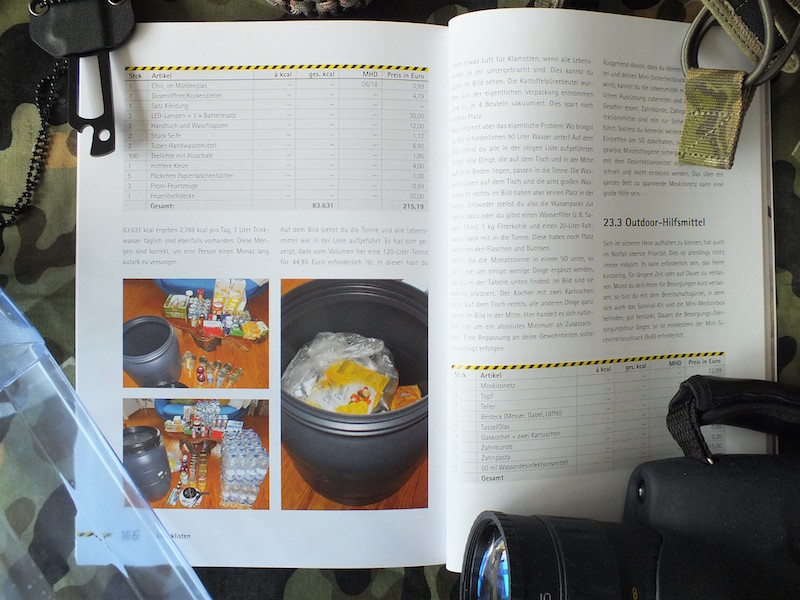 He sensitively addresses the mental stress of a threatening situation and provides suggestions for dealing with the physical aspects. Consideration is also given to a potentially hostile environment. The numerous colorful illustrations concretely and vividly show the reader how, for example, they can create renewable food resources in advance, ensure the supply of drinking and utility water, and what useful equipment they should procure. Our verdict: A thoroughly recommendable and meaningful book.
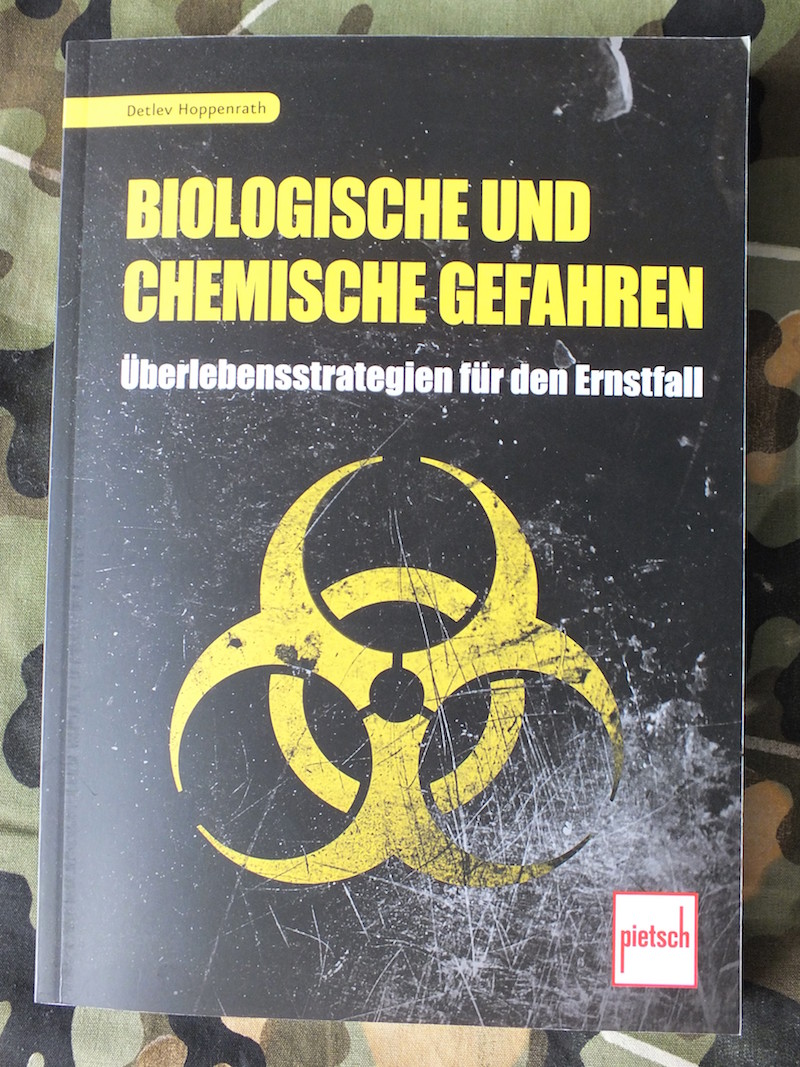 With the book "Biological and Chemical Hazards," author Detlev Hoppenrath goes even further and ventures into survival strategies for emergencies involving biological and chemical substances. In this book, he very expertly delves into the explosive topic of endangerment by hazardous substances on 143 pages. In the preface and subsequent introduction, the author specifically addresses the danger situation and frankly describes the effects of the various attack possibilities by perpetrators.
 He describes potential accidents in chemical industrial plants, but also the (still abstract) threat of terrorist attacks with so-called "dirty bombs," as well as real attacks with biological warfare agents against authorities and individuals. He also differentiates between the questions: "What do the authorities do and what can/must I do?" Other points include: "How do I protect myself in advance and during actual attacks with chemical weapons." His very useful advice includes not only appropriate equipment and stocking up on food but also the preparation of safe accommodations and medical measures.
Both books complement our "Gray-Man" campaign - HERE is the article on the Gray Man Theory.
Paul Pietsch Verlage on the Internet: http://www.paul-pietsch-verlage.de
SPARTANAT is the online magazine for Military News, Tactical Life, Gear & Reviews.
Send us your news: [email protected]
Ad
similar
Get the weekly SPARTANAT newsletter.
Your bonus: the free E-Book from SPARTANAT.
