Get the weekly SPARTANAT newsletter.
Your bonus: the free E-Book from SPARTANAT.

BASICS: Thermal imaging devices
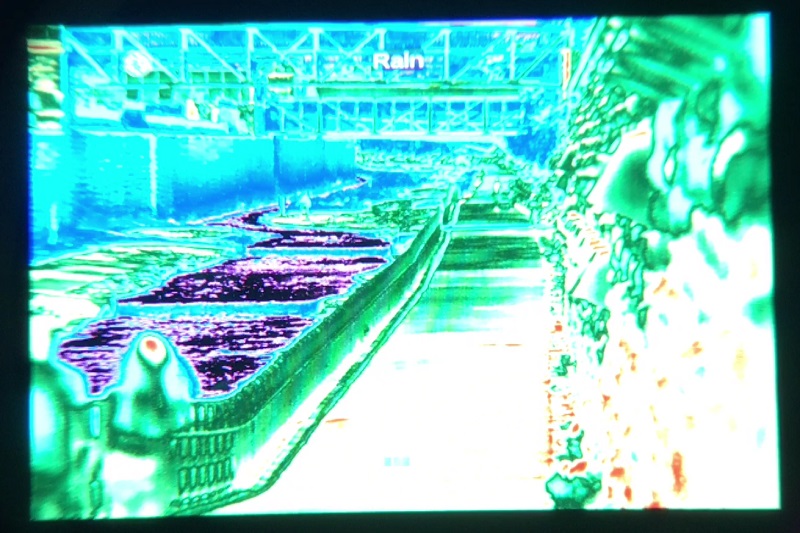
Thermal imaging devices (TID) convert infrared radiation into images using thermography. They work in the mid-infrared spectrum, detecting temperature differences even in darkness. TID cannot see through glass surfaces but are useful for identifying targets and work in various weather conditions.

Thermal imaging devices (TID) are the second major technology after image intensifiers when it comes to night vision, but how do they actually work? We'll tell you. They are based on thermography. This means TID detect infrared radiation in the mid-infrared spectrum (MWIR or according to DIN: IR-C) between 3000 and 5000 nanometers and convert it into an image. For comparison, the human eye detects the spectral range between 450 and 650 nanometers (nm), which is much lower.
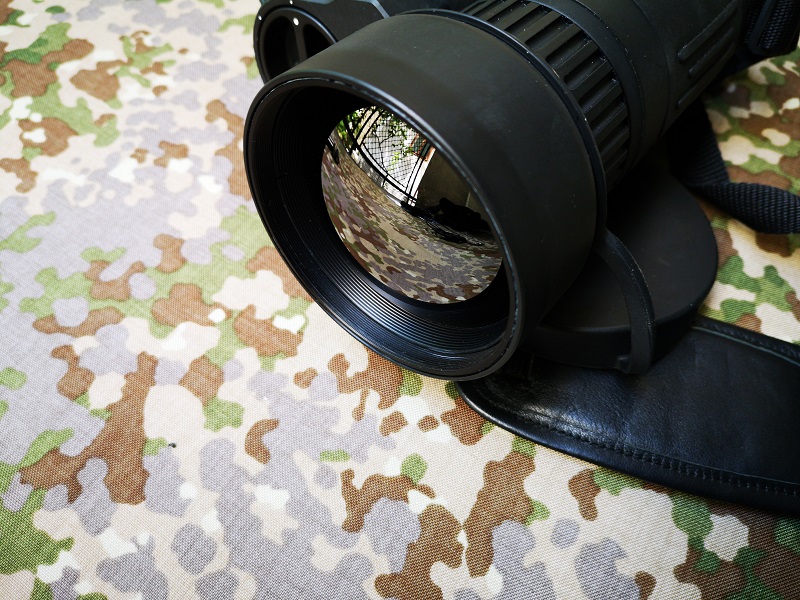 The lens of a TID is not made of glass but of germanium or other special materials. The sensor in the TID is heated by the infrared radiation. These changes are measured and compared with the values at operating temperature. This calculates temperature differences that are displayed on the screen of the thermal imaging device. That is the thermal image. This can be displayed in various color and monochrome filters.
 Thermal imaging devices and image intensifiers both work in the IR spectrum, but in different wavelength ranges. Image intensifiers are at home in the so-called Near Infrared range (NIR or IR-A) from 780 nm to 1400 nm, while TIDs, as mentioned earlier, work in the MWIR range. In the graphic above, we have shown you the spectral ranges.
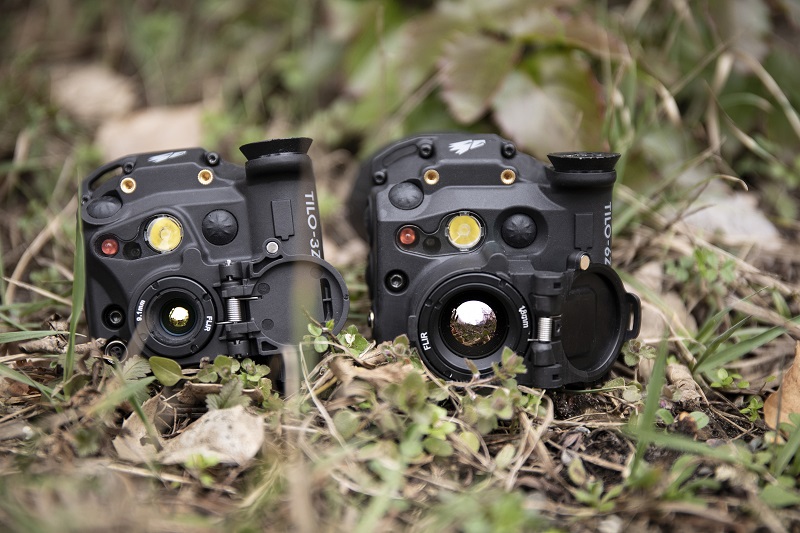 A TID is able to detect temperature differences and convert them into a thermal image even in complete darkness without additional tools. In simple terms: the image of the TID is created from temperature differences. This works at night as well as in poor visibility due to fog or smoke during combat. Only when everything is equally warm, you have a problem, because then the TID does not detect differences and you also do not see anything.
Many people do not know that you cannot see through glass surfaces with a TID. They act like a mirror for the TID as they reflect the thermal radiation (MWIR). In daylight, a TID is very practical too, as it significantly facilitates the identification of a well-camouflaged target, because we all emit heat.
We have introduced the new SPARTANAT BASICS category for you. With this, we present you the basics you've always wanted to know about how they work.
SPARTANAT is the online magazine for Military News, Tactical Life, Gear & Reviews.
Send us your news: [email protected]
Ad
similar
Get the weekly SPARTANAT newsletter.
Your bonus: the free E-Book from SPARTANAT.
