Get the weekly SPARTANAT newsletter.
Your bonus: the free E-Book from SPARTANAT.

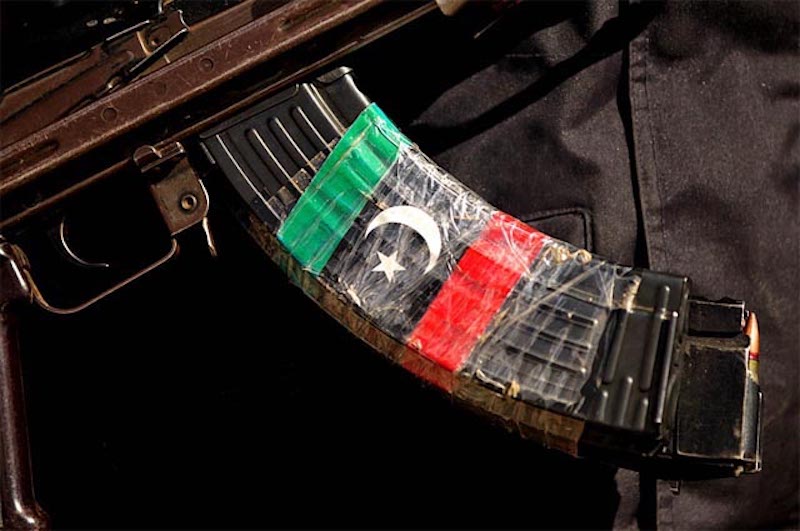
As a hostage in Libya (1): Captivity
An Austrian contractor, Alex Sänger, recounts his ten months in captivity in Libya, discussing his experiences as a hostage, including solitary confinement, psychological warfare, and negotiations for his release. This harrowing account sheds light on the challenges faced by international citizens in a volatile post-Gaddafi Libya.

For ten months, the Austrian Alex Sänger (pseudonym) had to endure a hostage situation in Libya. He worked as a contractor for a security company from 2013 to 2016, protecting both diplomats and employees of oil companies there. Libya has been extremely difficult terrain since Gaddafi's death and the collapse of the state order. SPARTANAT was able to exclusively interview Alex about his experiences as a hostage. Today is the first part of the interviews.
SPARTANAT: Alex, let's first talk about the background. How did you end up in Libya, and what did you do there?
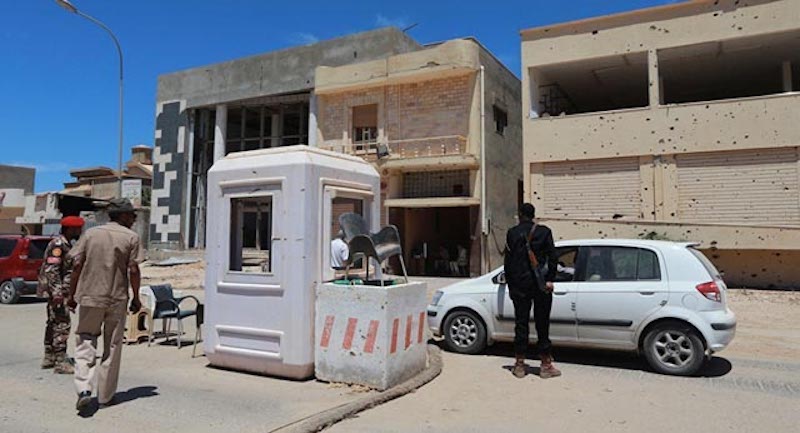
Sänger: I worked there for a company registered in Cyprus as a personal security officer, and after about a year, I switched to management, first as Country Security Coordinator and then as Country Manager. This work involved not only the security sector but also finance and logistics. The clients were not only diplomatic but also from the oil business. In total, I was in Libya for three years, starting in April 2013. Within these three years, I was in captivity twice, once in the East as a captive of the now recognized government, hosted by General Haftar. That was a very short stay and was resolved through diplomatic means. The second hostage situation was exactly one year later, at a time when all diplomatic missions had already left the country. In total, there were only eleven international citizens in all of Tripoli. One of them was me, and another was a colleague of mine.
 SPARTANAT: How was your experience in your first hostage situation?
Sänger: The first hostage situation started very calmly, then became wild within 36 hours, and then was very unpleasant for eight days. The prison was dirty, we were in solitary confinement and had little food. What we received looked as if it had been collected from somewhere dead and put together again. We got water from the toilet. I found a bottle that I always refilled.
"Torture in prison was routine. You could hear it."
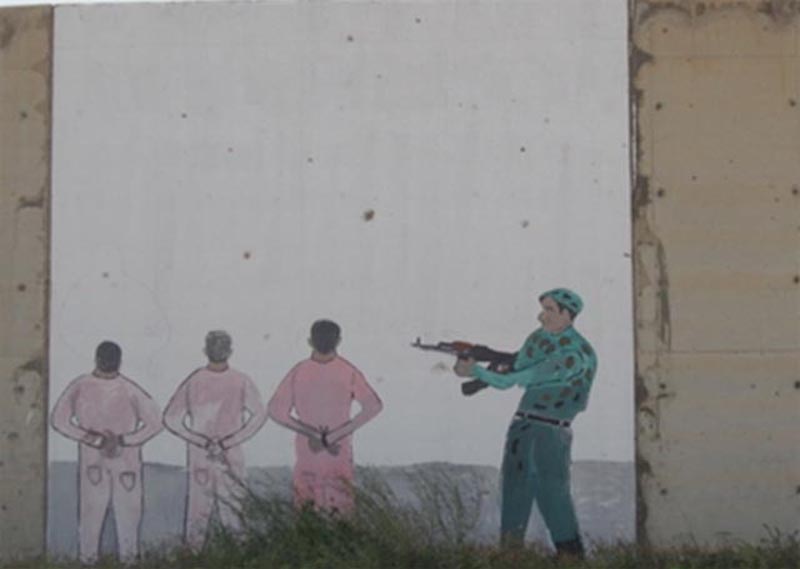
Torture in prison was routine. You could hear it. Every time I came out of the cell, I saw fresh blood. We were not physically harmed, but every time they opened the cell, they blindfolded us. Sometimes they took us for interrogation, sometimes just led us out to what seemed to be a courtyard. Once they made me kneel, then the man behind me loaded the Kalashnikov. Finally, they made me stand up again and took me back to the cell. The whole thing happened without words.
One of the guards once caught me with an electric shock cattle prod on the back. But he was immediately scolded by another guard. I didn't understand what they said, but it was obvious that it was not intended for them to catch me.
I was separated from my colleague at times. They put us together with junkies - at least me, that's what I know. Then I was with an al-Qaeda commander, then with regular criminals who tried to start a conversation with me and ask why I was there. It kept changing like that.
After eight days, the kidnappers moved us from the high-security wing to a communal cell with three of our Libyan drivers. That was another night before they took us back to the hotel. They locked us away there. Initially, I had the key and could lock the room from the inside until the guards changed, then they wanted the key from the outside. That made it clear to me that the guards themselves didn't know whether they should watch us to prevent us from running away, or whether the outside threat of someone coming to get us was much greater. The prison was less than 100 kilometers from Derna. Derna was the first Daesh stronghold in Libya in 2014.
SPARTANAT: How did you get out of there?
Sänger: At that time, we were there to prepare a mission of a subgroup of the EU. After our company realized that they had lost contact with us at the regular times we had to call, they immediately involved the diplomatic service, which intervened promptly. An employee of the company, the Regional Manager, flew to Al Beida with a diplomat and got us out. One demand General Haftar had made at the time was for the EU to officially recognize him or the government in the East. That actually happened half a year later, but at that time it was simply non-negotiable.
SPARTANAT: So you were political bargaining chips in that case ...
Sänger: Yes.
SPARTANAT: 16 days still sounds manageable. The second hostage situation was much longer.
Sänger: The second time was ten months. As I said, we were just a very small international group that remained in the country after the liberation. After we were released, we learned that the trigger for the second abduction was a former employee whom I had terminated according to international labor law. And he wanted to get back at me, just lock me up for a few days, scare me a bit. And then let me go again.
It happened like this: on my last day of work in Libya, I was on my way to the airport with a Libyan driver. The driver obviously worked with the kidnappers. During the abduction, I was brutally pulled out of the car. Everything happened very quickly. There were three militiamen, one of them as the driver, who were extremely nervous. They had just loaded their Kalashnikovs and during the drive, I had the barrel in my face, while at the same time I could feel the kidnapper trembling because he was so nervous. Also here, since I did not arrive at the airport, the company immediately looked into where I had gone and what could have happened.
"There was no way to get out then. The situation escalated within a few hours."
Within two hours, they found out where I was, but they didn't know exactly what had happened. An employee of the company went with my former Libyan assistant to make a fuss and get me out. Because he came and immediately involved the government of the Muslim Brotherhood, the militia got scared.
There was no way to get out then. The situation escalated within a few hours. At first, they just told me that I was captured because the company had a problem and that I would be quickly released if the company handled it - with money. But then I was accused of espionage and had to endure a new interrogation program every two months. And it was always a different group: first a militia with self-appointed policemen, they were the first to interrogate me. They just wanted to scare me. Then the interrogators who came became more and more senior. Ultimately, it was the intelligence service itself. And that was on a two-month basis.
SPARTANAT: Ten months is a very long time. Can you recall different phases of your captivity? For example, thinking at the beginning that it will be over soon, then hopelessness, etc.
Sänger: At first, I thought everything would be resolved in four hours. After four hours, nothing had happened. Okay, I thought, now it's the weekend: within the next four days, it will be resolved. When those days passed too, I fell into the first low because I realized that nothing was happening quickly.
The entire stay was a constant up and down. Let's say: I had months that passed quickly and then months that just didn't seem to pass at all. At the same time, I had weekly highs and lows. I always thought, if someone comes to get me, it can only be on a Tuesday afternoon, Wednesday, or Thursday morning. All other times didn't fit. First the Arab weekend, then the European weekend. When the decision is made, I only have three days of the week when someone can come.
So when it was Thursday noon, I fell into a complete mental low. Then I knew the next weekend was coming, nothing would happen. Sunday night and Monday, I started to think more positively again and never gave up hope. In general, I can say: I didn't laugh so much, but every now and then you have to laugh. I cried more, really "grief-stricken." I couldn't show more emotions because the others in the cell were constantly watching me and telling everything to the owner of the prison.
 SPARTANAT: So you were not alone most of the time but in a normal Libyan prison with regular Libyan prisoners?
Sänger: The prison was a converted office building with the windows welded shut and steel doors installed. We had a minimum of six and a maximum of eleven people in the cell. It was 32 square meters. There was a bathroom - toilet and shower. We slept on mattresses. The fellow prisoners were varied: one was in for smuggling people to Europe. However, he was not there because of that smuggling, but because he didn't pay a share to the government. Others were in for bank robbery, but again not because of the robbery, but because they forgot to deliver their share. They were also released later.
The official version was always that they had changed, that they now mastered the Koran well and understood as the government would like. In the background, negotiations with families or other relatives always took place during their imprisonment. And when enough money went into the police cash register, they were released. One person was there because he was a Gaddafi soldier, he was imprisoned because he was on the wrong side and because he was so loyal that he didn't start lying and deny Gaddafi.
SPARTANAT: How did you get along with these fellow prisoners? Do you have a common enemy because you are all in prison? Or is the cultural difference stronger because you are a Westerner in an Arab prison?
Sänger: At first, they tried to make me believe that we had the same fate. Perhaps not for the same reason, but in the end we were in the same prison and we were best friends and shared everything we had. I quickly realized that everything I and everyone else said in the cell was being carried out with the trash.
I mean, with the trash, because the one who was the "boss" of the cell took the garbage to the dump twice a day. And I quickly noticed that when he came back, he had different information or went to a different corner, made friends with someone. He just got orders - from the Sheikh or the police or whoever - to gather information. The people smuggler - he was a Syrian married to a Libyan - had much bigger problems because Libyans are very nationalist, and anyone who is not from Libya is automatically a step down. They didn't dare so much with me. They permanently assigned him to the lowest services - cleaning the toilet, washing, etc.
SPARTANAT: So, as a hostage, you were also a valuable item?
Sänger: Yes, in several ways. Some simply took advantage of the company's pot, i.e., the small militia. The militia above them demanded 50 million euros for me because they believed that I had sold a report for 20 million. Politically, there were also negotiations where they tried to use us as leverage in EU and UN negotiations, but they did not agree. We were non-negotiable for both. Our greatest value was then at the end. The kidnappers aimed to portray Europe positively about the government, showing that they were very good and loyal negotiators, treating their captives well, and not harming anyone.
SPARTANAT: So you never experienced physical torture?
Sänger: I never experienced physical torture. Not on myself.
"The psychological war was extreme. I was so worn out after six months with these people."
SPARTANAT: But of course, the psychological game ...
Sänger: The psychological game was extreme. After six months with these people, I was so worn out. When I was placed in a cell for the first time with my colleague who was also being held captive, I didn't even trust him anymore, I was so paranoid. Every question he asked seemed like a sign to me that they had turned him and that he now also had to provide information for them. It seems they did the psycho games well. Physically, the only limitation was that we didn't receive regular meals at the end, sometimes not at all. There was only cold water for washing. The cell was open, it was winter, and we were constantly cold. That was the only physical challenge.
SPARTANAT: Did you experience any violence from fellow inmates?
Sänger: The inmates thought I was some kind of "Mission Impossible spy" and that if they attacked me, I would break their necks with my left toenail. I always got along quite well with the Libyan mentality, knew how to handle them, had the experience. I never showed my European side. I made sure not to do anything that would restrict their religion or rituals, always kept my opinion to myself. There would have been no reason for...
SPARTANAT: But you still ended up in solitary confinement once.
Sänger: After six months, they transferred me to another prison with my Serbian colleague. After about a month, the final interrogation phase began. They separated us again and moved me to a dark, extremely dirty room with stinking mattresses. I didn't even know if it was day or night. I had no physical contact with anyone, which was very difficult. And no one to talk to. And that for a month and two days.
SPARTANAT: So a month of darkness ...
Sänger: There was light inside, two light bulbs, but when they were turned on, your eyes hurt after half an hour because the light was so intense.
"The only conversations I had were with the Joker. I placed the Joker card there and talked to it, made plans, sang, and celebrated my son's birthday."
SPARTANAT: Did you have anything to do during that time? Or just talking to yourself?
Sänger: I had playing cards. One of the guards gave me Rummy cards. The only conversations I had were with the Joker. I placed the Joker card in front of me, talked to it, made plans, sang, and celebrated my son's birthday. At that time, I sometimes didn't go to the bathroom for two days. I had a bottle I could urinate in, but for any bigger businesses, I had to knock, wait for someone to come, then ask them to take me to the toilet. The guards would say: Wait, wait. Sometimes it took 48 hours until I could go to the bathroom. By then, my underpants were already dirty because you can't hold it that long ...
SPARTANAT: How was the time after that? Does having endured a month of solitary confinement make you more vulnerable, or does the prisoner fortify and build more protection? Or is the question completely off?
Sänger: I'm not sure what you mean exactly. For me, since then, I can't sleep anymore when it's very quiet. Because it was extremely quiet in the solitary cell. My colleague - his cell was next to the radio room, and he heard radio transmissions 24 hours a day, 7 days a week -
SPARTANAT is the online magazine for Military News, Tactical Life, Gear & Reviews.
Send us your news: [email protected]
Ad
similar
Get the weekly SPARTANAT newsletter.
Your bonus: the free E-Book from SPARTANAT.
