Get the weekly SPARTANAT newsletter.
Your bonus: the free E-Book from SPARTANAT.

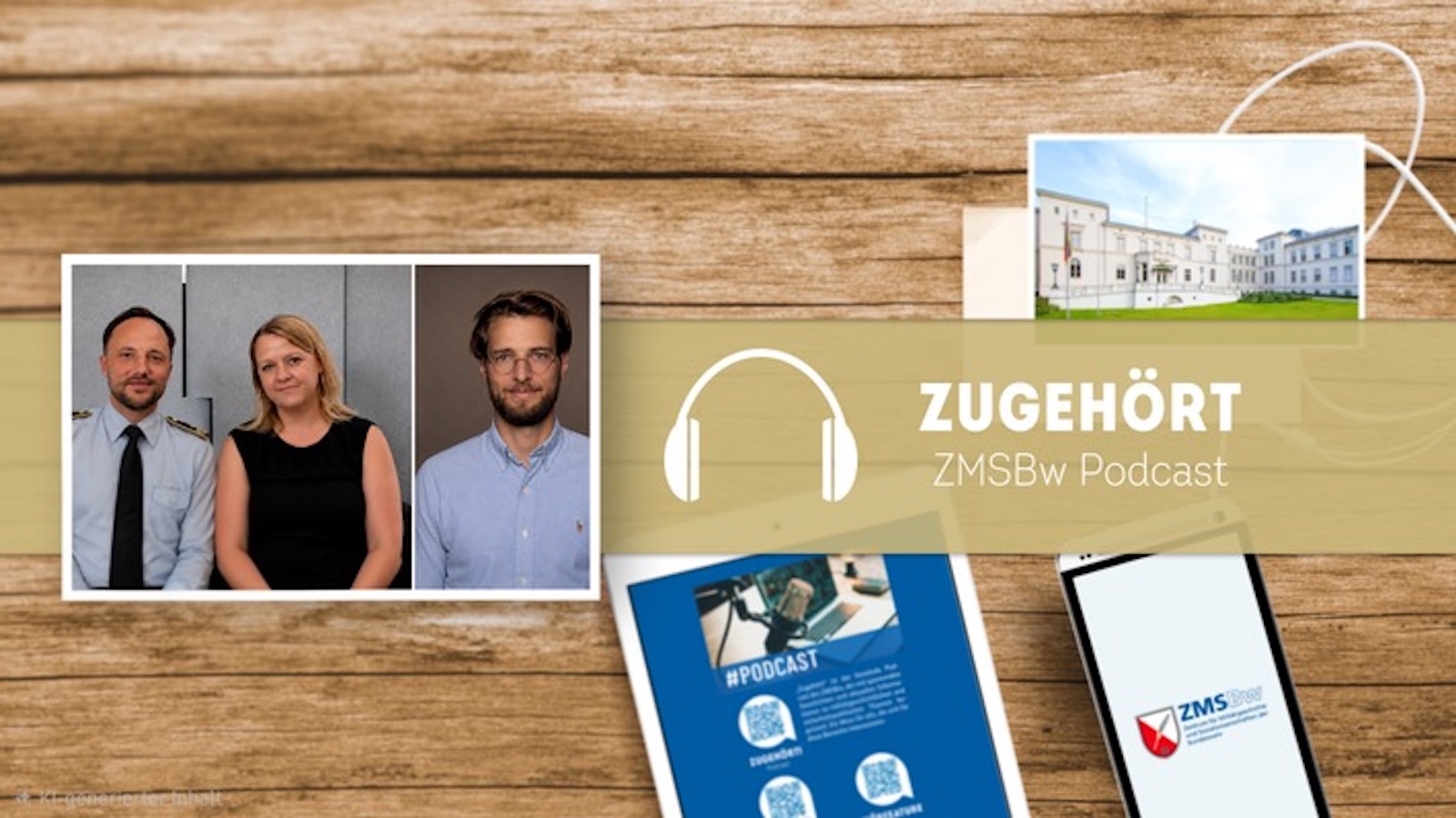
A Turning Point in Civil Defense?
The podcast discusses the renewed focus on civil defense in Germany since 2022, highlighting its historical context, particularly during the Cold War. Experts Cornelia Juliane Grosse and Ferdinand Gehringer examine the evolving threat landscape and the implications for national defense strategies, emphasizing the complexity of hybrid threats today.

Military national defense has once again become a political priority since 2022, but what about civil defense? Lieutenant Colonel Michael Gutzeit discusses this with historian Cornelia Juliane Grosse, who conducts research on civil defense during the Cold War at the ZMSBw, and security policy analyst and consultant Ferdinand Gehringer.
Historical Experience and the Current Threat Landscape
Following Russia’s attack on Ukraine, this turning point has once again shifted public attention to the role of the Bundeswehr in national and alliance defense. At the same time, civil defense—as the second pillar of total defense—has also come back into focus.
Looking back, parallel developments can be seen from an early stage. With the establishment of the Bundeswehr beginning in 1955, the civilian component of defense was also built up. By the end of the Cold War, this had resulted in a complex system of total defense designed to comprehensively protect the Federal Republic of Germany in the event of an attack by the Warsaw Pact. After 1990–91, these structures were extensively dismantled.
Today, in light of a changed threat landscape, the question arises: What might a renewed concept of total defense look like? What can we learn from the Cold War era, and what role do hybrid threats play? What place does the population occupy in these plans?
The podcast explores the interplay between historical experience and the current threat landscape. It becomes clear that much of this is not as new as it seems. However: Unlike during the Cold War, the Federal Republic of Germany is no longer a country on the front lines, and the high number of hybrid attacks and threats creates a new dimension of complexity. So where does our country stand in terms of planning? Has a new era begun in civil defense as well?
Interviewees
Cornelia Juliane Grosse is a research associate in the Education Department at the ZMSBw. She is editor-in-chief of “Militärgeschichte. Zeitschrift für historische Bildung” and editor-in-charge of the book series “Kriege der Moderne.” She also conducts research on civil defense, civil-military cooperation, and military history during the Cold War.
Ferdinand Gehringer works as an independent security policy analyst and author. At the national and international levels, he advises on issues related to hybrid threats, the protection of critical infrastructure, and cyber and information security at the intersection of technology, regulation, and geopolitics. He serves as an expert, develops security concepts, writes analyses, and advises the German Bundestag, ministries, the European Parliament, and international partners.
Lieutenant Colonel Michael Gutzeit is the Head of Public Affairs (LdI) and Press Spokesperson for the Bundeswehr Center for Military History and Social Sciences in Potsdam, as well as being responsible for the website and digital media.
You can listen to the podcast episode on audio apps and the ZMSBw website.
SPARTANAT is the online magazine for Military News, Tactical Life, Gear & Reviews.
Send us your news: [email protected]
Ad
similar
Get the weekly SPARTANAT newsletter.
Your bonus: the free E-Book from SPARTANAT.
