Get the weekly SPARTANAT newsletter.
Your bonus: the free E-Book from SPARTANAT.

25 Years of Women in the German Armed Forces
Since January 2001, women have been allowed to serve in the Bundeswehr following a landmark ruling by the European Court of Justice in favor of Tanja Kreil, who challenged gender discrimination in armed service. This significant change ended decades of gender inequality in Germany's military and allowed women to enlist voluntarily.

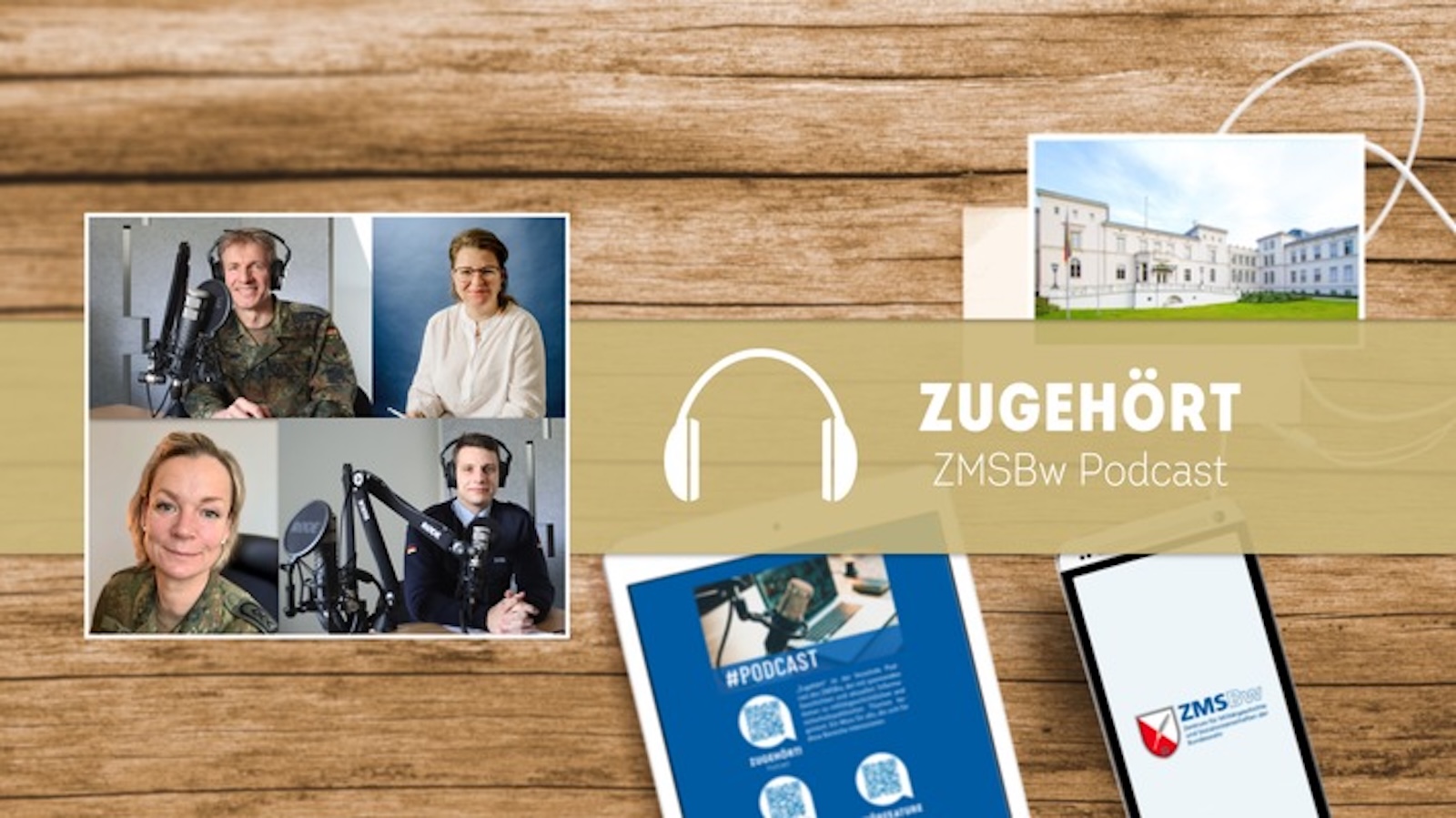
Since January 2001, women have been permitted to serve in the armed forces. Senior Staff Sergeant Gerrit Reichert speaks with eyewitnesses from the very beginning—Staff Sergeant Annett Selzer of the Bundeswehr Logistics Command in Erfurt and retired Captain Sandy Kirchner—as well as Captain Nils Birk of the Bundeswehr Military Service Center (ZMSBw) about the Kreil ruling, which transformed the Bundeswehr.
Exactly 30 years ago, in 1996, a young woman from Lower Saxony filed a lawsuit against the Federal Republic of Germany in the Administrative Court of Hanover. Electronics technician Tanja Kreil wanted to join the Bundeswehr after completing her civilian training as a weapons electronics technician, but was rejected. The reason: as a member of a maintenance unit, she would have had to perform armed service, which was not permitted for women under the Basic Law. This was because Article 12a, Paragraph 4 stated that women “under no circumstances may perform armed service.” Tanja Kreil felt she was being discriminated against on the basis of her gender, and the Administrative Court of Hanover turned to the European Court of Justice (ECJ) for legal clarification.
The Basic Law is amended
The ECJ ruled in Tanja Kreil’s favor. As a result, Article 12a, Paragraph 4 of the Basic Law was amended to state that women may not “under any circumstances be required to perform armed service,” but that armed service is henceforth permitted on a voluntary basis. Although Tanja Kreil did not avail herself of this landmark ruling, 244 other women did. In January 2001, exactly 25 years ago, they became the first women in the Bundeswehr to enlist in the armed forces for general armed service. The Kreil ruling brought to an end a struggle for gender equality that had begun as far back as the mid-1970s.
In Dialogue
Staff Sergeant Annett Selzer was one of 151 women who began their service in the Army in January 2001 (alongside 76 in the Air Force and 17 in the Navy). Retired Captain Sandy Kirchner enrolled in July 2001 for the very first training course for female officers. Captain Nils Birk is a historian at the ZMSBw and, in his dissertation, examines the initial question of what role women have played in the Bundeswehr’s force planning since its founding in 1955. “An unexpectedly and surprisingly large one,” says Birk, though until 2001, the legislature had set very narrow limits in this regard.
Master Sergeant Gerrit Reichert is a specialist journalist focusing on military history. He has made a name for himself primarily as the biographer of Lothar-Günther Buchheim and through books about U 96, “Das Boot.”
You can listen to the podcast episode on the website of the ZMSBw.
SPARTANAT is the online magazine for Military News, Tactical Life, Gear & Reviews.
Send us your news: [email protected]
Ad
similar
Get the weekly SPARTANAT newsletter.
Your bonus: the free E-Book from SPARTANAT.
